The First Estimate Is A Starting Scope
A roof claim behaves differently from almost every other kind of insurance claim, and the reason is structural rather than adversarial.
An adjuster inspects a roof once, from the ground and on the surface, and writes a scope based on what was visible in that visit. It is their assessment of the minimum acceptable repair cost.
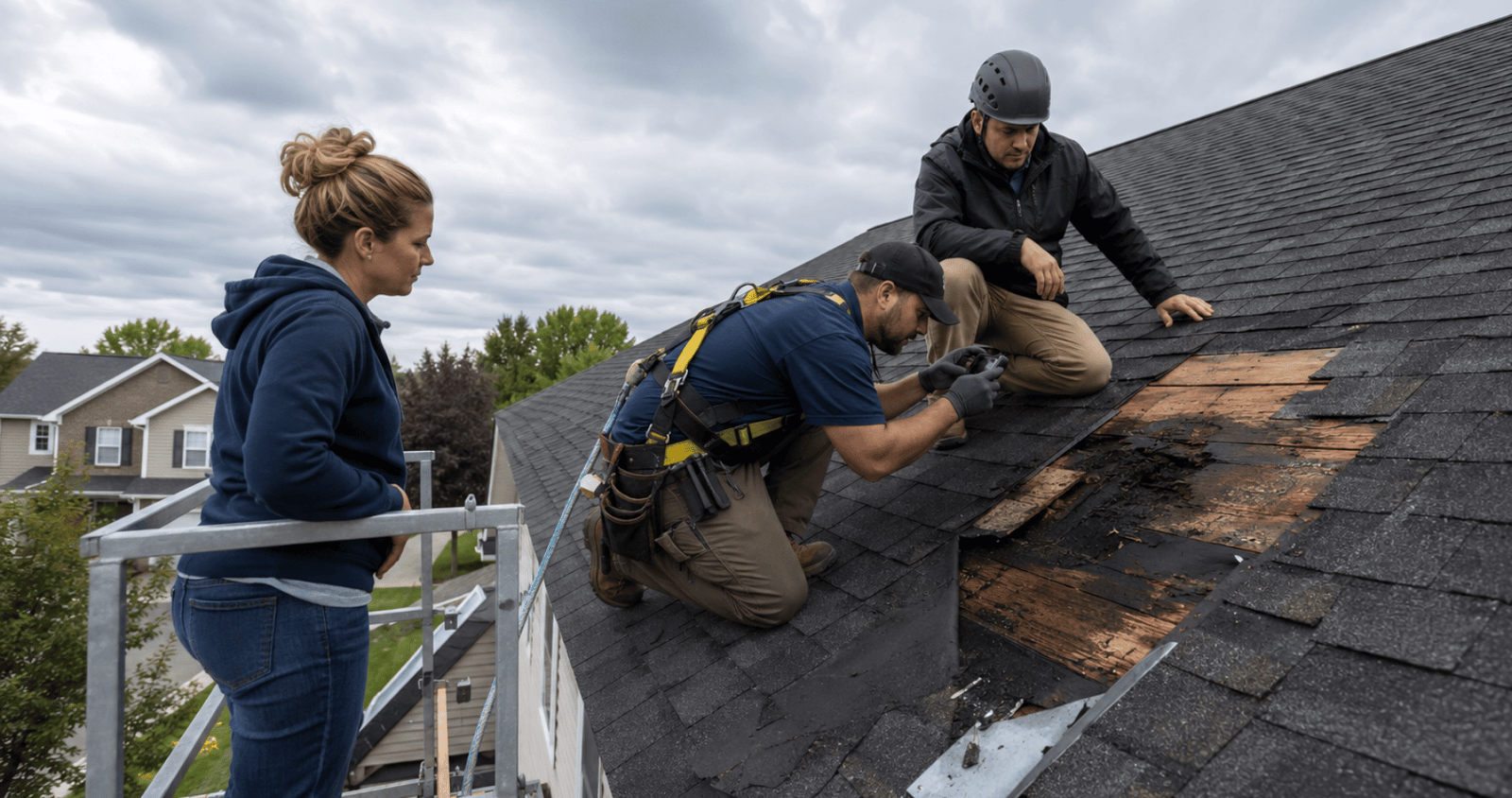
What that visit does not capture is what appears once shingles come off. Rotted decking, damaged underlayment, failed flashing, pipe boots, drip edge, and code required upgrades that only apply when a roof is replaced rather than patched.
Which is why most roof claims require at least one supplement to capture the full scope of necessary work.
The homeowners who recover the full amount are not the ones who argued hardest. They are the ones who understood the process had a second half.
Two Payments, Not One
The mechanic that surprises people, and it decides whether you finish whole.
Most policies with replacement cost coverage pay in two stages.
The first check is the actual cash value, meaning the replacement cost minus depreciation for the roof's age and wear, minus your deductible. That money funds the start of the work.
The second check is the recoverable depreciation, released only after the work is completed and you submit the final invoice and proof of completion.
The gap between them is larger than most homeowners expect. On a fifteen year old asphalt roof with a thirty year expected life, the actual cash value payment can be roughly half of what replacement costs.
Two consequences follow.
You need to bridge the gap. The first check will not cover the full job, and a contractor expects payment.
You must claim the second one. It is not automatic. Failing to submit the completion documents forfeits money you were entitled to, and there is usually a deadline.
If your policy settles at actual cash value rather than replacement cost, there is no second check at all, which is worth confirming before you plan the work.
The Adjuster Meeting Is The Leverage Point
The single highest value thirty minutes in a roof claim.
Being present when the adjuster inspects, with your own documentation in hand, changes what goes into the initial scope.
Industry data illustrates how large that difference is. Analysis of supplement data puts homeowner handled claims settling in one range and claims where a contractor attended the adjuster inspection settling substantially higher on the same damage event, with average recovered supplements running several thousand dollars per claim.
Those figures come from contractor industry sources and should be read as directional rather than as a promise. The underlying point holds regardless. An adjuster writing a scope alone writes a narrower one than an adjuster walking a roof with someone pointing at flashing and decking.
Two things to do.
Schedule the inspection when you can be there, and ask a contractor to attend.
Bring your documentation, meaning dated photographs and any inspection report, rather than relying on the adjuster to find everything.
Get An Independent Inspection First
The step that should happen before you file, not after.
Have a licensed roofing contractor inspect the roof and provide a written report with photographs before contacting your insurer.
Three reasons that order works better.
It confirms whether the damage qualifies under storm related coverage, which prevents filing a claim that gets denied and sits on your record.
It finds damage an adjuster may miss, particularly in valleys, around chimneys, on steep slopes, and in areas not visible from the ground.
It gives you a scope to compare against, which is the foundation of any supplement.
Contractors experienced with insurance work know what carriers include and what they routinely omit, and that knowledge is worth more than an opinion about shingle quality.
What A Supplement Actually Is
The mechanism that recovers the difference, explained plainly.
A supplement is a formal request for additional payment covering repair items not included in the original estimate.
Common supplement items cluster in predictable places.
Hidden damage, most often rotted or damaged decking discovered after tear off.
Code required upgrades, including ice and water shield, drip edge, and ventilation requirements that apply to a replacement but not to the original installation.
Omitted line items, where an estimate simply missed a component.
Quantity corrections, where measurements or square counts were estimated rather than measured.
The process is straightforward. Compare the carrier's estimate line by line against a contractor's detailed scope, identify what is missing or undervalued, and submit it with documentation linking the additional damage to the original covered event.
Photographs of rotted decking, before and after shots, and dated material receipts are what support a supplement. An assertion that more work was needed does not.
Do Not Repair Before The Inspection
The mistake that undermines otherwise valid claims.
Repairing damage before the adjuster inspects can erase the evidence and reduce the payout.
Emergency measures preventing further damage are different and are expected. Tarping an open section, covering a hole, or stopping active water intrusion protects the property and is generally reimbursable. Keep the receipts.
The line sits between preventing further loss, which you should do immediately, and beginning restoration, which waits for the inspection.
The same logic applies to materials. Do not discard damaged shingles, decking, or flashing until the adjuster has seen them or released you.
You Choose The Contractor
A right frequently misunderstood.
Insurers can recommend contractors from a preferred network, and the choice remains yours. Some states regulate this explicitly, barring an insurer from requiring a specific contractor or refusing a claim because you selected your own.
Two sensible questions rather than a fight.
Ask what the network offers, since preferred contractors sometimes carry workmanship guarantees and direct billing arrangements that have genuine value.
Ask what happens if your contractor's estimate is higher, and establish that before work begins rather than after.
Whichever route you take, choose a contractor with specific insurance claim experience who understands supplementing and will provide detailed documentation. That capability matters more than price on a claim funded job.
The Document Nobody Should Sign
A warning that appears repeatedly in consumer guidance and in state alerts.
An assignment of benefits transfers your right to insurance proceeds to a contractor. Some state insurance departments publish consumer alerts warning against them in roofing contracts, and courts in some jurisdictions have found them contrary to homeowners' interests.
Signing one can mean surrendering control of your own claim, including the ability to approve settlements or decisions made in your name.
Related caution. Be wary of contingency agreements offered by contractors who appear immediately after a storm and collect a deductible before disappearing.
Two protections. Verify licensing and local presence before signing anything. And never pay a substantial deposit to a contractor you did not seek out yourself.
Why Claims Get Denied
Knowing the categories helps you avoid them and helps you appeal.
Pre existing damage or wear and tear, where the insurer concludes the roof failed from age rather than from the storm.
Filing past the deadline, which is commonly one year from the date of loss and sometimes shorter depending on the policy.
Maintenance exclusions, where deferred upkeep contributed.
Cosmetic damage exclusions, which some carriers have added specifically to limit hail claims on metal roofing and similar surfaces.
Damage not reaching the deductible, particularly where a percentage wind and hail deductible applies.
One additional pattern worth avoiding. Mixing old and new damage in a single claim gives a carrier grounds to deny portions of it. Keep the storm damage claim about the storm.
Read Your Roof Endorsements Before The Storm
Where carriers have quietly tightened terms.
Several restrictions have become common and they sit in endorsements rather than in the main policy.
Roof age schedules, which settle older roofs at actual cash value regardless of your overall policy settlement basis.
Cosmetic damage exclusions, which exclude dents and marks that do not affect function.
Percentage wind and hail deductibles, which can run one to five percent of dwelling coverage and produce a far larger figure than a flat deductible.
Matching limitations, where an insurer replaces damaged sections without matching undamaged ones.
Find these before you need them, because each one changes what a claim will actually produce and none of them appears on the premium summary.
Keep One Folder
The habit that determines how smoothly the second half goes.
Claims that settle quickly share the same paper trail. Dated photographs of every damaged area captured before and after tear off, a written scope matching the carrier's line item format, measurements backing the square count and pitch rather than estimates, and a record of every contact with the adjuster.
Keep every email, estimate, invoice, and payment record in one place.
The reason is practical. Clean records speed up the depreciation release at the end of the project, and the depreciation release is where the second check comes from.
Claims that stall are rarely the ones with bad work. They are the ones where documentation lives across a phone camera roll, several email threads, and somebody's memory.
The Sequence, Start To Finish
Nine steps in order.
Get an independent contractor inspection with a written report and photographs.
Document the damage yourself, dated and from multiple angles.
File the claim with your carrier and note the claim number and adjuster contact.
Attend the adjuster inspection, with your contractor and your documentation.
Review the carrier estimate line by line against your contractor's scope.
Submit a supplement for missing, undervalued, or code required items with supporting documentation.
Complete the work once the scope is agreed, using a licensed contractor.
Submit the final invoice and certificate of completion to trigger the depreciation release.
Confirm the second check matches the depreciation figure on the original estimate.
That last step is the one people skip. Check the arithmetic rather than assuming the amount is correct.
Four Things That Change The Outcome
Get an independent inspection before filing, so you know what you are claiming.
Be present at the adjuster inspection with a contractor and your documentation.
Expect a supplement rather than treating the first estimate as final, because most roof claims need one.
Submit the completion documents to release the depreciation, and check the figure against the original estimate.
A roof claim is a workflow rather than a negotiation. The carrier follows a scope, a depreciation schedule, and your policy language. The homeowners who finish whole are the ones who worked the same sequence rather than waiting to be told what they were owed.
This article is for general educational purposes and is not insurance advice. Settlement terms, roof endorsements, filing deadlines, contractor selection rules, and supplement processes vary by insurer and by state. Confirm details with your carrier and your policy documents.
Some images in this article were generated using artificial intelligence and are for illustrative purposes only.