Three Limits Stand Between You And A Storage Claim
Yes, your renters insurance follows your stuff into a storage unit. That is the easy part and every article says it.
What almost nobody explains is that three separate restrictions stack on top of each other. Clear the first and the second still applies. Clear both and the third can still gut your payout. Understanding all three takes about four minutes and it is the difference between assuming you are covered and actually being covered.
Limit One Is The Ten Percent Cap
Your belongings inside your apartment get your full personal property limit. Your belongings in a storage unit usually do not.
Off premises coverage is commonly capped at ten percent of your personal property limit, or one thousand dollars, whichever is larger.
So thirty thousand dollars of personal property coverage gives you roughly three thousand for the storage unit. Fifty thousand gives you five.
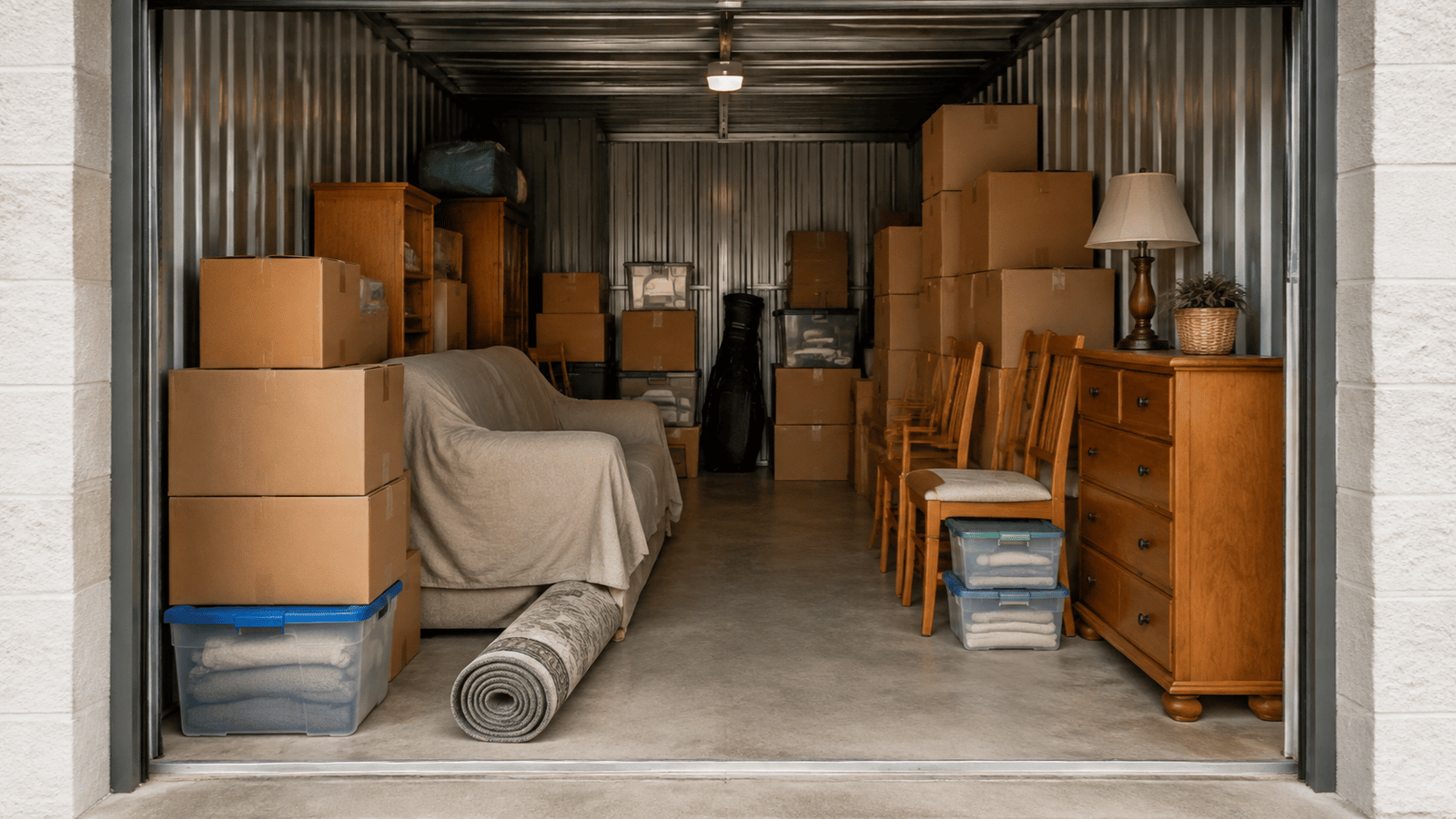
Now think about what people actually put in storage. A full apartment worth of furniture during a move. Seasonal gear. Electronics that did not fit. It is common to store more value than the cap covers, and the gap only becomes visible when the facility burns or gets broken into.
Limit Two Is What Counts As A Loss
Renters insurance is named peril coverage. Fire, theft, vandalism, and water from a burst pipe are typically on the list.
Here is the part specific to storage. Some policies restrict off premises coverage to theft only. Fire at the facility, water damage, vandalism, none of it pays under that kind of policy.
That is not universal and plenty of carriers cover the full peril list off premises. But it is common enough that you need to ask the question directly rather than assuming your home coverage carries over intact.
Limit Three Is The Category Caps
This one surprises people because it sits inside the first limit rather than replacing it.
Jewelry, firearms, collectibles, and silverware carry their own internal caps, often somewhere around fifteen hundred to twenty five hundred dollars for the whole category.
So if your ten percent cap is three thousand dollars and you stored four thousand in jewelry, you are not getting three thousand. You are getting the jewelry sublimit, which is lower still.
Scheduling those items individually is the only real fix. Scheduled property gets its own agreed value and sits outside these caps.
The Exception Worth Knowing About
Here is a genuinely useful detail most renters never hear.
If your belongings are in storage because your home is uninhabitable or being repaired after a covered loss, many policies waive the off premises limit entirely. Your stuff gets the full personal property limit while it waits.
The logic makes sense. You did not choose to move it, the claim forced you to.
Similarly, a dependent student living in a dorm often keeps full coverage rather than the reduced off premises limit, subject to age and enrollment conditions.
Neither exception applies to ordinary storage by choice. But if you are storing because of a fire or a flood or a renovation, say so when you file. It can change the number significantly.
What Actually Ruins Stuff In Storage
Worth noting that the two most common causes of damage in a storage unit are both excluded.
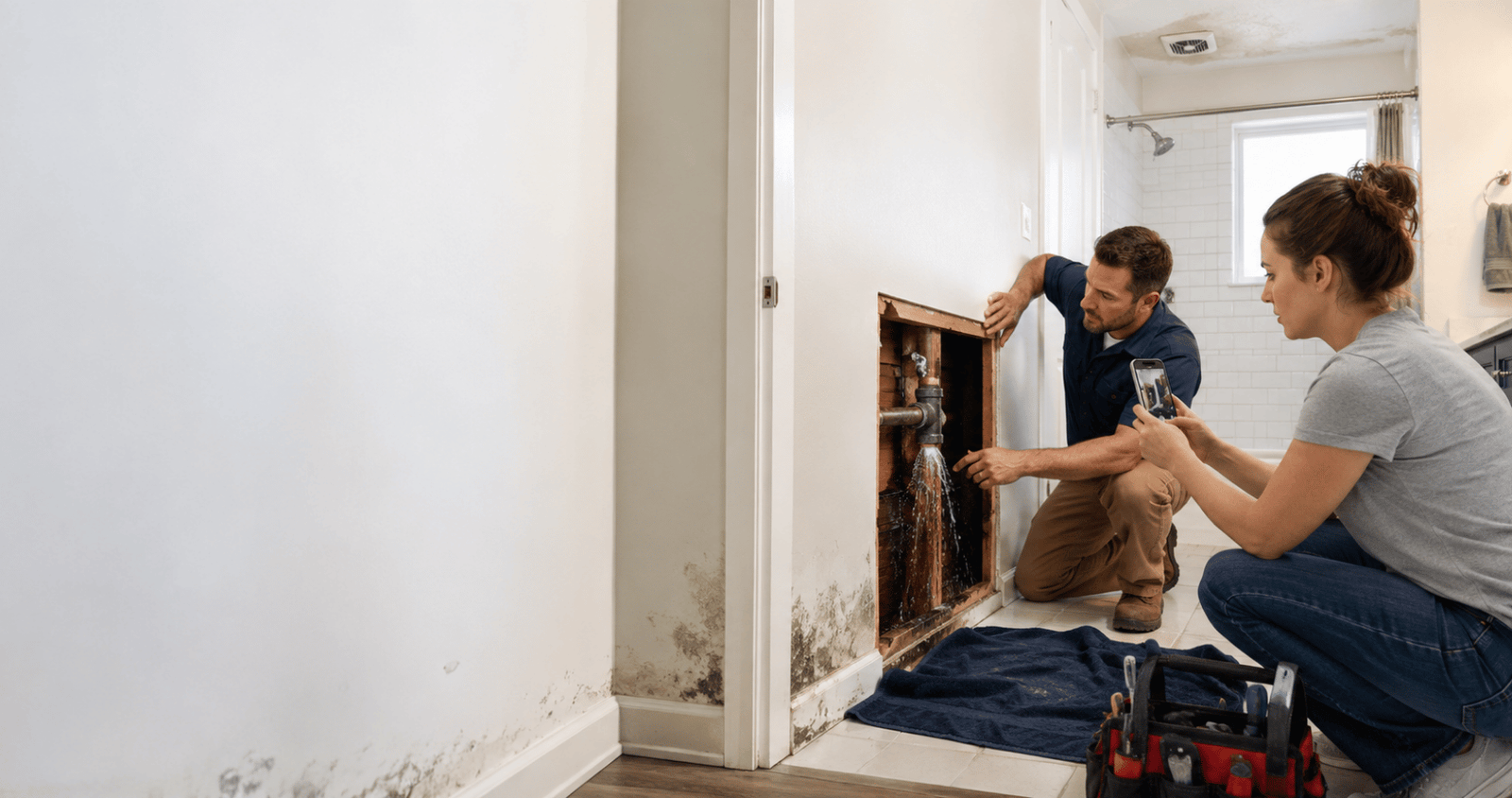
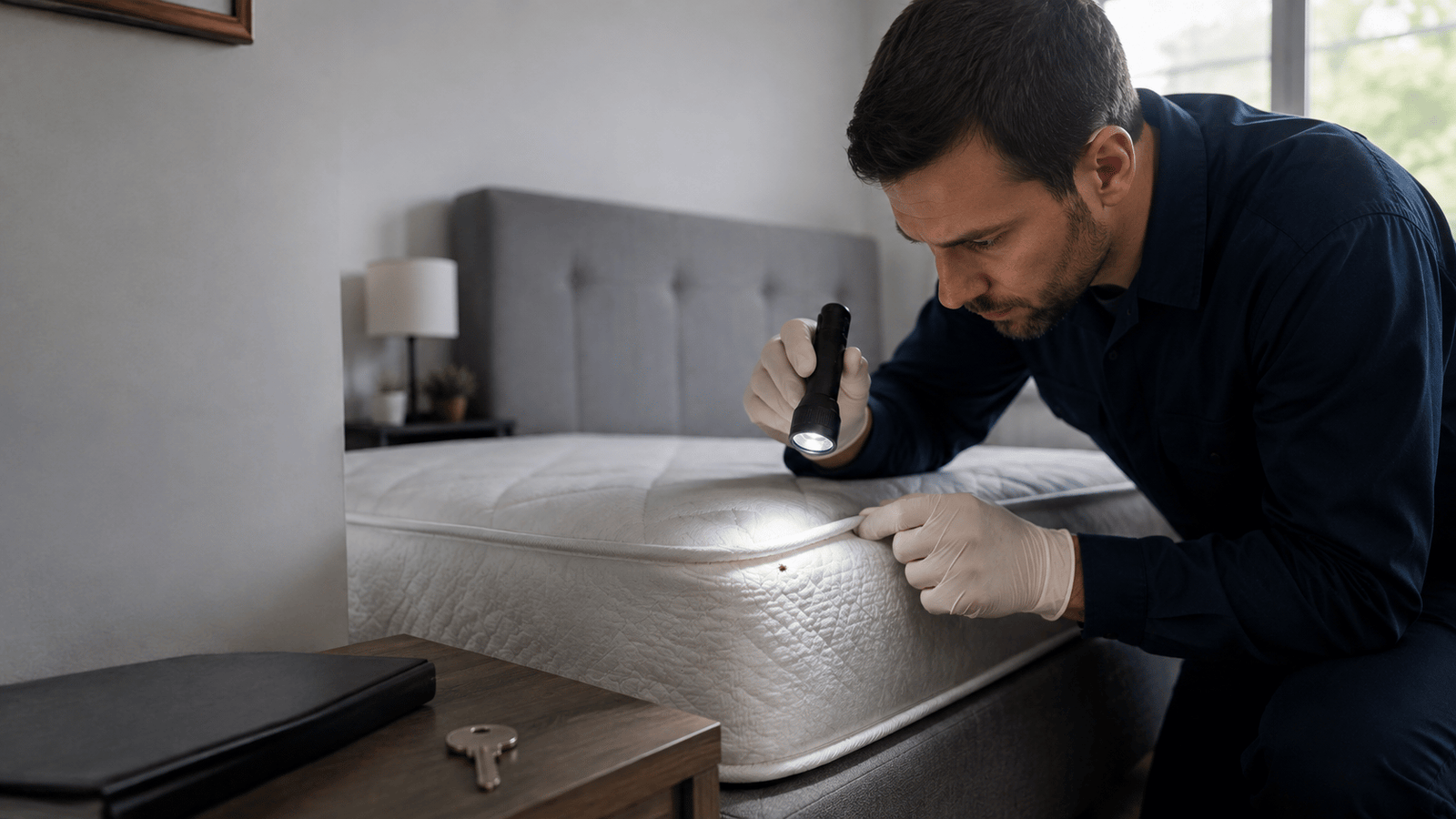
Mold and mildew from long term humidity is not covered. Neither is pest and rodent damage. Both are classified as gradual conditions rather than sudden accidents, the same logic that excludes them at home.
Climate controlled units reduce the risk but do not change your coverage. Policy terms are identical either way.
Flood and earthquake are excluded too, which matters more than usual here since ground floor units sit at exactly the elevation flood water reaches first.
So the risks storage is most exposed to are largely the ones your policy will not pay for. That is the honest picture.
Do You Need The Facility's Insurance
Most facilities require proof of coverage. Many will try to sell you their own protection plan at the counter.
You are usually not obligated to buy theirs if you already carry renters insurance. Bring your declarations page as proof and ask whether that satisfies the requirement.
Where facility plans or standalone storage policies genuinely help is filling the gap. If you are storing fifteen thousand dollars of belongings against a three thousand dollar cap, supplemental coverage is a reasonable buy. If you are storing old furniture and boxes of books, it usually is not.
Run Your Own Numbers
Two minutes with a calculator settles this.
Find your personal property limit on your declarations page. Multiply by ten percent. That is roughly your storage ceiling.
Now estimate what you actually have in the unit at replacement cost. Not what you paid, what replacing it would cost today.
If the second number is bigger than the first, you have a gap. Either raise your personal property limit, ask about increasing the off premises sublimit specifically, or buy a supplemental policy.
What To Do This Week
Photograph the inside of your unit and save the file to cloud storage. Then check your declarations page for two numbers, your personal property limit and any off premises or self storage limit listed separately.
If those numbers do not cover what is behind that door, you have a decision to make. Better to make it now than in a claims call.
This article is for general educational purposes and is not a substitute for reviewing your actual policy documents. Off premises limits, covered perils, and sublimits vary by insurer and by state.
Some images in this article were generated using artificial intelligence and are for illustrative purposes only.