Why Nobody Agrees What Renters Insurance Costs In Arizona
Search for the average cost of renters insurance in Arizona and you will find numbers ranging from about 148 dollars a year to roughly 275. Same state, same year, wildly different answers.
Neither side is lying. They are quoting different policies. And once you understand what moves that number, you stop caring about the average and start caring about your own quote.
What Is Actually Behind The Spread
Every published average rests on assumptions the headline never mentions.
A survey quoting 151 dollars nationally is often based on 30,000 dollars of personal property coverage with a 500 dollar deductible. A survey quoting 275 for Arizona is often based on 40,000 in personal property and 300,000 in liability. That is a meaningfully bigger policy.
So the spread is not really disagreement. It is different products wearing the same label.
Here is roughly how coverage level moves the price in Arizona.
| Coverage Level | Rough Annual Cost |
|---|---|
| Basic, around 20,000 personal property | Low 200s |
| Standard, around 40,000 personal property | Mid 200s to high 200s |
| High limits, 250,000 property and 300,000 liability | Around 1,000 |
Credit matters too, and more than most renters expect. In Arizona, tenants with poor credit can pay roughly three times what tenants with excellent credit pay for the same coverage.
The Number That Actually Matters
Skip the average. Get three quotes at identical coverage levels and compare those.
Rates between carriers in Arizona differ enough that the cheapest and most expensive options for the same renter can sit hundreds of dollars apart annually. That gap is larger than the gap between published state averages.
Ask each quote for the same three things. Personal property limit, liability limit, deductible. If those three do not match across quotes, you are not comparing anything.
What Arizona Weather Does To Your Policy
This is the part generic renters insurance advice misses entirely.
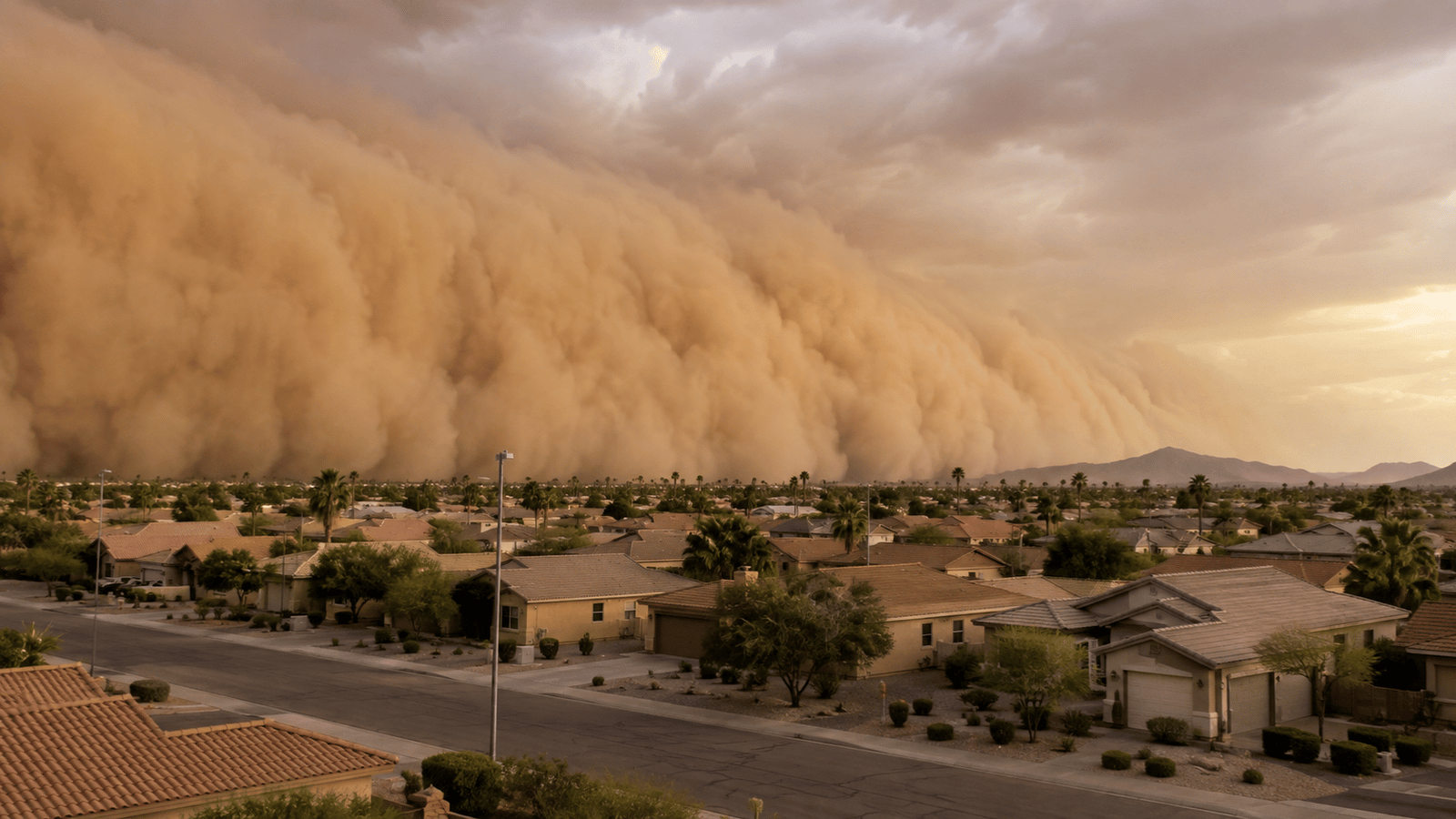
Arizona monsoon season runs from mid June through September. It brings dust storms, high wind, and flash flooding. Two of those three are covered. One is not.
Wind and dust storm damage is covered. If a haboob blows out a window and wrecks what is inside, standard personal property coverage responds.
Flash flooding is not covered. Not by any standard renters policy, anywhere. Monsoon flooding is legally a flood event, and flood coverage is a separate product entirely through the National Flood Insurance Program or a private carrier.
That distinction catches renters every single monsoon season. Water that comes through a broken window from wind is one thing. Water that rises off the ground is another.
Wildfire is covered under fire and smoke perils. Worth noting given Arizona sees significant wildfire activity most years, particularly in the northern and central parts of the state.
The Flood Gap Is The Real Arizona Problem
If you live near a wash, in a low lying area, or anywhere with a history of monsoon flooding, standard renters insurance leaves a genuine hole in your protection.
Renters flood policies exist and are usually cheap, since you are only insuring contents rather than a building. It is worth a quote if your ZIP code has flood history. Check your address on the FEMA flood map before you decide it does not apply to you.
Is Renters Insurance Required In Arizona
No, not by state law. Arizona does not mandate coverage for tenants.
Your landlord can require it though, and many do. The Arizona Residential Landlord and Tenant Act allows landlords to set insurance as a lease condition. Some property managers require 100,000 dollars in liability coverage or more.
So the practical answer is that it is optional under state law and mandatory under most leases.
Does Your City Change The Price
Somewhat, though less than people assume.
Phoenix tends to run above the state average. Chandler and some smaller markets run below it. Tucson generally sits close to the state number. The spread across Arizona cities is real but modest, often a few dozen dollars a year.
Your ZIP code matters more through crime rates and claim history than through which city name is on your mail.
Before You Buy
Pull three quotes at matched coverage levels rather than trusting any published average, including the ones in this article. Check whether your address carries flood risk, since that is the gap standard coverage will not fill. And look at your liability limit, because raising it is cheap and most renters carry less than they should.
Cost figures in this article are drawn from published industry rate surveys and represent averages across different coverage assumptions. Your actual premium will differ. This article is for general educational purposes and is not a substitute for a quote or a review of your policy documents.
Some images in this article were generated using artificial intelligence and are for illustrative purposes only.