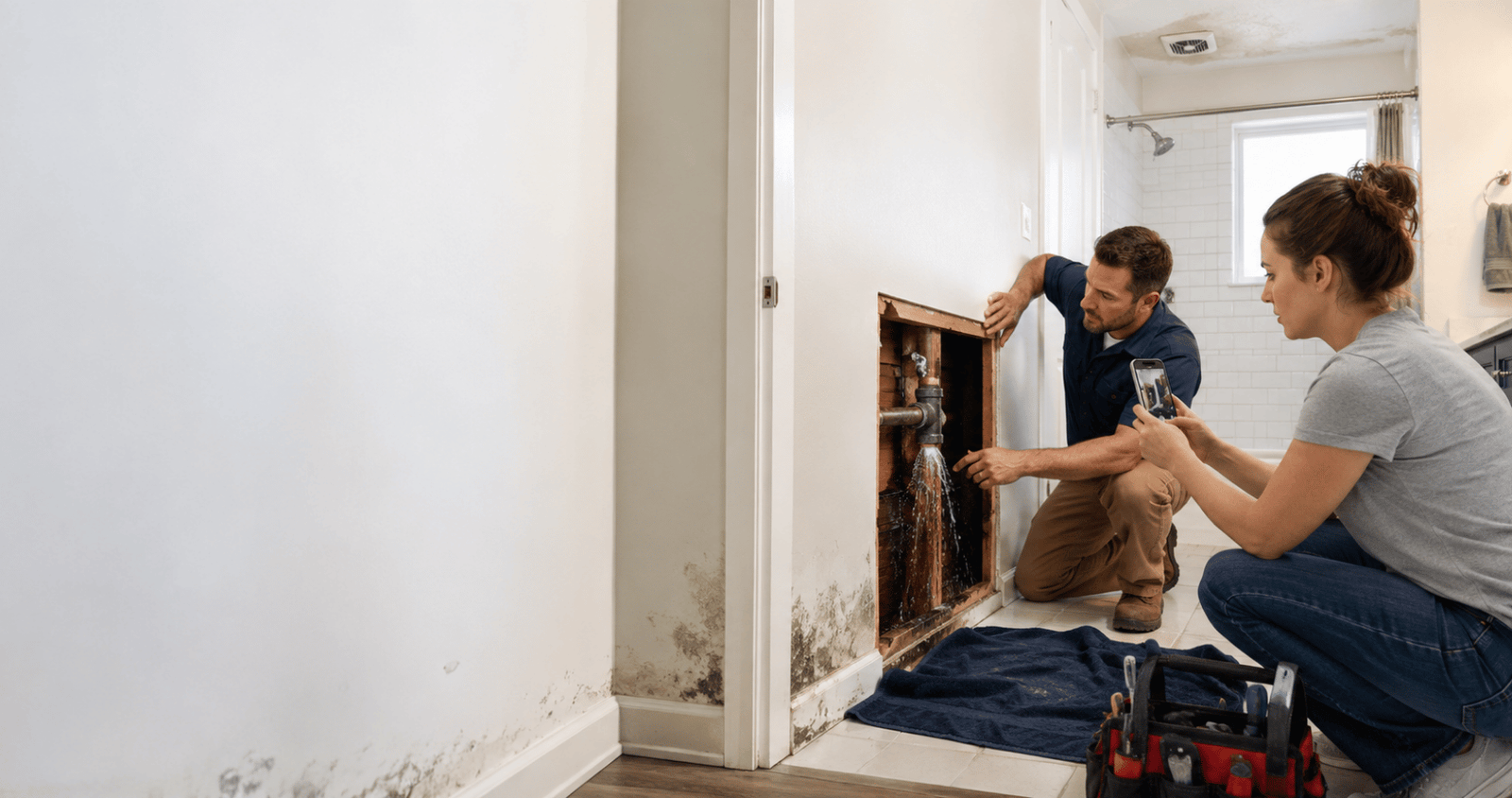
Three In Five Are Underinsured And Learn It Mid-Claim
The uncomfortable statistic first, because it frames everything else.
Three out of five American homeowners do not carry enough coverage, and most of them do not find out until they are in the middle of a claim.
That is not carelessness. It is the predictable result of how these numbers get set. A dwelling figure is chosen at closing, personal property is calculated as a percentage of it, liability defaults to a standard minimum, and nobody revisits any of it while construction costs rise and belongings accumulate.
A homeowners policy has five numbers. Here is how each one should actually be set, and which two mistakes account for most of the shortfall.
Mistake One, Insuring Market Value
The most common and most expensive error in home insurance.
Your dwelling coverage should equal what it costs to rebuild your home today, not what the house would sell for.
Market value includes land, which cannot burn down, and it reflects economic conditions rather than construction costs. Replacement cost reflects the actual expense of rebuilding from scratch with current materials and labor.
In many markets those two figures diverge sharply in both directions.
In an expensive area, a house may sell for far more than it costs to rebuild, because land carries much of the value.
In a soft market or an area with high construction costs, rebuilding can cost more than the property would sell for, which is where underinsurance concentrates.
Mistake Two, Insuring Too Much
The opposite error, less discussed and genuinely wasteful.
One worked example makes it clear. A home with a replacement cost of four hundred thousand dollars insured for one million produces premiums on six hundred thousand dollars of coverage that can never be used, because insurers pay up to the cost of rebuilding rather than up to the policy limit.
That extra coverage adds no protection. It adds cost.
Which means the goal is accuracy rather than maximization. The correct dwelling figure is the rebuild cost, and both directions away from it are mistakes.
How To Estimate The Rebuild Cost
Three approaches, in ascending order of reliability.
Square footage times local rebuild cost. Typical rebuild costs range from roughly one hundred to two hundred dollars per square foot depending on location and construction quality. A two thousand square foot home at one hundred fifty dollars produces three hundred thousand dollars.
Home value minus land value, which produces a rough figure where you know the land component.
A professional replacement cost estimate, which insurers use and which accounts for materials, finishes, and local labor rates.
Use the higher of the first two as a sanity check against whatever your policy currently carries, then ask your insurer for their calculation.
Some carriers now recalculate the full rebuilding cost annually to keep coverage accurate, which is worth asking about because construction costs have moved considerably.
Then Protect Against Cost Inflation
The endorsement that addresses the gap between a good estimate and a bad year.
Standard replacement cost coverage pays up to your dwelling limit and no further. Which fails precisely when a regional disaster drives up demand for materials and labor at the moment everyone needs to rebuild.
Two products address it.
Extended replacement cost pays a percentage above your limit, typically twenty five to fifty percent extra.
Guaranteed replacement cost pays the full cost to rebuild even where it exceeds the dwelling limit.
Both protect against construction cost inflation rather than against having underinsured a home you improved without telling anyone. Renovations still need reporting separately.
Ask which is available and what the specific percentage is, because products described as guaranteed sometimes carry a cap.
Personal Property Is A Default, Not A Calculation
The second number, and the one most likely to be wrong because nobody chose it.
Most carriers set personal property coverage at fifty to seventy percent of the dwelling limit automatically. On a four hundred thousand dollar dwelling limit, that produces two hundred thousand dollars for contents.
That figure was never based on your belongings. It is a ratio.
Which means the correct approach is to complete a home inventory, total it, and compare the result against the default. Where an inventory adds up to two hundred twenty five thousand dollars against a two hundred thousand default, you can choose a higher limit.
Two additional points on this coverage.
Choose replacement cost rather than actual cash value. Replacement cost coverage typically adds around ten percent to the premium and pays what items cost today rather than depreciated value. On a full household of contents that difference is measured in tens of thousands of dollars.
It follows your belongings. Personal property coverage extends to items anywhere, including a laptop stolen from a car, a bike taken outside a coffee shop, or luggage lost while traveling.
Sublimits Sit Underneath That Number
The gap inside the number you just set.
Most policies contain sublimits, meaning caps within a larger cap. An engagement ring worth ten thousand dollars sits under a jewelry sublimit that may be two thousand five hundred.
Jewelry, art, electronics, firearms, silverware, and collectibles all carry them, and the caps are frequently far below what people own.
The fix is scheduling, also called adding a rider. Each item is listed individually and insured for its appraised value, which removes the category cap and typically requires an appraisal or a detailed description.
Which is another reason the home inventory matters. It is the only reliable way to discover which items exceed a limit you did not know existed.
Liability Should Reflect Your Assets
The third number, and the one most people leave at the default without thinking about it.
One hundred thousand dollars per occurrence is the standard minimum offered.
Common guidance recommends three hundred thousand as a minimum with five hundred thousand to one million preferred, and the reasoning is that liability limits should reflect your net worth and exposure rather than a default figure.
The arithmetic is simple. Anything a judgment exceeds your limit by comes from your own assets, and injury claims involving medical treatment pass three hundred thousand dollars without difficulty.
Liability is also among the cheapest coverage on a homeowners policy, which makes raising it the best value change available on most policies.
Where assets are substantial, an umbrella policy adds a layer above both home and auto liability, and carriers frequently require higher underlying limits before attaching one.
Loss Of Use Is The Number Nobody Checks
The fourth figure, and the one that determines where you live during a rebuild.
Loss of use, also called additional living expenses, pays temporary costs including hotel stays, meals out, and in some cases lost rental income when your home becomes uninhabitable after a covered event.
A common limit is twenty percent of dwelling coverage. Some policies default to ten percent.
Whether that is enough depends on two things nobody checks in advance. Local rental prices and local rebuilding timelines.
Set the figure against a realistic scenario. If a total rebuild in your area takes twelve to eighteen months and comparable rental housing costs three thousand dollars a month, a limit covering four months is not adequate.
Ask your insurer about higher options, or about policies offering unlimited coverage for a defined time period rather than a dollar cap. Both exist and both are worth pricing.
Other Structures And Medical Payments
The two smaller numbers, listed for completeness.
Other structures typically defaults to ten percent of dwelling coverage and covers detached garages, sheds, fences, porches, and decks. Where you have a substantial detached structure, that percentage may be short.
Medical payments to others usually ranges from one thousand to five thousand dollars per person and covers small no fault injuries to guests. Its purpose is closing minor incidents before they become liability claims, and raising it costs very little.
What The Coverage Actually Costs
Context for the decisions above, since higher limits do carry a price.
Average annual costs rise predictably with dwelling coverage. Roughly one thousand five hundred fifty five dollars at two hundred thousand of coverage, two thousand one hundred ten at three hundred thousand, two thousand six hundred fifty five at four hundred thousand, and three thousand two hundred ten at five hundred thousand.
Home age matters considerably. A home built in 2024 averaged around one thousand two hundred twenty dollars against two thousand one hundred ten for homes built in 1955 and 1984 at identical coverage limits, because older homes lack modern safety features and cost more to repair.
Location dominates everything. State averages range enormously, with the most expensive states running well above six thousand dollars annually.
Which means the figures above are benchmarks rather than predictions, and your own quote depends on location, home size, age, and the limits you select.
Supplemental Policies Sit Outside All Of This
Four coverages that no dwelling limit addresses.
Flood, excluded from every standard policy and requiring a separate policy.
Earthquake, likewise excluded and available separately or by endorsement.
Windstorm, which in some coastal states is separated out and sold independently.
Scheduled personal property, for items above sublimits.
Which of these you need depends on location and lifestyle rather than on your dwelling limit, and none of them is included by raising it.
Review It Every Year
The habit that keeps all five numbers accurate.
Three things drift and none announce themselves.
Construction costs, which have risen faster than general inflation and which set your dwelling figure.
Your home, through renovations and additions that raise the rebuild cost and that carriers do not know about unless you tell them.
Your contents, which accumulate faster than anyone estimates.
Automatic inflation adjustments help and frequently lag actual construction cost increases.
Ten minutes at renewal, comparing your dwelling limit against a current rebuild estimate and your personal property limit against your inventory total, is what prevents the mid claim discovery described at the top of this article.
The Fifteen Minute Review
Find your five numbers on the declarations page. Dwelling, other structures, personal property, liability, and loss of use.
Compare the dwelling figure against a current rebuild estimate, using square footage times local cost per square foot as a rough check.
Compare personal property against a home inventory total rather than accepting the default percentage.
Confirm both dwelling and contents settle at replacement cost.
Raise liability to at least three hundred thousand, and ask what five hundred thousand costs.
Check loss of use against a realistic year of temporary housing in your area.
Three in five homeowners are underinsured, and almost none of them chose to be. The numbers were set once, by ratio, and then left alone while the cost of everything they protect moved.
This article is for general educational purposes and is not insurance or financial advice. Coverage percentages, endorsement availability, rebuild costs, and premiums vary significantly by insurer, by state, and by property. Confirm your own figures with your carrier.
Some images in this article were generated using artificial intelligence and are for illustrative purposes only.