The Deductible Is A Percentage, Not A Number
Every other deductible you carry is a flat figure. One thousand dollars on the home, five hundred on the car.
Earthquake coverage does not work that way, and the difference is the entire reason nine in ten homeowners in the highest risk state go without it.
Deductibles are a percentage of your dwelling coverage limit, typically ranging from five to twenty five percent, with fifteen percent as the standard.
Run that on real numbers.
A four hundred thousand dollar home at fifteen percent means the first sixty thousand dollars is yours.
An eight hundred thousand dollar home at fifteen percent means one hundred twenty thousand.
A one million dollar home, which is unremarkable in parts of California, means one hundred fifty thousand dollars out of pocket before the coverage pays anything.
That is not a flaw in the product. It is the design, and understanding why changes how you evaluate it.
It Was Built To Survive, Not To Be Cheap
The history explains the economics.
After a major quake left private insurers unwilling to write homeowners coverage at all, the California Legislature created a publicly managed, privately funded entity in 1996 to carry the earthquake risk so ordinary home insurance could continue being sold.
That entity was designed to survive a catastrophic event rather than to be affordable.
Which is why the deductibles are high, the premiums are significant, and the coverage is narrower than people expect.
It is not a maintenance product and it was never meant to pay for cracked drywall. It exists to prevent a total loss from ending you financially, and every design choice follows from that.
What It Costs
Wide ranges, because construction type and location dominate.
Statewide averages sit around one thousand two hundred fifty to two thousand seven hundred fifty dollars a year, with a broader range across the state of roughly seven hundred to five thousand or more.
San Francisco runs two thousand to five thousand dollars annually, reflecting fault proximity.
Los Angeles typically runs eight hundred to three thousand or more for a single family home.
The Central Valley, including Modesto, Stockton, and Fresno, runs roughly eight hundred to two thousand.
Soft story apartment buildings and older concrete construction cost significantly more.
One observation worth sitting with. In the Bay Area, earthquake premiums can approach or equal what a homeowner already pays for standard coverage, which means roughly doubling annual insurance spend for one additional peril.
That figure surprises almost everyone, and it is not a reason not to buy. It is a number to see clearly before deciding.
The Coverage Is Narrower Than Expected
Four limitations that catch homeowners who assumed a policy covered everything on the property.
Base personal property coverage is small. One standard plan includes five thousand dollars of personal property coverage, with options up to two hundred thousand.
Base additional living expenses are also small. Standard coverage on one base plan is one thousand five hundred dollars, with options up to one hundred thousand.
Landscaping, pools, fences, masonry, and separate buildings are not covered on most earthquake policies.
Exterior masonry veneer is excluded unless specifically added.
Which means a base policy is genuinely a catastrophic dwelling product, and the personal property and living expense figures need raising deliberately if you want them to matter.
Two Features Worth Knowing
Both are unusual and both improve the value considerably.
Loss of use carries no deductible. That coverage pays the additional cost of living elsewhere when you cannot safely occupy your home, or when a civil authority prevents entry, and it is not subject to the percentage deductible.
That matters more than it sounds. The most likely earthquake outcome for many households is not a destroyed house. It is a house nobody is allowed to enter for weeks while inspectors work through a neighborhood, with a mortgage still due and rent to pay somewhere else.
Building code upgrade coverage is included. One standard policy includes ten thousand dollars of it, with higher limits purchasable.
For an older home, that is frequently the difference between a rebuild you can fund and one you cannot, because rebuilding to current seismic code costs considerably more than replacing what was there.
You Do Not Pay The Deductible Up Front
A mechanical detail that reduces some of the anxiety around the number.
You do not have to pay the deductible before receiving a claim check. It is simply the amount deducted from your total covered losses.
Which means the one hundred twenty thousand dollar figure is not cash you need to produce. It is the portion of a loss the policy will not reimburse.
That distinction matters for how you think about the product. You are not being asked to fund a deductible. You are being told that damage below a threshold is entirely yours, and damage above it is shared.
Retrofitting Cuts The Premium
The one lever homeowners control, and it works in two directions.
Seismic retrofits can qualify for premium discounts of five to twenty five percent.
They also determine eligibility. Homes with dwelling limits above one million dollars, or built before 1980 on a raised foundation without a verified retrofit, are only eligible for the higher deductible tiers of fifteen, twenty, or twenty five percent.
Which means an unretrofitted older home cannot buy the lower deductible options at any price.
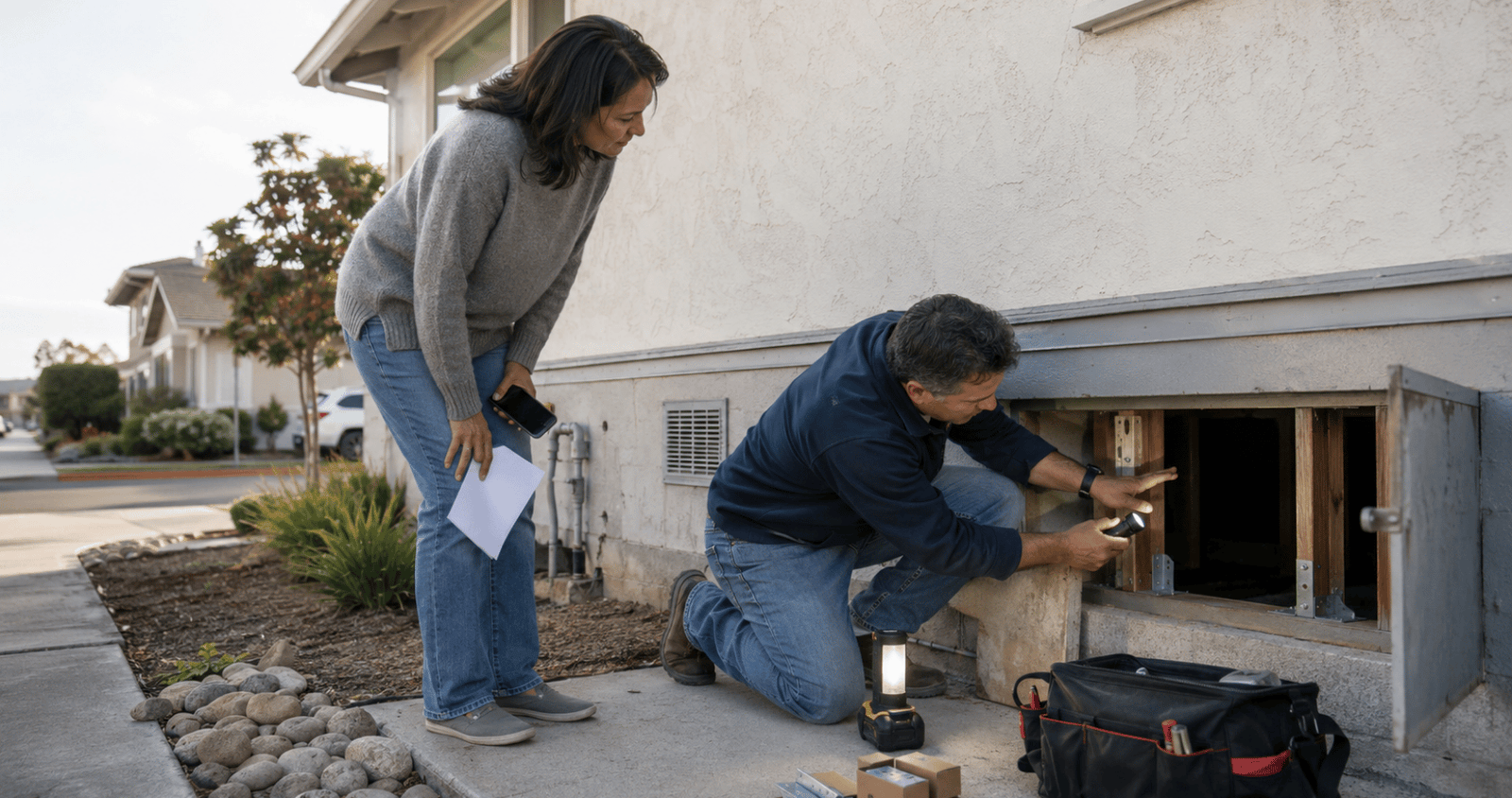
For a pre 1980 house on a raised foundation with cripple walls, retrofitting does three things at once. It lowers the premium, it opens access to better deductible tiers, and it materially reduces the chance the house comes off its foundation.
That is a rare case where the mitigation work is worth doing on its own merits and the insurance benefit is a bonus.
The Deductible Tier Decision
The most consequential choice on the policy, and it runs opposite to instinct.
Lower deductibles are available at higher premiums, down to five percent for eligible homes.
The temptation is to buy the lowest available deductible. The counterargument is that a lower deductible raises the premium substantially while still leaving a figure most households could not absorb.
On a six hundred thousand dollar dwelling limit, moving from fifteen to ten percent changes your exposure from ninety thousand to sixty thousand dollars. Better, and still not a number most people have available.
Which suggests treating this as catastrophic coverage and pricing the tiers rather than assuming lower is better. For many households, a higher deductible with meaningfully raised personal property and loss of use limits produces more usable protection than a lower deductible with base limits.
Ask for quotes at two or three tiers and compare the whole package rather than the deductible alone.
Private Alternatives Exist
Worth knowing, because the state backed pool is not the only route.
Private non pooled earthquake policies are increasingly available and sometimes offer lower deductibles or broader coverage.
Several private carriers write this coverage, and their terms differ from the standard pool product in ways that can suit specific properties better.
Two things to do. Ask your existing homeowners carrier whether they participate in the state pool, and separately get at least one private quote to compare deductible structures and coverage breadth.
The comparison is not only about price. Deductible options, personal property limits, and what is included in the base form all vary.
Condo Owners Have A Different Problem
A situation worth separating out.
Most association master policies exclude earthquake, which leaves owners exposed to a special assessment after a damaging quake.
Which means the risk for a condo owner is not primarily damage to their own unit. It is a bill from the association for their share of repairing a building the master policy will not pay to fix.
Loss assessment coverage on a condo earthquake policy is what responds to that.
Two steps for condo owners. Confirm whether the master policy carries earthquake coverage, which it usually does not. And set loss assessment coverage on your own earthquake policy at a level reflecting your share of a serious building loss rather than at a default.
Renters Should Look At This Too
The version of the product that is genuinely cheap.
Renters have no dwelling to insure, which removes the largest component of the premium and the percentage deductible attached to it.
One figure illustrates the difference. A recent rate increase applied across the pool averaged around seventy dollars annually for homeowners and less than ten dollars for renters.
Which tells you the underlying premiums differ by roughly the same order.
For a renter, earthquake coverage protects belongings and, importantly, funds temporary housing when a building is red tagged. That second part is the realistic scenario, and it is inexpensive.
When It Genuinely Makes Sense
Four situations where the arithmetic supports buying.
You could not absorb a total loss. If losing the house would end you financially, catastrophic coverage is doing exactly what it was designed for.
You have substantial equity and a mortgage. A destroyed house still carries a loan, and the two together are the scenario that produces bankruptcy rather than inconvenience.
Your home is older, unretrofitted, or on a raised foundation, which raises both the likelihood and severity of damage.
You live near a major fault, where premiums are highest precisely because the probability is highest.
When Skipping It Is Defensible
The honest counterweight, because this is a genuinely personal financial decision.
Your rebuild cost is within your self insurance capacity. Where you could fund a full rebuild from savings, the deductible structure makes the coverage a poor value.
Your dwelling limit is low relative to your assets, which produces a small deductible in absolute terms and a correspondingly small transfer of risk.
Your home is newer and built to current seismic codes, which reduces both damage probability and severity.
Nine in ten homeowners in the highest risk state go without this coverage. Sometimes that is a reasoned choice and often it is inertia. The difference between the two is whether you ran the numbers.
How To Actually Decide
A framework rather than a recommendation.
Find your dwelling limit and multiply it by fifteen percent. That is your likely deductible.
Ask whether you could absorb that figure, and separately whether you could absorb a full rebuild.
Get a premium quote at two or three deductible tiers, using the pool's calculator or an agent.
Compare the annual premium against the deductible, and consider how many years of premium it would take to reach it.
Factor in loss of use, which carries no deductible and addresses the most likely scenario.
Price a retrofit if your home is pre 1980 on a raised foundation, since it affects premium, eligibility, and the actual risk.
Then decide. The answer differs legitimately between two neighbors with different savings, different equity, and different houses.
The One Calculation That Matters
Multiply your dwelling limit by fifteen percent and look at the number.
If you could write that figure and keep going, this coverage is optional and the deductible structure makes it a weak value.
If you could not, then ask the harder question. Could you absorb losing the house entirely, while still owing the mortgage on it.
Earthquake insurance is not a product that makes a bad day into a manageable one. It is a product that prevents a catastrophic day from being permanent, and it should be evaluated on that basis rather than on whether it feels expensive.
This article is for general educational purposes and is not insurance or financial advice. Premiums, deductible tiers, eligibility rules, coverage terms, and private market availability vary by state, property, and insurer and change over time. Confirm current details with a licensed agent or your state insurance department.
Some images in this article were generated using artificial intelligence and are for illustrative purposes only.