One Hundred Fifty Thousand In Coverage, Fifteen Hundred For A Ring
The gap that surprises people is not that jewelry has a limit. It is how far below the policy limit that limit sits.
You may carry one hundred fifty thousand dollars in personal property coverage and only one thousand five hundred dollars for stolen jewelry.
Which means a stolen wedding ring produces a fifteen hundred dollar settlement on a policy that would replace an entire household of furniture.
Sublimits commonly run one thousand to two thousand five hundred dollars, and the critical detail is that the cap applies to all jewelry combined rather than per item.
So a ring, a watch, and a pair of earrings share one cap that a single piece frequently exceeds on its own.
That is the problem. Here is how scheduling fixes it and the two losses it fixes that most people never think about.
Theft Is Not The Main Risk
The finding that reframes the whole decision.
Most people assume theft is the exposure. For jewelry and small valuables, the two most common sources of loss are accidental loss and mysterious disappearance.
Accidental loss means dropping a ring down a drain or leaving it at a hotel.
Mysterious disappearance means it is simply gone with no known cause.
Standard policies exclude both.
The reason is structural. Named peril policies pay only for losses caused by specific events listed in the policy, meaning fire, theft, and vandalism. Losing something is not a listed peril.
Which produces the most common bad surprise in this category. A ring that slipped off a finger or vanished during a move is not a covered loss, and most people learn that after a claim is denied rather than before.
What Scheduling Actually Changes
Four differences, and each one matters independently.
Full appraised value. A scheduled item is covered for its stated amount rather than a shared sublimit, so a seven thousand dollar ring produces a seven thousand dollar settlement.
Broader perils. Scheduled coverage typically includes accidental damage, accidental loss, and mysterious disappearance, which the base policy excludes.
Little or no deductible. Floaters commonly carry no deductible or a very low one, zero to two hundred fifty dollars, rather than the one thousand or higher on a standard policy.
Coverage away from home. Scheduled items travel with you rather than being limited to losses at the residence.
That deductible point compounds the value more than people expect. On a standard policy, a two thousand dollar loss against a one thousand dollar deductible nets one thousand. On a scheduled item with no deductible, the same loss pays in full.
What It Costs
Modest relative to the exposure, and the ratio is the whole argument.
Scheduling typically costs between one and two percent of an item's value annually, with a broader range of one to three percent depending on the item type, insurer, and location.
On a five thousand dollar item, roughly fifty to one hundred fifty dollars a year.
One worked comparison puts the case plainly. Insuring a piece for one hundred five dollars a year costs one thousand fifty dollars over a decade, and buys ten years of coverage against theft, loss, mysterious disappearance, and accidental damage with no deductible.
Which is why the economics strongly favor scheduling for anything worth more than a few thousand dollars.
The Engagement Ring Case
The single most commonly underinsured item in American households.
For many people an engagement ring is the most valuable personal item they own, and the standard sublimit of one thousand five hundred to two thousand five hundred applies to all jewelry combined.
If the ring alone is worth four thousand dollars, that sublimit leaves a shortfall before the deductible even enters the calculation.
And the standard policy will not cover the ways rings most often go missing, since accidental loss and mysterious disappearance are excluded.
A jewelry floater covers both and applies wherever you are rather than only inside your home.
For anyone who has recently become engaged or married, this is a single phone call worth making before the ring is worn daily.
Appraisals Are The Foundation
The document everything rests on, and it is inexpensive.
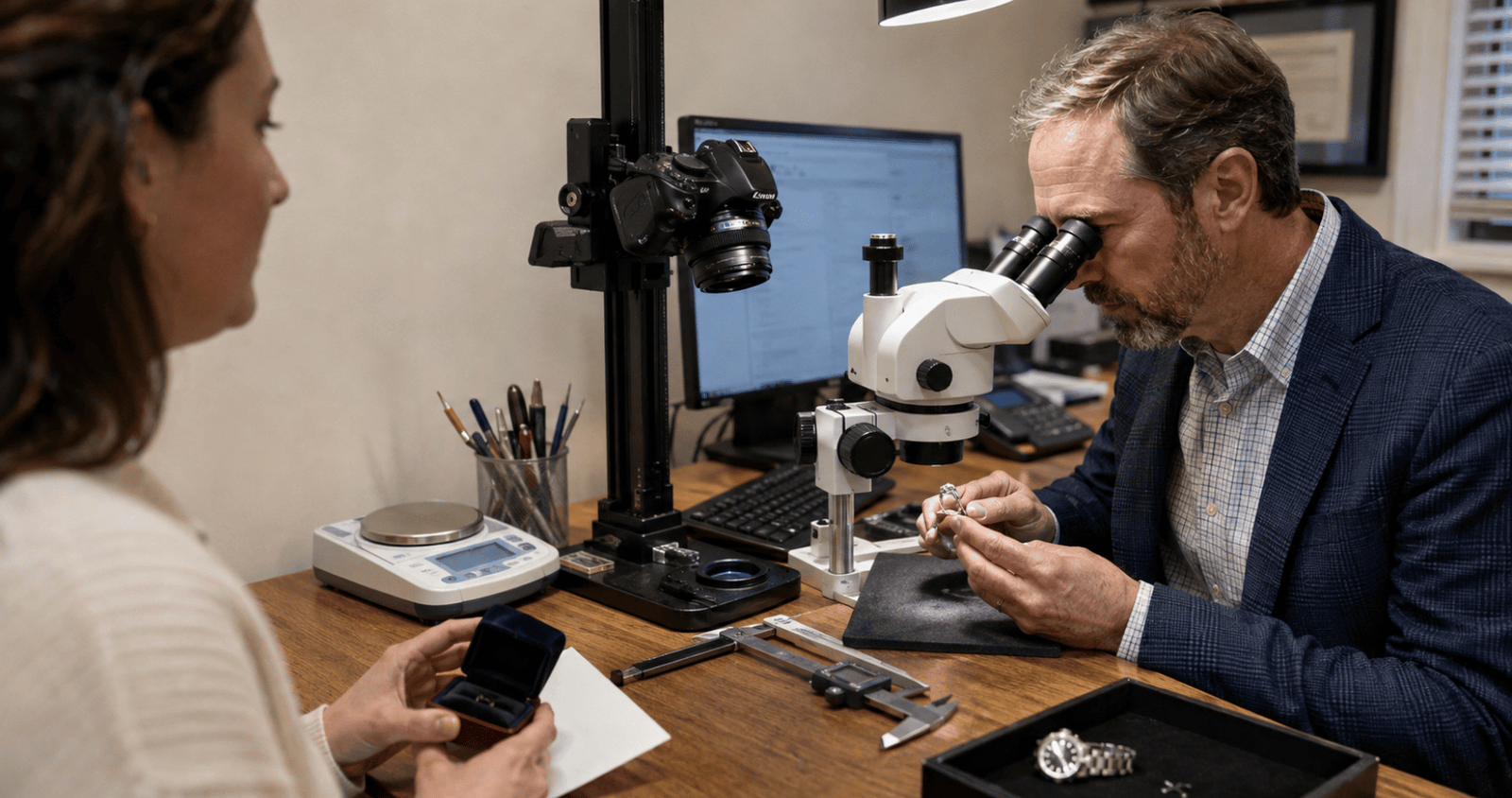
Insurers require a professional appraisal to schedule a piece, and appraisals from a certified gemologist typically run fifty to one hundred fifty dollars.
That appraisal becomes the baseline for what the insurer will pay on a claim, which makes its accuracy the difference between full recovery and a shortfall.
Three practical points.
Get anything valuable appraised now if it has not been appraised recently, particularly inherited pieces carrying decades old valuations.
Send a copy to your carrier so a record exists on file before you ever need to make a claim.
Keep the original with your records, ideally in cloud storage rather than in the house.
Insurers may also request receipts, photographs, and serial numbers to confirm value.
Update Values Every Few Years
The maintenance step that prevents a slow shortfall.
Secondary market values for watches from major brands can shift significantly, and guidance suggests reviewing coverage every twelve to eighteen months for collections.
The same logic applies to precious metals and stones, where market movements over several years can leave an appraisal well behind current replacement cost.
An agreed value locked in at an outdated figure protects you at that outdated figure, which is the same trap that catches classic car owners.
Set a reminder to revisit appraisals every two to three years, and immediately after any significant market movement in the relevant category.
The Middle Option
A structure worth knowing about for households with several moderate pieces.
Some carriers offer a blanket jewelry endorsement, meaning a higher sublimit for jewelry generally without scheduling individual pieces.
A blanket limit of ten thousand or fifteen thousand dollars provides considerably more coverage than the standard sublimit for someone with multiple pieces who prefers not to schedule each one.
The trade off is real and worth understanding.
Blanket coverage may not cover mysterious disappearance, which is the exposure scheduling exists to address.
It typically carries the standard policy deductible rather than a low or zero one.
Which makes the fully scheduled floater the better protection for individual high value pieces, and the blanket endorsement a reasonable compromise for a collection of moderate items where no single piece dominates.
Ask about both and price them against each other.
When To Use A Standalone Policy
The third route, suited to particularly valuable items.
A standalone jewelry policy is built specifically for rings, watches, bracelets, and heirlooms, insuring each item at full appraised value, often with no deductible, and covering more than a homeowners policy does.
Guidance suggests a standalone policy is the better fit for especially valuable pieces or where you want broader protection than a homeowners endorsement offers, while an endorsement suits moderately valuable pieces where simple coverage through an existing policy is preferable.
For a watch collection specifically, the recommendation is a dedicated scheduled policy or a specialist plan rather than relying on a standard homeowners policy, since sublimits of one thousand to two thousand five hundred apply per item and are far below investment grade values.
Two things a specialist policy typically adds. Agreed value coverage across a collection, and worldwide protection including transit.
More Than Jewelry Qualifies
The categories carrying their own sublimits, since jewelry gets the attention and is not alone.
A scheduled personal property endorsement, sometimes called a personal articles floater, is designed for possessions exceeding the coverage in a regular policy, including furs, stamps, coins, guns, computers, antiques, silverware, and fine arts.
Fine art and collectibles are frequently capped at a few hundred to a couple thousand dollars in total, and standard policies pay depreciated value rather than agreed value on them.
Valuables traveling, on display, or in transit also receive limited or no protection under a base policy, which affects anyone who lends pieces to exhibitions or carries equipment.
Which means the audit is broader than a jewelry box. Look at every category in that list before deciding what to schedule.
Storage Can Lower The Premium
A detail specific to high value items.
Storing valuables in a certified safe or a bank vault can reduce premiums and strengthen a claim.
The reasoning is straightforward. Reduced theft exposure lowers the risk, and documented secure storage supports the claim narrative if a loss occurs elsewhere.
For pieces worn occasionally rather than daily, a safe is frequently worth more than its cost through the premium reduction alone.
Ask your insurer whether they credit it and what specification they require, since ratings differ.
Documentation Beyond The Appraisal
What supports a claim when one happens.
Photographs of each piece, from multiple angles and in good light.
Serial and model numbers where they exist, particularly for watches.
Original box and papers, which for luxury watches directly support the appraisal and claims process. Purchasing from a trusted dealer who provides full documentation matters for this reason.
Purchase receipts, stored with the appraisal.
Identifying marks, including repairs, engravings, and distinguishing features.
A lack of ownership and value documentation can make a claim harder or lead to denial, which makes this the cheapest protection available for items you already own.
How To Audit Your Own Coverage
Five steps, and the whole exercise takes an afternoon.
List each significant piece, with purchase price and any serial or model numbers, backed by photographs.
Get anything valuable appraised that has not been appraised recently.
Pull your declarations page and find the special limit of liability for jewelry theft, then look for the other category sublimits alongside it.
Compare your list against those caps, category by category rather than in total.
Schedule anything above a cap, and price a blanket endorsement for collections of moderate items.
The declarations page step is the one people skip. The sublimits are printed there and almost nobody reads them until a claim.
The Afternoon That Closes The Gap
Find the jewelry sublimit on your declarations page, then the other category limits beside it.
Total what you actually own in each of those categories.
Get current appraisals for anything meaningful, particularly inherited pieces.
Schedule what exceeds a cap, and ask specifically whether mysterious disappearance is covered and what deductible applies.
Send copies of everything to your carrier so a record exists before a claim.
The most expensive things most households own are frequently the least insured, not because anyone chose it but because a number printed on page three of a policy was set decades ago and nobody has read it since.
This article is for general educational purposes and is not insurance advice. Sublimits, scheduling costs, covered perils, deductibles, and appraisal requirements vary by insurer and by state. Read your declarations page and confirm details with your agent.
Some images in this article were generated using artificial intelligence and are for illustrative purposes only.