Most Of Utah Lives Within Fifteen Miles Of The Same Fault
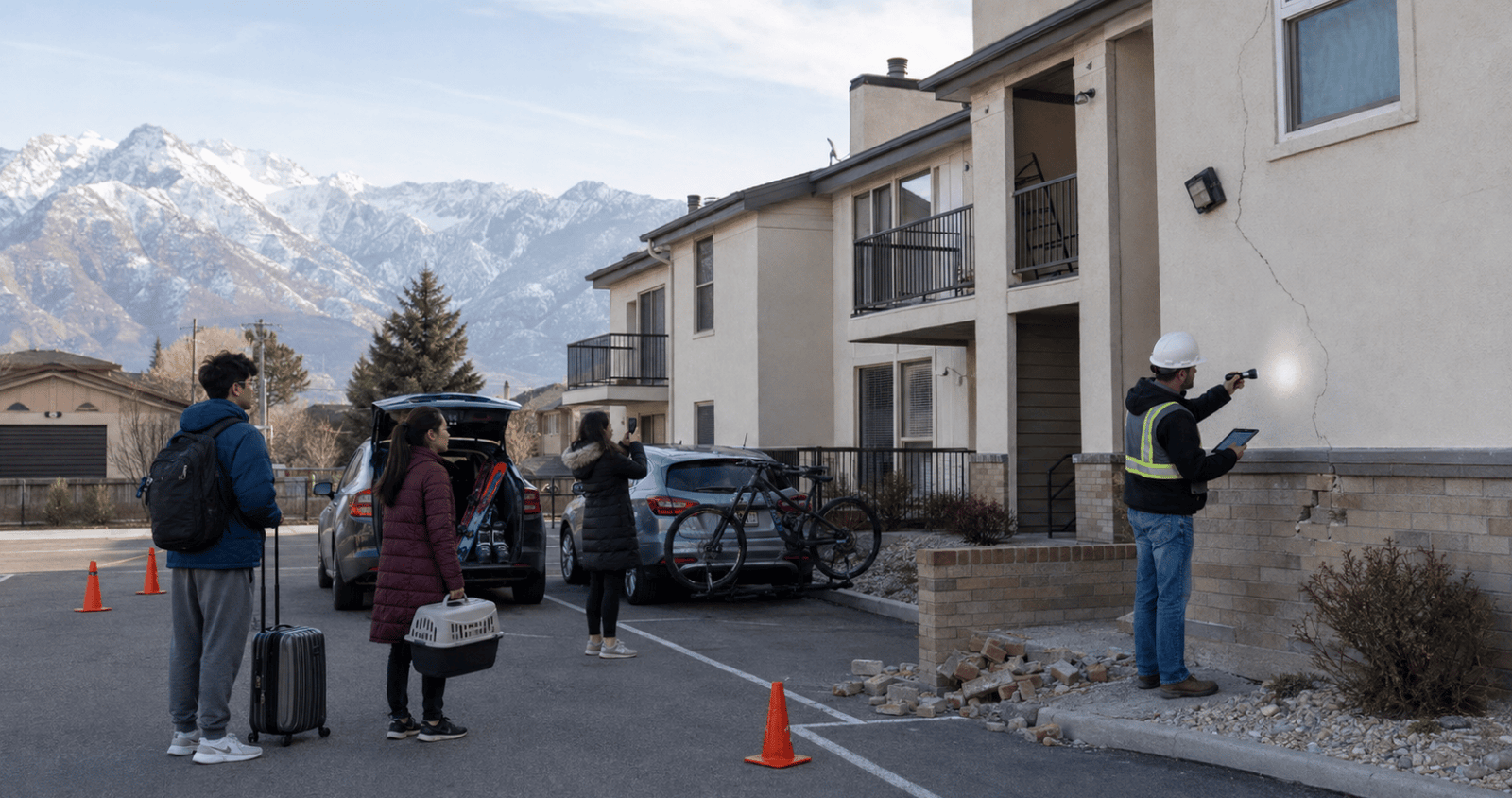
The Wasatch Fault is a two hundred forty mile system running along the western base of the Wasatch Mountains, directly beneath Brigham City, Ogden, Salt Lake City, Provo, and south into Juab County.
More than eighty percent of Utah's residents live within fifteen miles of it.
No other state concentrates that much of its population on top of a single hazard. And the coverage that addresses it costs fifty to one hundred dollars a year for a renter, which almost nobody buys.
That is the central fact of renting in Utah, and everything else on this page is secondary to it.
The Numbers Behind The Fault
Worth being specific rather than vague.
The Utah Insurance Department puts the probability of at least one magnitude six point seven five or greater earthquake hitting the Wasatch Front at forty three percent within the next fifty years.
Roughly five hundred earthquakes occur in the Wasatch Front region each year, most of them too small to notice.
USGS hazard assessments consistently rank this corridor among the highest risk earthquake zones in the western United States.
And the 2020 Magna earthquake, a magnitude five point seven event, caused widespread damage across the Salt Lake Valley. That one is recent enough that a lot of current renters felt it.
Standard Policies Exclude All Of It
Every standard renters policy in Utah excludes earthquake damage. Every carrier, no exceptions, and the same applies to homeowners and landlord policies.
If a quake cracks your building and destroys what is inside your apartment, your standard policy pays nothing for the earthquake damage.
The Cheapest Gap Close In This Whole Subject
Here is why this matters more in Utah than anywhere.
An earthquake endorsement for a Utah renter typically costs fifty to one hundred dollars a year.
Not a month. A year. For coverage on the risk that eighty percent of the state's population lives directly above.
You have no building to insure, which is the whole reason it is cheap. A renter's earthquake coverage is contents plus loss of use.
For anyone renting along the Wasatch Front corridor, meaning Salt Lake, Davis, Utah, Weber, and Cache Counties, this is worth serious consideration at that price.
How The Deductible Works
One thing to understand before you evaluate it.
Earthquake deductibles are a percentage of your coverage rather than a flat dollar amount. That makes the coverage poor for small claims.
A fallen bookshelf will not clear it. That is by design.
What it genuinely protects against is a building declared unsafe to occupy while you need housing for months, in a market with very little slack. Judge it on displacement, not on breakage.
Ask your insurer two questions. What the endorsement costs at your address, and whether loss of use carries a deductible on their form.
What A Standard Utah Policy Costs
Published figures cluster tightly.
Most analyses put Utah renters insurance somewhere between twelve and twenty two dollars a month depending on coverage level, which works out to roughly one hundred fifty to two hundred sixty five dollars a year.
Utah runs at or below the national average, which reflects low crime, newer housing stock in growth areas, and the fact that the biggest hazard is excluded rather than priced in.
There is pressure on that though. Utah recorded the largest percentage increase in home insurance costs of anywhere in the country between 2021 and 2024, averaging a fifty nine percent jump. Wildfire exposure is the main driver.
Renters insurance has not moved the same way, but the direction is worth noting. Shop at renewal rather than letting a policy roll.
Wildfire Is Covered, And Smoke Counts
The peril that works in your favor.
Fire and smoke damage is a named peril, so wildfire damage to your belongings is covered, including smoke damage when flames never reach your building.
That second part is not theoretical here. One documented scenario involved a nearby wildfire pushing heavy smoke into a renter's apartment through open windows, causing roughly four thousand dollars in smoke damage.
Wildfire season in Utah now extends into fall, and foothill communities, Park City, and anywhere in the wildland urban interface carry real exposure.
Two practical notes. If smoke damages your belongings, document the odor specifically in writing, not just visible residue, because smoke claims need more supporting detail than fire claims. And if you are evacuated under a mandatory order, call your insurer even if your apartment is untouched, since loss of use can apply when a civil authority prevents access.
Water Comes From Snow Here
Utah's flood risk works differently than most states and it is entirely excluded.
Flash floods affect Salt Lake County and Washington County, and heavy winter snowpack drives spring flooding when it melts fast.
Both are flood, both sit outside every standard renters policy, and both require a separate policy through the National Flood Insurance Program or a private carrier.
Renter flood policies cover contents only, which makes them substantially cheaper than the homeowner version. Check your address before assuming a desert state means no water risk.
The Gear Problem Is Uniquely Utah
This section matters more here than in any other state, and almost no article covers it.
Utah renters own disproportionate amounts of expensive outdoor equipment. Skis and snowboards, mountain bikes, climbing racks, camping systems, camera gear for all of it.
Two things happen to that equipment inside a standard policy.
Per item sublimits. Standard policies cover recreation equipment against named perils but often apply category or per item caps. A full ski setup, a carbon mountain bike, and a climbing rack can exceed those caps well before you approach your overall personal property limit.
Off premises limits. Gear stolen from a car, a garage, or a trailhead parking lot is covered, but at off premises limits, typically around ten percent of your personal property coverage.
Read that again. Thirty thousand dollars of personal property coverage gives you roughly three thousand for anything taken away from your apartment. A bike rack full of bikes at a trailhead can exceed that in one theft.
The fix is scheduling. Listing individual high value gear on a personal property endorsement removes the caps and usually adds coverage for accidental loss rather than theft alone.
If your gear closet is worth more than your furniture, and in Utah it often is, this is the conversation to have with your insurer.
Winter Breaks Pipes
Standard cold climate exposure applies.
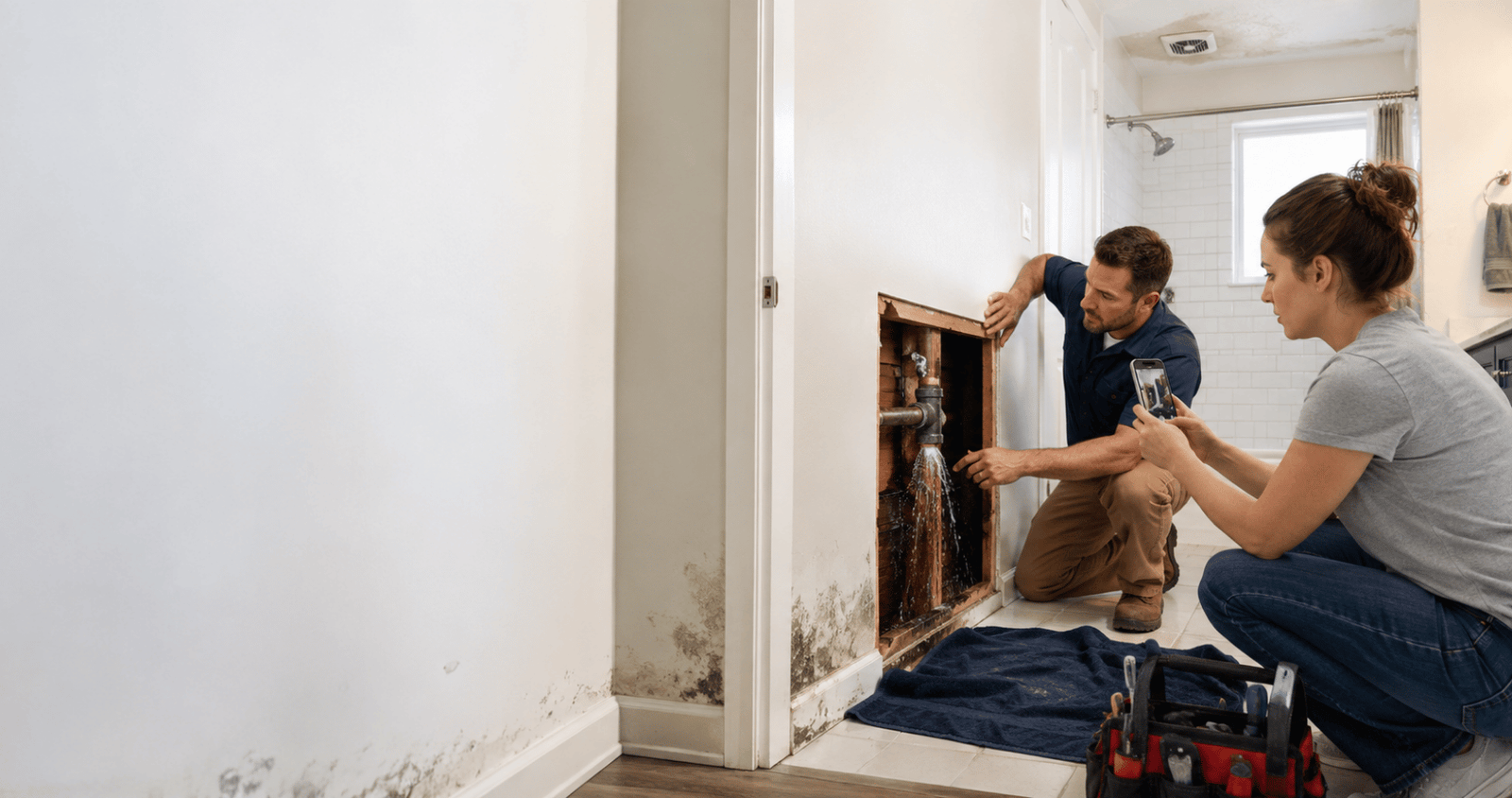
A pipe that freezes and bursts suddenly is a covered event for your belongings. Gradual leaks from a pipe that has been failing for months are not.
Report anything dripping in writing the day you notice it. That record is what separates a covered sudden loss from a denied gradual one.
Student Housing Around Three Campuses
Utah has large student rental populations around the University of Utah, Utah State, and BYU.
Two reminders that apply specifically.
A roommate's belongings are not covered by your policy unless they are named on it. Each person needs their own, and most insurers will not add unrelated roommates anyway.
And if you are a dependent full time student, a parent's homeowners policy may extend coverage while you live away at school, usually at around ten percent of their personal property limit and often with conditions around age, residency, and how recently you occupied the unit. Off campus apartments on your own lease frequently fall outside that extension.
What The Law Says
Utah does not require renters insurance. Landlord tenant relationships are governed by the Utah Fit Premises Act under state code.
Landlords may require coverage as a lease condition, and the practice is common across Salt Lake City, Provo, Ogden, and the growth corridors. Some Utah landlords require three hundred thousand dollars in liability rather than the more typical one hundred thousand, partly because higher tenant liability limits reduce their own premiums.
Read your lease clause before shopping, then buy to match it.
Setting Your Limits
Salt Lake City's cost of living supports personal property coverage in the twenty five thousand to forty thousand dollar range for most renters, which is above the national default.
Do the count yourself. Furniture, mattress, electronics, kitchen equipment, all your clothing, and the gear closet, which is the category Utah renters most consistently forget to include.
Replacement cost over actual cash value is the right call for anyone with recent electronics or gear, since depreciation on both is steep.
A two hundred fifty to five hundred dollar deductible is typical here. Pick one you could actually cover in an emergency.
Growth Means A Lot Of First Policies
Utah has some of the fastest growing communities in the country, and places like Lehi, Eagle Mountain, and St. George have expanded rapidly.
Rapid growth means a large share of renters here are buying a first policy rather than renewing one, which produces two predictable mistakes.
Accepting the default coverage amount. The number a quoting tool offers is a starting point, not a recommendation. Fifteen or twenty thousand dollars is common as a default and often low for a furnished apartment plus a gear closet.
Assuming the landlord's insurance does something for you. It covers their building and their financial interest. It does not cover a single item of your property, your liability, or a hotel room if the unit becomes unlivable.
If this is your first policy, spend ten minutes on an inventory before you pick a number. It is the only part of this process that genuinely requires your input, and everything downstream depends on getting it roughly right.
Three Calls Worth Making
Price the earthquake endorsement. At fifty to one hundred dollars a year, on a fault that eighty percent of the state lives beside, this is the best value decision available to a Utah renter and the one almost nobody makes.
Ask about scheduling your gear. If your skis, bike, and climbing rack together are worth more than a few thousand dollars, the per item caps and off premises limits will not cover them as they stand.
Check your flood exposure if you are anywhere near a canyon mouth, a wash, or low ground below a snowpack drainage.
Utah prices renters insurance affordably in part because its defining hazard sits outside the policy. Closing that gap costs less here than almost anything else on this list.
This article is for general educational purposes and is not insurance advice. Coverage terms, endorsement availability, sublimits, and pricing vary by insurer and can change. Confirm details with your carrier, your lease, or the Utah Insurance Department.
Some images in this article were generated using artificial intelligence and are for illustrative purposes only.