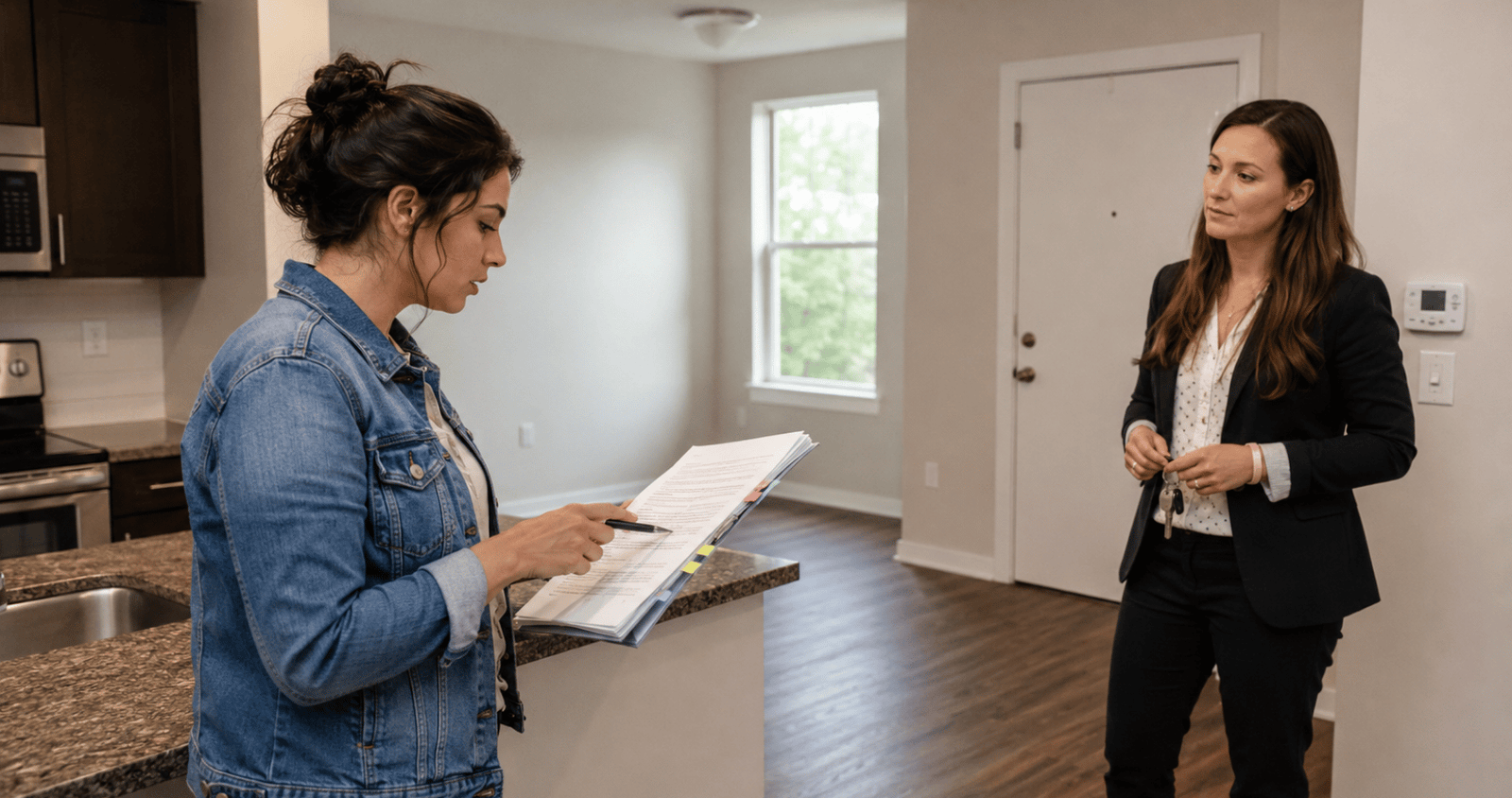
A Clause In Your Lease Is Not Automatically A Rule
Leases are contracts, and contracts can contain terms that do not survive contact with the law.
A tenant organization director in New York puts the reason plainly. Leases are full of illegal clauses because the landlord assumes the tenant does not know otherwise.
That is not an accusation against every landlord. Many leases are template documents passed between properties for years, accumulating clauses nobody has reviewed against current law.
But the practical effect is the same. Provisions appear that a court would strike, and they work anyway, because tenants read them as rules and behave accordingly.
Here are the ones that show up most often, what the law generally says, and what to do about them.
An Illegal Clause Still Causes Damage
One thing to understand before the list.
An unenforceable clause does not enforce itself. But its presence still creates confusion and risk during a dispute.
If your lease says you accepted the unit as is, and you later complain about a defect, you will spend the argument explaining why that clause does not apply rather than discussing the defect.
Which means the goal is not just knowing a clause is invalid. It is getting it struck before you sign, or documenting your position early if you already have.
The Habitability Waiver
The most common and the most consequential.
Every residential tenant in the United States is entitled to an implied warranty of habitability, meaning the landlord's obligation to keep the property fit to live in. That exists under state law in every jurisdiction regardless of what a lease says.
The language to watch for is as is acceptance. Tenant accepts the premises in their current condition, as is, without representations or warranties by Landlord.
Related versions include statements that the landlord has made no representations regarding the condition of the premises, or that the tenant has independently inspected the property and found it satisfactory.
Attempts to waive habitability are generally unenforceable and courts routinely strike them. They still make it harder to demand pre occupancy repairs and harder to raise a habitability complaint afterward.
If you see one, ask for it to be removed. If the landlord declines, document the unit's condition thoroughly at move in and email the photographs to them, which accomplishes the same thing from your side.
Waivers Of Your Right To Sue
Several related clauses appear in this family.
Blanket liability waivers, exempting the landlord from liability for injuries caused by their own negligence. New York state guidance lists this among provisions that are not allowed, and similar rules apply widely.
Jury trial waivers, which New York guidance also lists as impermissible in this context, and which California courts have rejected for serious housing related claims.
Broad waivers of the right to sue, which generally violate public policy, since access to the courts is not something a residential tenant can contract away.
Mandatory arbitration clauses, which face particular scrutiny where they would prevent a tenant from pursuing habitability or personal injury claims, and which may be found unconscionable in that context.
These matter more than they look. A clause purporting to release a landlord from liability for a stairwell they failed to repair is exactly the clause that becomes relevant after someone is hurt.
Entry At Any Time
A frequent one and easy to spot.
Most states require twenty four to forty eight hours notice before a landlord may enter, and limit entry to specific purposes such as repairs, inspections, or showing the unit, with an exception for genuine emergencies.
A lease saying the landlord may enter at any time, or without notice, or at the landlord's discretion, conflicts with those rules in most places.
This one is worth raising specifically because it affects daily life rather than a hypothetical dispute. Ask for the clause to reflect your state's notice requirement.
Deposit Clauses That Do Not Work
Two versions appear regularly.
Non refundable deposits. A security deposit is refundable by definition, less lawful deductions. A lease declaring the deposit automatically non refundable may be unlawful in your state. Some states prohibit non refundable deposits entirely, while others permit clearly labeled non refundable fees for specific purposes provided they are separated from the refundable deposit.
Excessive amounts. Many states cap deposits at one to two months' rent, sometimes more for furnished units. A demand exceeding the cap is not enforceable simply because it appears in a contract.
Related clauses purporting to waive deposit protections, including return deadlines and itemization requirements, are declared void in a number of states.
Clauses That Punish You For Speaking Up
This category is the most concerning, and one part of it involves a federal law.
Penalties for calling police, fire, or health inspectors. Any clause punishing a tenant for contacting emergency services or code enforcement is a serious red flag and may violate public safety laws. Federal protections also bar clauses penalizing calls for police assistance in domestic violence situations.
Penalties for organizing with other tenants, which may constitute unlawful retaliation.
Bans on honest reviews. Clauses that punish tenants for posting truthful reviews may be unlawful under the federal Consumer Review Fairness Act, which broadly prohibits contract terms restricting honest consumer reviews.
That last one surprises people. A lease clause forbidding negative online reviews is not merely unpleasant, it may be unlawful on its face.
Blanket Guest Bans
Landlords can set reasonable rules about long term guests and occupancy.
An outright ban on visitors is a different thing, and state laws typically protect your right to have friends or family visit for a reasonable period.
Look for the distinction between a rule about how long a guest may stay before becoming an occupant, which is normal, and language forbidding guests generally, which usually is not.
Shifting All Maintenance To You
Landlords are generally responsible for structural and major repairs, along with essential systems including heating, plumbing, and electricity.
A lease shifting all maintenance obligations to the tenant, or renting the property as is with the tenant responsible for everything, is unenforceable in most jurisdictions.
Reasonable versions exist and are common. A house rental assigning lawn care and snow clearance to the tenant is ordinary. A clause making you responsible for the furnace, the roof, or the plumbing is not.
Read this clause carefully in any single family house rental, since that is where the line legitimately moves and where overreach hides most easily.
Auto Renewal Traps
A quieter problem with real financial consequences.
Automatic renewal clauses bind you to another term unless you give notice by a deadline buried in the document.
Several states, including California, New York, and Illinois, require landlords to present automatic renewal clauses conspicuously or to provide advance notice before the deadline passes. Where a landlord failed to meet those disclosure requirements, the clause may be unenforceable.
Two practical steps. Find the notice deadline when you sign and put it in your calendar immediately. And if you were never notified as your state requires, that is worth raising rather than accepting another year.
Shortcuts Around Eviction
The most serious category, and courts treat it accordingly.
Clauses allowing immediate termination without proper notice, waiving a tenant's right to contest an eviction, or creating alternative removal procedures generally cannot override statutory eviction protections and due process requirements.
Eviction is a court process in every state. A lease cannot create a private version of it, and a clause saying you agreed to leave on demand does not replace the notice and hearing the law requires.
The Insurance Clause, Read Properly
Since this connects to everything else on this site.
A lease can require you to carry renters insurance, and that requirement is enforceable. What to check within it.
The liability minimum, commonly one hundred thousand dollars, and whether your state caps what a landlord can demand. Oregon, for example, limits a required liability amount by statute.
Whether they must be listed on your policy, and in what capacity. Interested party status means they are notified of lapses. Additional insured extends your coverage to them, which is a larger ask worth questioning.
Whether you are being offered a product instead of a policy. Some leases present a small monthly charge as an alternative to insurance. Those products typically cover damage to your unit only, and not your belongings, your temporary housing, or your liability elsewhere.
That the choice of carrier is yours. A landlord can require coverage and cannot select your insurer.
What To Do Before You Sign
Four steps, all reasonable to take.
Read the whole thing, including the pages that look like boilerplate. That is where these clauses live.
Mark anything in the categories above and ask for it to be struck or amended. Landlords amend leases more often than tenants expect, particularly where a clause is plainly outdated.
Get any promise in writing and into the lease. A verbal assurance that they will fix the window before you move in is worth nothing once you have signed a document saying you accepted the premises as is.
Ask a local tenant organization to look at it if something concerns you. Many will review a lease at no cost, and they know which clauses their state actually voids.
What To Do If You Already Signed
Not a lost cause.
An unenforceable clause remains unenforceable whether or not you noticed it at signing. Signing does not validate a term the law prohibits.
Document the unit's condition now, even late, and email it to your landlord. That counteracts an as is clause more effectively than arguing about the clause.
Raise a specific clause only when it becomes relevant, rather than opening a general dispute. If a landlord attempts to enforce something invalid, that is the moment to push back with advice.
Get help before acting on your own reading. Whether a specific clause is void depends on your state, and the consequences of being wrong fall on you.
The Practical Version
Read the boilerplate, because that is where the problems live.
Mark anything waiving your right to a habitable home, to sue, to a jury, or to notice before entry. Mark anything punishing you for calling authorities, organizing, or reviewing. Mark any non refundable deposit, any auto renewal deadline, and any clause making you responsible for major repairs.
Ask for those to be struck before signing. Then, whatever the lease says, photograph the unit on move in day and email the results to your landlord, because that single act does more to protect you than most of the clauses you were worried about.
This article is for general educational purposes and is not legal advice. Which lease provisions are enforceable varies significantly by state and by city, and the examples here describe common patterns rather than universal rules. Consult a local tenant organization or attorney about your specific lease.
Some images in this article were generated using artificial intelligence and are for illustrative purposes only.