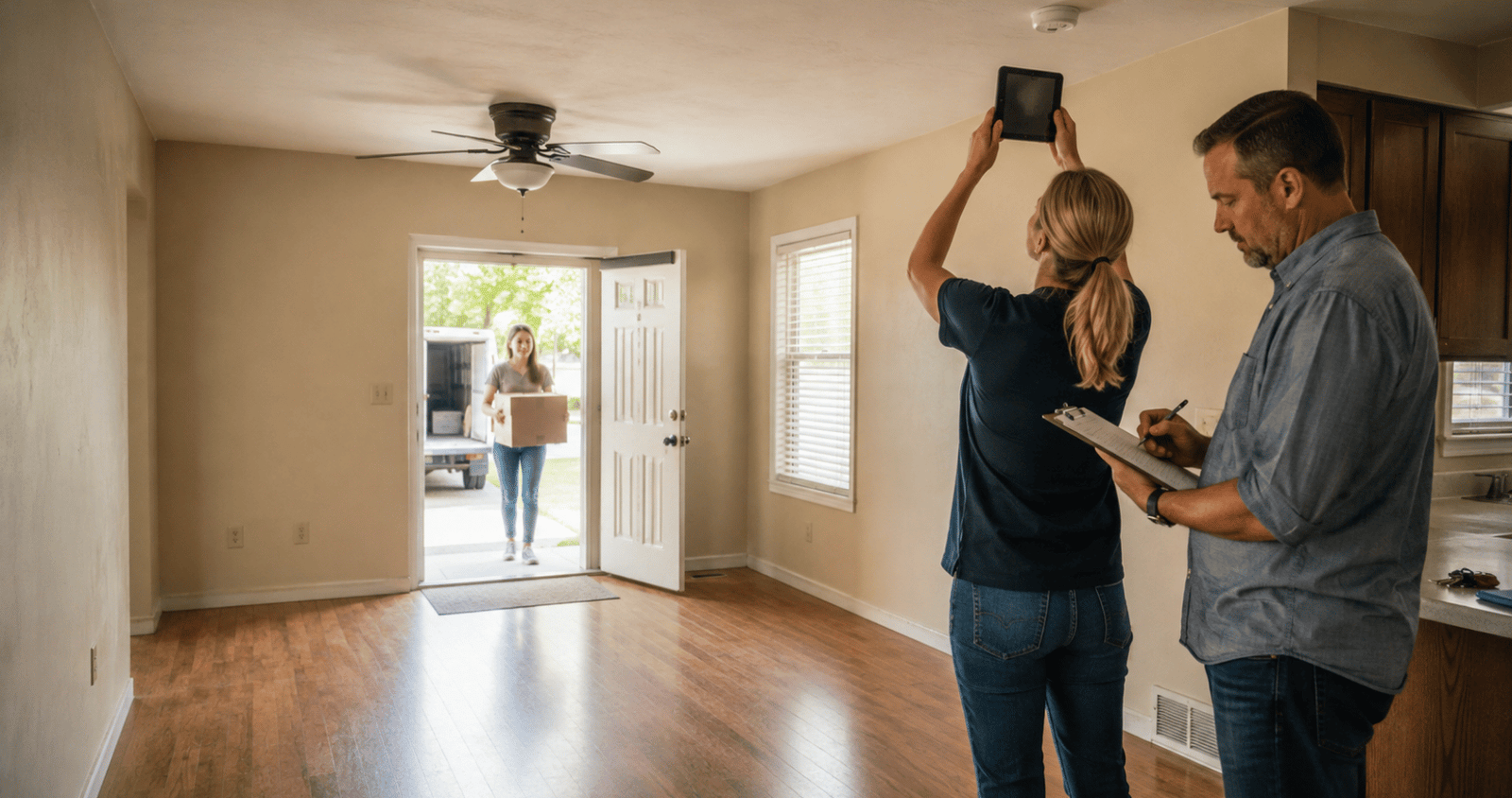
The Policy You Kept Is The One That Will Not Pay
Here is the scenario that costs new landlords the most money, and it happens through inaction rather than through any decision.
A homeowner moves out, rents the property, and keeps the existing homeowners policy in place, assuming it still applies.
Then a tenant is injured, or a kitchen fire causes significant damage. The claim is filed, and the insurer denies it citing the unapproved change in occupancy and use.
The owner covers repairs, liability claims, and lost rental income entirely out of pocket, in some cases running into tens of thousands of dollars.
Homeowners policies specifically exclude rental properties, which means relying on one for a rented home leaves you uncovered rather than partly covered.
The fix is a phone call before the first tenant moves in. What follows is what that call should produce.
Why The Two Products Differ
The distinction is purpose rather than paperwork.
Homeowners insurance protects a primary residence and includes personal property coverage for the occupant's belongings.
Landlord insurance is built around the specific risks of renting. Tenant liability, extended vacancy, loss of income during repairs, and a higher likelihood of property damage from turnover.
The clean way to hold it in your head is ownership. Landlord insurance protects what the landlord owns, meaning the building, fixtures, and the owner's financial exposure. Renters insurance protects what the tenant owns, meaning their belongings and their personal liability.
Neither policy reaches across that line, which is why both need to exist.
The Three Core Coverages
A landlord policy is built from three components, and one of them has no equivalent on a homeowners policy.
Property damage, covering the structure and detached buildings against covered perils.
Liability, covering claims where a tenant or their guest is injured on the property. Most policies offer three hundred thousand dollars to two million in liability coverage.
Loss of rental income, reimbursing rent lost when a covered event makes the property temporarily uninhabitable.
That third one is described as one of the biggest differences between landlord insurance and a standard homeowners policy, and it is the coverage that keeps a mortgage paid while a property sits under repair.
Loss Of Rent Deserves Real Attention
Worth sizing properly rather than accepting a default, because the exposure is longer than most owners assume.
A fire or major storm can take a rental property out of service for months rather than weeks, particularly where permits and contractor availability are involved.
Two questions decide whether the coverage is adequate.
What is the limit, expressed either as a dollar figure or as a number of months of rent?
What is the maximum period, since some policies cap the duration regardless of the dollar amount?
Set both against a realistic repair timeline for your area rather than an optimistic one. A policy covering six months on a property that would take twelve to rebuild leaves half the exposure with you.
For an owner carrying a mortgage on the property, this coverage is what prevents a covered loss from becoming a personal cash flow crisis.
Tenant Damage Is Covered, With A Boundary
A question every landlord asks and the answer has two halves.
Landlord insurance often covers damage caused by a tenant where it results from a covered peril such as fire.
What it does not cover is ordinary wear and tear, or the gradual deterioration that comes with turnover.
Which draws a practical line. A tenant's accidental kitchen fire is an insurance matter. A tenant's worn carpet and scuffed walls are a security deposit matter.
Vandalism and malicious damage sits between the two and is frequently available as a specific coverage rather than being automatically included. One example policy priced vandalism coverage separately at over five hundred dollars annually for a property in a dense urban area, which illustrates both that it is optional and that location drives it.
Ask whether vandalism is included, excluded, or available as an add on, because the answer varies.
Your Own Property At The Rental
A smaller coverage worth setting correctly.
Contents coverage on a landlord policy covers the landlord's personal property kept at the property, meaning appliances, lawn equipment, maintenance tools, and any furnishings you provide.
It does not protect tenants' belongings, which is what a renters policy is for.
Limits are typically modest, and one example policy carried a five thousand dollar contents limit priced at thirty five dollars, which reflects how little risk the insurer is taking.
For a furnished rental the figure needs to be considerably higher. Count what you actually provide rather than accepting a default set for an unfurnished house.
What It Costs
Figures vary and cluster in a workable range.
The national average sits around one thousand four hundred seventy eight to one thousand five hundred dollars a year, with one source citing approximately one thousand eight hundred ninety five and another putting the general range at eight hundred to three thousand.
The consistent finding across sources is the premium relative to a homeowners policy. Landlord insurance costs roughly fifteen to twenty five percent more than a comparable homeowners policy on the same property, with industry data citing around twenty five percent.
The reason is straightforward. Rental properties carry higher wear and tear, liability from tenants and guests, and the added exposure of lost rental income.
Premiums move with location, property condition, coverage limits, deductible, and exposure to hurricanes, wildfires, flooding, and other hazards.
One worked example gives a sense of the upper end. A property with an estimated replacement cost around seven hundred forty thousand dollars, fully rented at six thousand dollars a month, produced a total annual premium above three thousand one hundred dollars after three quotes.
What It Excludes
The same core exclusions as any property policy, with one addition that matters here.
Flood, requiring a separate policy.
Earthquake, likewise.
Normal wear and tear, which is a maintenance responsibility.
Tenant personal belongings, which is the tenant's own insurance.
That last one is worth stating to tenants explicitly rather than assuming they know. A tenant who believes the building policy covers their furniture is a tenant who will be surprised.
Require Renters Insurance In The Lease
The step that protects both parties and costs the landlord nothing.
Where a tenant causes accidental damage, their liability coverage is the first line of defense, which spares the landlord from filing on their own policy and absorbing a premium increase.
Two practical points on how to structure it.
Specify a minimum liability limit in the lease, commonly one hundred thousand dollars.
Ask to be listed as an interested party, which means you are notified if the policy lapses. That status is informational rather than granting you coverage, and it is the appropriate arrangement.
What you cannot do is require a tenant to buy from a specific insurer. The policy is a personal contract between the tenant and their carrier.
Vacancy Is A Real Exclusion
The gap that catches owners between tenants.
Most policies restrict or void coverage when a property sits unoccupied beyond a defined period, commonly thirty or sixty days.
Which matters during turnover, during renovations, and during any extended marketing period.
Two protections.
Tell your insurer when a property will be vacant beyond the threshold, and ask about a vacancy permit endorsement.
Do not assume a short gap is fine, because the threshold is measured in days rather than in intent.
An empty property is also a higher risk property, since unnoticed water leaks, frozen pipes, and vandalism all become more likely without anyone present.
Short Term Rentals Are A Different Product
A distinction worth drawing clearly.
Standard landlord policies are written for long term tenancies. Short term rental activity is generally treated as a commercial operation and requires specialized coverage rather than a residential landlord policy.
Which means an owner running a property on a nightly booking platform with a standard landlord policy may be in the same position as the owner in the opening scenario, holding coverage written for a use that does not match reality.
Platform protection programs are a separate layer and are not a substitute for a policy in the regulated sense.
If your property operates short term, or mixes short and long term tenancies, raise it with your insurer specifically.
Your Lender Will Require It
The practical driver for most owners.
Landlord insurance is generally not required by state law, and mortgage lenders often require coverage on financed rental properties.
Lender requirements are set to protect the lender's interest rather than yours, which means the minimum they demand is a floor rather than a recommendation.
Two figures worth carrying above that floor. Liability, since it protects everything you own rather than one building. And loss of rent, since the lender's requirement addresses the structure rather than your income.
Scaling Beyond One Property
A note for owners with more than a single rental.
Insuring several properties on separate policies is common and frequently inefficient. Many carriers offer a portfolio or blanket approach covering multiple properties under one policy, sometimes with a single deductible structure and a shared limit.
Two questions worth asking an independent agent.
Whether a blanket policy is available at your number of properties, and what the threshold is.
Whether an umbrella policy makes sense above the underlying liability limits, since a landlord with several tenanted properties carries more liability exposure than a single family homeowner does.
For an owner scaling from one property to several, that conversation usually pays for itself.
Work With Someone Who Writes These
The practical route through all of this.
Landlord policies vary more between carriers than homeowners policies do, particularly on vandalism, loss of rent duration, and vacancy terms.
An independent agent who writes rental property coverage regularly can compare those terms rather than only the premiums, and knows which carriers are comfortable with older properties, multi unit buildings, or higher risk locations.
Two things to bring to that conversation. A realistic replacement cost figure for the structure, and your actual monthly rent, since both drive the coverage limits.
Before The First Tenant Moves In
Convert the policy from homeowners to landlord coverage, before anyone signs a lease.
Set liability above the lender minimum, since it protects your assets rather than the building.
Size loss of rent against a realistic repair timeline and your actual monthly rent.
Ask three specific questions. Whether vandalism is included, what the vacancy threshold is, and how long loss of rent pays for.
Require renters insurance in the lease, with a stated minimum liability limit and interested party status.
Get three quotes through an agent who writes rental property coverage regularly.
A rental property is a business asset dressed as a house, and the policy protecting it needs to know that. The owners who get caught are almost never the ones who chose badly. They are the ones who never changed anything.
This article is for general educational purposes and is not insurance advice. Coverage terms, exclusions, vacancy thresholds, and pricing vary significantly by insurer, property type, and state. Work with a licensed agent to determine appropriate coverage.
Some images in this article were generated using artificial intelligence and are for illustrative purposes only.