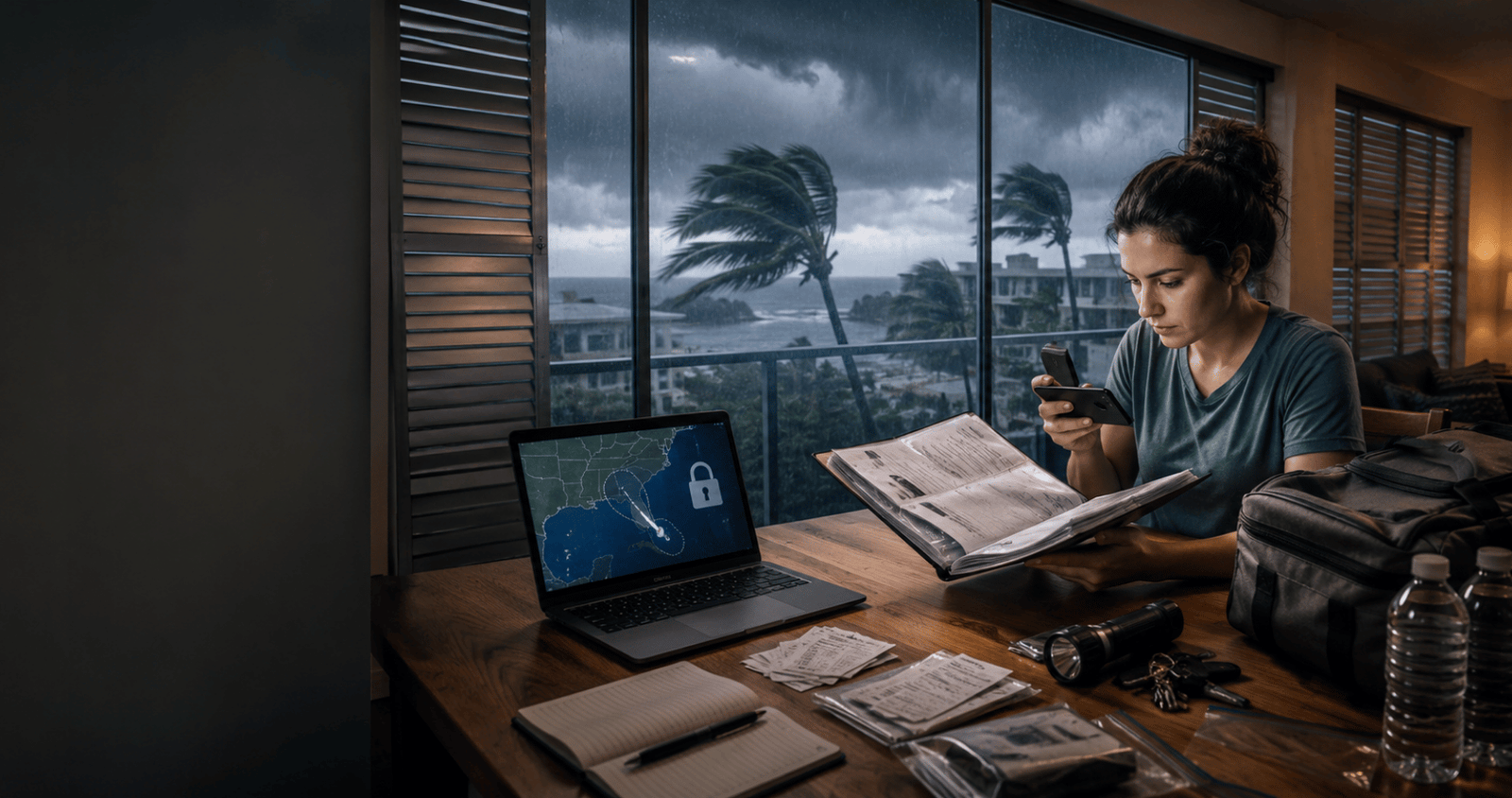
You Cannot Buy This Once The Storm Has A Name
Here is the fact that should govern how you read the rest of this page.
Once a hurricane watch is issued for your area, insurers generally stop writing new policies until the risk passes. It is called a binding moratorium, and it is standard practice across the industry.
So the window to buy coverage is not when the forecast cone appears on television. It closed before that.
Everything below assumes you are reading this in advance. If a storm is already named and heading toward you, the useful actions are documentation and preparation, not shopping.
What Wind Actually Covers
Start with the reassuring part, because it is broader than people assume.
Windstorm is a named peril on a standard renters policy. Hurricane force winds that blow out your windows and destroy your furniture, electronics, and clothing produce a normal covered claim.
Tornadoes count too. Hurricanes routinely spawn them, and one recent Florida storm generated a record number of tornado warnings in a single day. Tornado damage to your belongings is wind damage.
Falling trees, flying debris, and structural failure from wind all fall on the covered side.
One regional caveat. In some high risk coastal areas, certain policies exclude or limit wind and hail coverage specifically. If you rent on the coast, confirm that wind is actually included on your form rather than assuming it.
The Wind Driven Rain Rule
This distinction decides an enormous number of hurricane claims, and it is worth understanding precisely.
If wind creates an opening in the building, a blown out window, a breached door, a section of roof torn away, and rain then enters through that opening and ruins your belongings, that is generally a covered wind claim.
The logic is that the rain got in because of wind damage. The wind is the proximate cause, so the whole loss is treated as wind.
Rain that simply accumulates outside and seeps in at ground level is a different thing entirely. That is flooding, regardless of what storm produced it.
Same storm, same rain, opposite outcomes, decided by how the water entered the building.
What Is Never Covered
Four categories sit outside every standard renters policy.
Storm surge. The wall of water that pushes inland during landfall. This is the image most people associate with hurricane destruction and it is flood damage, not wind damage.
Rising water from rainfall accumulation. Water pooling outside and entering at ground level is flood, even when no surge is involved.
Sewer and storm drain backup. A very common post hurricane occurrence, and excluded without a water backup endorsement. Systems overwhelmed by storm volume push backward into ground floor units.
The building itself. Even if the structure is destroyed, your policy covers your belongings only. Rebuilding is the landlord's responsibility through their own insurance.
Worth stating clearly. Your landlord's flood insurance does not cover your belongings and does not pay for your temporary housing. That protection is yours to arrange or go without.
The Percentage Deductible
In coastal states, hurricane claims do not use your ordinary deductible.
Roughly nineteen coastal states allow hurricane or named storm deductibles, calculated as a percentage of your coverage rather than a flat dollar amount. Typical figures run from one to ten percent, with two to five percent common on renters policies.
Run the math on real numbers. Thirty thousand dollars of personal property coverage with a five percent hurricane deductible means the first fifteen hundred dollars of damage is yours.
Compare that to the five hundred dollar flat deductible that applies to a kitchen fire or a theft in the same apartment. Three times higher, for the peril most likely to occur where you live.
Two things follow.
Find this number on your declarations page before hurricane season, not after. It will be listed separately from your standard deductible.
And understand the trigger. These deductibles apply only when damage comes from a specifically defined event, usually a named storm or a declared hurricane. Ordinary thunderstorm wind in July uses your regular deductible.
Evacuation Can Trigger Coverage Without Damage
This is the claim renters most often fail to file.
If a local government issues a mandatory evacuation order and you incur hotel and meal costs, your renters policy may reimburse the additional expense even if your apartment is never damaged.
Loss of use coverage can respond when a civil authority prevents you from occupying your home. You do not necessarily need a hole in the roof.
Save every receipt from the moment you leave. Hotel, fuel, meals above your normal grocery spending, pet boarding, storage.
Then call your insurer when you return, even if the apartment looks fine. Plenty of renters absorb four days of evacuation costs assuming there is nothing to claim.
The Caveat Attached To That
One condition matters enormously and it catches people after major storms.
Loss of use is tied to the underlying cause. It responds to covered perils only.
So if your apartment is uninhabitable because wind tore the roof off, loss of use pays for your hotel.
If your apartment is uninhabitable because three feet of surge water filled it and you have no flood policy, loss of use does not pay for your hotel either. The triggering peril is excluded, so everything downstream of it is excluded too.
That is the harshest version of the flood gap. You lose your belongings and you also lose the coverage that would have housed you.
What This Costs In Florida
Published figures are reasonably consistent.
A typical Florida renters policy with twenty thousand dollars of personal property and one hundred thousand in liability runs about fifteen to twenty five dollars a month, or one hundred eighty to three hundred a year.
Coastal ZIP codes in Miami Dade, Broward, Palm Beach, and Tampa Bay sit at the upper end. Inland markets like Orlando, Ocala, and Tallahassee run lower.
Three things move your number. The personal property limit you select, most carriers defaulting to twenty to twenty five thousand. Your deductible. And building features, since central monitored alarms or sprinkler systems typically earn a discount of five to ten percent.
Setting Your Limits For A Coastal Apartment
Two numbers deserve more thought here than they get anywhere else.
Personal property. Most carriers default somewhere around twenty to twenty five thousand dollars. Walk your apartment and total replacement costs honestly before accepting the default. Hurricane losses tend to be total losses for whatever the water or wind reaches, unlike a theft where a few items go missing. If a storm takes your furniture, electronics, clothing, and kitchen at once, the default limit gets tested in a way it never would otherwise.
Loss of use. This one is systematically undersized in hurricane regions and the reason is simple. After a landfall, thousands of displaced people compete for the same hotel rooms and short term rentals in the same week, and prices rise accordingly. Repairs also take longer, because every contractor in the region is booked.
Divide your loss of use limit by what a week of post storm accommodation and meals realistically costs near you, not by ordinary prices. If the answer is two weeks and your building needs three months of structural work, the limit is short.
Raising both is usually inexpensive relative to what they protect.
The Three Policy Stack
Full protection in a hurricane zone is not one product. It is three, and most renters carry only the first.
Renters insurance covers wind, wind driven rain through a breach, fire, theft, liability, and loss of use.
Flood insurance covers surge, rising water, and accumulation. Renter policies through the National Flood Insurance Program cover contents only, which makes them far cheaper than the homeowner version.
A water backup endorsement covers sewer and drain backup, which is common after a storm and excluded from both of the above.
Each closes a gap the others leave open. In a coastal ground floor apartment, all three are defensible.
One timing note that matters. Flood policies typically carry a waiting period before coverage begins, often thirty days. That is another reason the buying window is well before the season, not during it.
Flood Zones Are Not A Guarantee
Worth a caution.
Flooding regularly affects areas outside designated evacuation zones and outside mapped high risk flood areas. Residents in lower risk zones have been flooded by recent storms in ways nobody in the neighborhood expected.
Flood maps describe historical risk. They do not promise anything about the next storm.
Check your address, but treat a favorable zone designation as one input rather than a reason to skip the quote.
Before The Season Starts
Documentation is the part you control, and it decides how much of your coverage you actually collect.
Video every room. Open closets, drawers, and cabinets while filming. Narrate what things are. Capture serial numbers.
Store it off your devices. Cloud storage or emailed to yourself. Your phone and laptop travel with you or get destroyed.
Photograph the exterior and the roof line if you can see it. Pre storm condition evidence helps when an adjuster later suggests damage predated the event.
Find three numbers on your declarations page. Your standard deductible, your hurricane or named storm deductible, and your loss of use limit.
Save your policy number and claims line offline. After a landfall, call centers are overwhelmed and early filers move faster.
After The Storm
Document before you clean or discard anything. Photos and video of every affected item and every entry point. Note specifically where water came from, since that single detail decides wind versus flood.
Make temporary repairs to prevent further damage if it is safe, and keep those receipts. Policies generally require you to mitigate.
Do not throw damaged belongings away until an adjuster has seen them or released you.
File promptly. After a major storm, claim volume is enormous and adjuster availability tightens quickly.
Keep a running expense log from the moment you evacuate or are displaced.
The One Deadline That Matters
Everything on this page comes down to timing.
Wind is covered, water from below is not, the deductible is a percentage, and evacuation costs are often claimable. All useful to know.
But none of it helps if you are reading this with a named storm in the forecast, because the window to add coverage has already closed.
If you rent anywhere hurricanes reach, the work happens in the quiet months. Get the policy, price the flood quote, add the backup endorsement, find your deductible, and film your apartment. Then hurricane season is a matter of preparation rather than regret.
This article is for general educational purposes and is not insurance advice. Deductible structures, wind coverage availability, binding rules, waiting periods, and endorsement terms vary by insurer and by state. Read your policy and confirm details with your carrier or state insurance department.
Some images in this article were generated using artificial intelligence and are for illustrative purposes only.