Nashville Renters Own The One Thing Policies Cap Hardest
Standard renters insurance was designed around furniture, clothing, and a television. It handles those well.
It handles a room full of guitars badly.
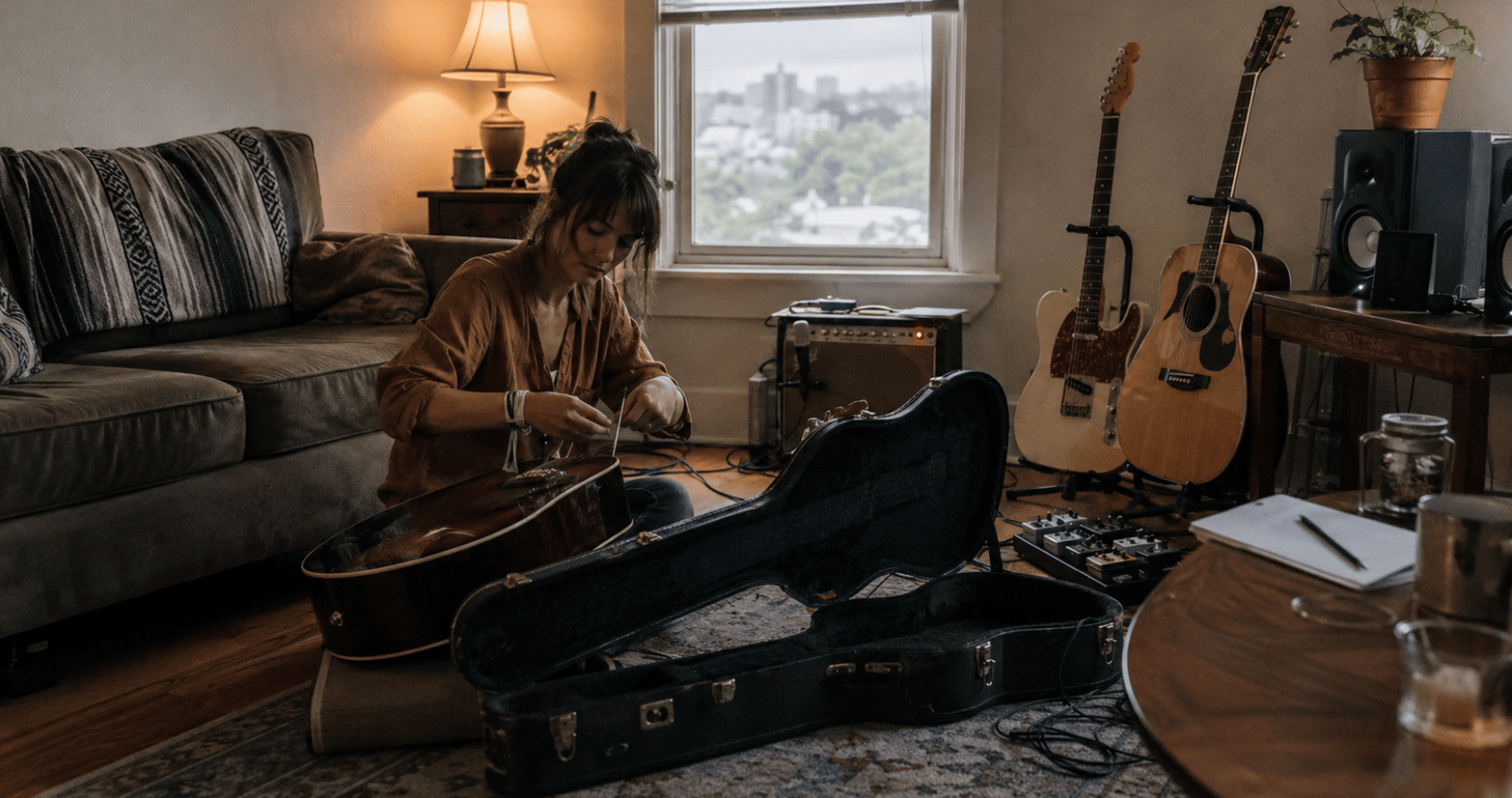
Nashville's music community means a large share of renters here own instruments and recording equipment worth thousands of dollars. Standard policies apply per item limits to instruments, often somewhere between one thousand and twenty five hundred dollars.
So a thirty five hundred dollar guitar is not covered at thirty five hundred dollars. It is covered up to the sublimit and no further, regardless of how much total personal property coverage you carry.
If your gear closet is worth more than your furniture, and in this city it frequently is, that gap is the first thing to fix.
What Scheduling Actually Changes
A scheduled personal property endorsement lists individual items at an agreed value. It does three things a standard policy will not.
It removes the cap. Schedule a four thousand dollar instrument and it is insured at four thousand.
It covers accidental damage. Standard coverage responds to named perils like fire and theft. Scheduled items typically cover loss and damage more broadly, which matters for something you carry to gigs.
It usually drops the deductible to zero on the scheduled item specifically.
Cost runs roughly one to three percent of the item's value annually. On a four thousand dollar instrument that is somewhere around forty to one hundred twenty dollars a year.
Against the risk of a total loss on a working instrument, that arithmetic is not difficult.
Recording Gear Counts Too
The sublimit conversation is not just about instruments.
Interfaces, monitors, microphones, outboard gear, and a serious computer add up quickly, and some of it falls under electronics limits rather than instrument limits depending on the carrier.
Two questions worth asking your insurer directly.
Whether equipment used to earn income is treated as business property, since personal policies restrict or exclude it. If you record clients, teach lessons, or play paid gigs, this matters.
And whether your gear is covered while it is out of the apartment, at a venue, a studio, or in a vehicle. Off premises limits are typically lower than your in home limit, often around ten percent of your personal property coverage.
For a working musician, both answers can change what you need to buy.
Working Musicians Need A Different Conversation
There is a line between owning instruments and earning a living with them, and insurers draw it firmly.
Personal renters policies restrict or exclude business property. If you gig for pay, teach lessons at home, record clients, or sell anything you produce, some or all of your gear may fall outside your personal coverage regardless of what you scheduled.
Three options exist and they suit different situations.
A business equipment rider added to your existing policy. The lightest option, appropriate for someone with modest income from music alongside other work.
An instrument specific policy from a carrier that specializes in musicians. These typically cover gear at replacement value worldwide, including in transit and at venues, and they often handle accidental damage that a personal policy will not.
A small commercial policy if music is your primary income and you carry meaningful liability exposure at venues or in a home studio with clients coming through.
Ask your insurer plainly whether your gear is treated as personal or business property. The answer determines which of these you need, and getting it wrong means discovering after a loss that a scheduled item was excluded for the reason you bought it.
The Documentation That Actually Speeds A Claim
For gear specifically, standard photographs are not enough.
Record serial numbers for every instrument and every significant piece of equipment. On guitars this is usually inside the soundhole, on the headstock, or on a neck plate. On amps and interfaces it is on a rear panel label.
Keep purchase receipts or, for vintage and custom instruments, a current appraisal. Appraisals matter here for the same reason they matter with jewelry. A 1968 instrument is not valued by what you paid in 2011.
Photograph identifying marks. Wear patterns, repairs, modifications, and case stickers all help establish that a recovered instrument is yours.
Register serial numbers where you can. Stolen instrument databases exist, and pawn shops and dealers check them. Recovery rates on registered instruments are meaningfully better than on unregistered ones.
Store all of it in cloud storage rather than on a device that could be stolen alongside the gear.
The Night That Made This Concrete
On March 3, 2020, a tornado carved a path through East Nashville, Germantown, and into Donelson overnight. Twenty five people died and thousands of homes and apartments were destroyed.
Renters in those neighborhoods who carried coverage replaced their belongings and paid for temporary housing. Those who did not had nothing at all.
Tornadoes are a covered peril under a standard renters policy. Middle Tennessee sits in the southern extension of the tornado corridor, and the storms here frequently arrive at night without visual warning.
Which means the preparation has to already exist. There is no gathering instruments at two in the morning.
The Flood That Nobody Saw Coming
Nashville's other reference point is water.
The May 2010 flood killed twenty six people and caused more than two billion dollars in damage across the city. The Cumberland River crested at fifty one point nine feet, nearly twelve feet above flood stage, and entire neighborhoods went under.
Standard renters insurance excludes flooding entirely. Every policy, every carrier.
FEMA flood zones cover significant portions of Nashville, particularly along the Cumberland River, Mill Creek, Richland Creek, and the Harpeth River corridors.
Growth Is Making It Worse
Here is the part specific to a city building this fast.
Nashville's impervious surface growth, meaning new development replacing ground that used to absorb water with concrete that does not, increases runoff.
Rain that once soaked into soil now travels to the nearest creek. That changes flood behavior in neighborhoods whose historical record suggested they were fine.
Combined with the standard caution that over twenty five percent of flood claims nationally come from properties outside designated high risk areas, a favorable zone designation is weaker evidence here than it looks.
Renter flood policies through the National Flood Insurance Program cover contents only, which makes them substantially cheaper than the homeowner version. Worth pricing if you are near any of those corridors.
Property Crime In A Growing City
Nashville records over thirty thousand property crimes annually, affecting roughly forty five out of every thousand residents.
Theft is covered under every standard policy, including belongings taken from your car, a storage unit, or while traveling.
For musicians this connects back to the sublimit problem. An instrument stolen from a vehicle after a gig runs into both the instrument cap and the off premises limit at the same time.
Photograph your gear, record serial numbers, and store the file somewhere that is not the laptop most likely to be stolen with it.
The Hosting Gap
Nashville has a substantial short term rental market, and this catches renters regularly.
If you host on a short term rental platform, your renters insurance likely does not cover guests' injuries or damage arising from hosting. Personal policies exclude business activity, and charging someone to stay is business activity.
Platform protection programs are a separate layer and they are not insurance policies in the regulated sense.
Two things follow. Check whether your lease permits subletting at all, since most do not. And if you host with permission, talk to your insurer about what coverage actually applies before a guest arrives.
Temporary Housing In An Expensive Market
Average Nashville rents run above nineteen hundred fifty dollars, and that number affects a coverage line most renters never check.
Loss of use pays for temporary housing when a covered event makes your unit uninhabitable. Standard limits are commonly a flat figure or a percentage of your personal property coverage.
Divide your limit by what a week of Nashville hotel and restaurant costs would run, particularly after a storm displaces multiple households at once and local supply tightens.
If the answer is under a month, that limit is undersized for this market.
Also remember that loss of use pays the difference between your normal costs and your displaced costs. Your rent obligation does not stop.
What Nashville Renters Pay
Figures cluster reasonably.
Most analyses put Nashville renters insurance at fifteen to twenty five dollars a month, or roughly one hundred eighty to three hundred dollars a year. One puts the average at twenty three dollars monthly, or two hundred seventy six annually.
Carrier differences are meaningful. One comparison found Farmers averaging around ten dollars a month in Nashville, with State Farm nearer fifteen.
That is a fifty percent difference between two well known carriers in the same city, which is why quoting across companies is worth more than most coverage tweaks.
Less than half of Tennessee renters carry coverage at all.
Setting Your Numbers
Four lines matter.
Personal property. The average renter owns twenty thousand to fifty thousand dollars worth. Walk your apartment room by room, and count the gear closet honestly rather than guessing.
Settlement basis. Actual cash value pays depreciated value. Replacement cost pays what a comparable new item costs today. On electronics and instruments the gap is large.
Liability. At least one hundred thousand, and three hundred thousand to five hundred thousand if you have assets to protect. The cost difference is often just a few dollars per month.
Scheduled items. Anything above the instrument, jewelry, or electronics sublimit.
Endorsements Worth Pricing Here
Three come up repeatedly in this market.
Scheduled personal property for instruments and recording gear, which is the Nashville specific one.
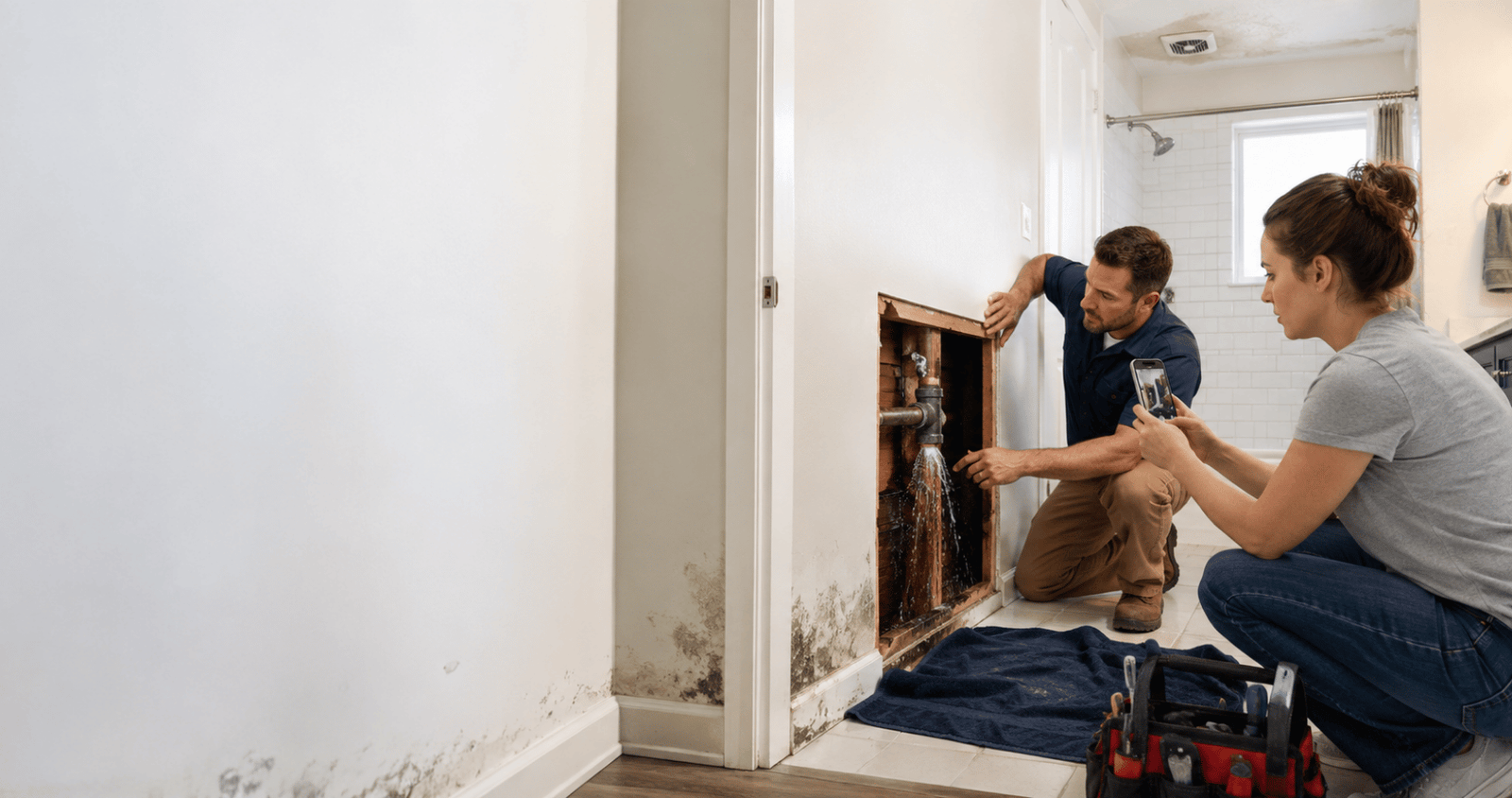
Water backup coverage for sewer and drain incidents, excluded from every standard policy and relevant in older buildings and ground floor units.
Identity theft protection, increasingly offered as an inexpensive endorsement in any growing metro.
Getting The Price Down
Shop across carriers, given a spread that runs from around ten dollars to well above twenty for comparable coverage.
Bundle with auto if you drive.
Claim security features. Deadbolts, alarms, and smoke detectors factor in at most carriers.
Choose a deductible you could actually cover in an emergency rather than the lowest premium. Five hundred and one thousand are the common options.
The Short Version
Nashville renters face the same tornado and flood exposure as the rest of Middle Tennessee, plus one problem that is genuinely local.
The instruments and recording gear that make this city what it is sit under per item caps most renters never read. A thirty five hundred dollar guitar is not covered for thirty five hundred dollars unless you scheduled it.
Three things this week. Total your gear at replacement value. Ask your insurer what your instrument and electronics sublimits actually are. Then schedule anything above them, which usually costs less per year than a single decent set of strings and a cable.
This article is for general educational purposes and is not insurance advice. Cost figures reflect published surveys with differing assumptions and will not match your quote. Sublimits, coverage terms, and endorsement availability vary by insurer.
Some images in this article were generated using artificial intelligence and are for illustrative purposes only.