The Apartment Is Hard, The Insurance Is Not
Arriving in the United States as a student means running into a wall repeatedly. No credit history, often no Social Security Number, and a housing market that assumes both.
Renters insurance is the exception, and it is worth knowing early.
Renters insurance for students does not require a US credit history or a Social Security Number. It is one of the easiest American protections for a newcomer to set up after signing a lease.
That is genuinely unusual. Most financial products here will make you wait. This one will not.
Why It Works When Other Things Do Not
Credit scoring exists to predict whether you will repay borrowed money. Renters insurance does not lend you anything, so a carrier's need for that history is weaker than a lender's.
Where credit is used in insurance pricing, it is one factor among several rather than a gate. And a meaningful number of insurers, particularly student focused and digital ones, quote without requiring it at all.
Which means the sequence most newcomers expect is backwards. You are not waiting for credit before you can be insured. You can be insured in the first week.
What Works Instead Of An SSN
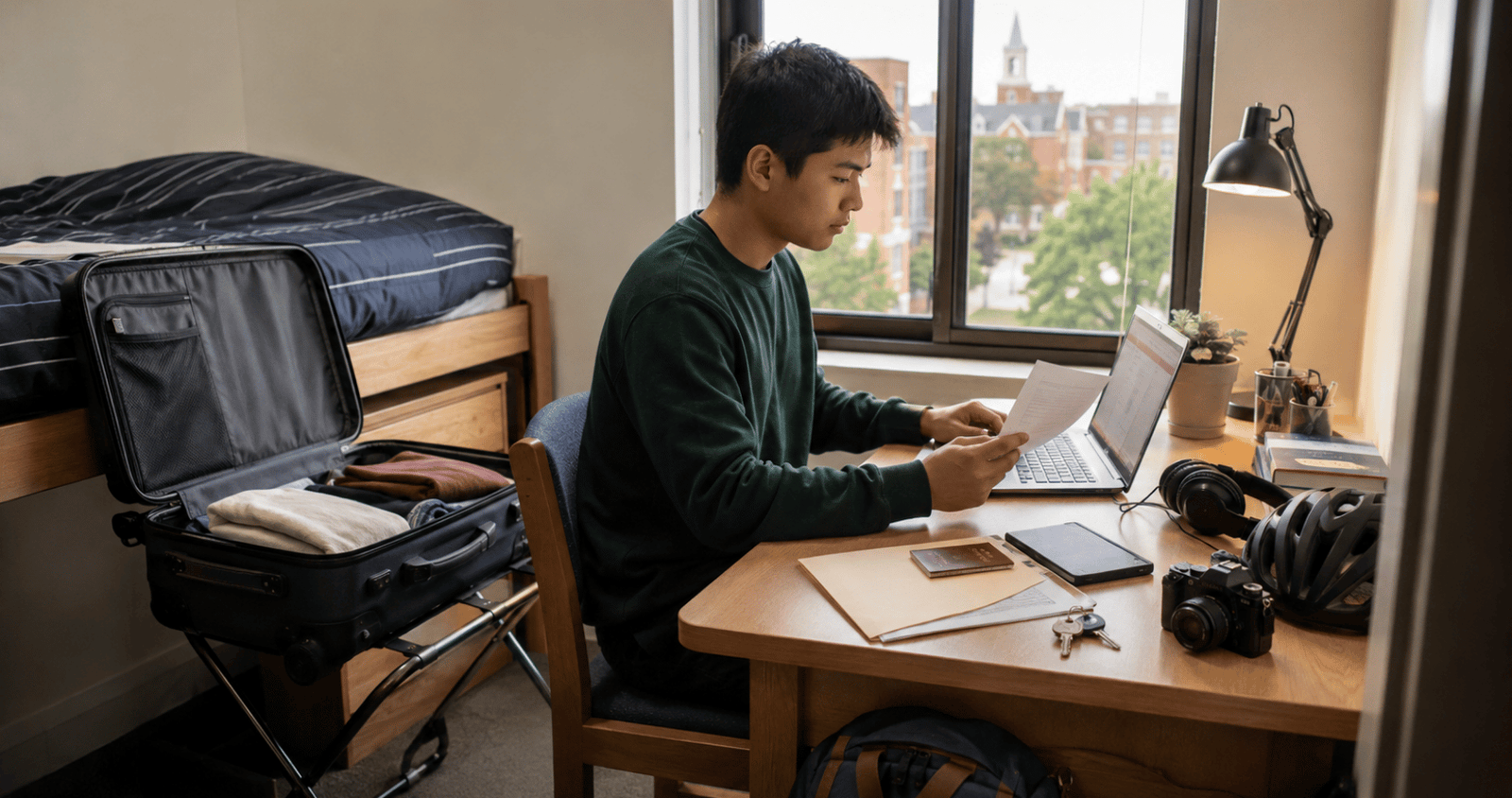
Carriers serving international students accept alternative documentation. Have these ready before you start a quote.
Your passport.
Your visa, typically the F-1 or J-1 stamp.
Your I-20 if you are on an F-1, or your DS-2019 if you are on a J-1.
Proof of enrollment, which can be an acceptance letter or an enrollment verification from your university.
Bank statements or address verification from your school, where a carrier wants additional confirmation.
An ITIN, if you have one, generally works where an SSN field appears.
If an insurer's online form requires an SSN and you do not have one, that is a signal to change insurers rather than to give up. Look for a student focused or digital carrier that offers an alternative, or ask directly whether a passport or ITIN will do. Providers used to serving international students are typically flexible about this.
The Home Country Policy Trap
A specific warning, because the assumption is common and it is wrong.
Do not rely on a policy from your home country. Coverage written elsewhere typically will not cover your belongings in the United States and typically will not satisfy a US lease requirement.
Two separate failures in that sentence. The protection does not reach your things, and the paperwork does not satisfy your landlord.
If your family has coverage at home, it is almost certainly not doing anything for you here. Assume you are starting from zero.
What This Product Actually Is
Worth explaining plainly, because renters insurance is uncommon in many countries and the concept may be genuinely unfamiliar.
An American renters policy does four things.
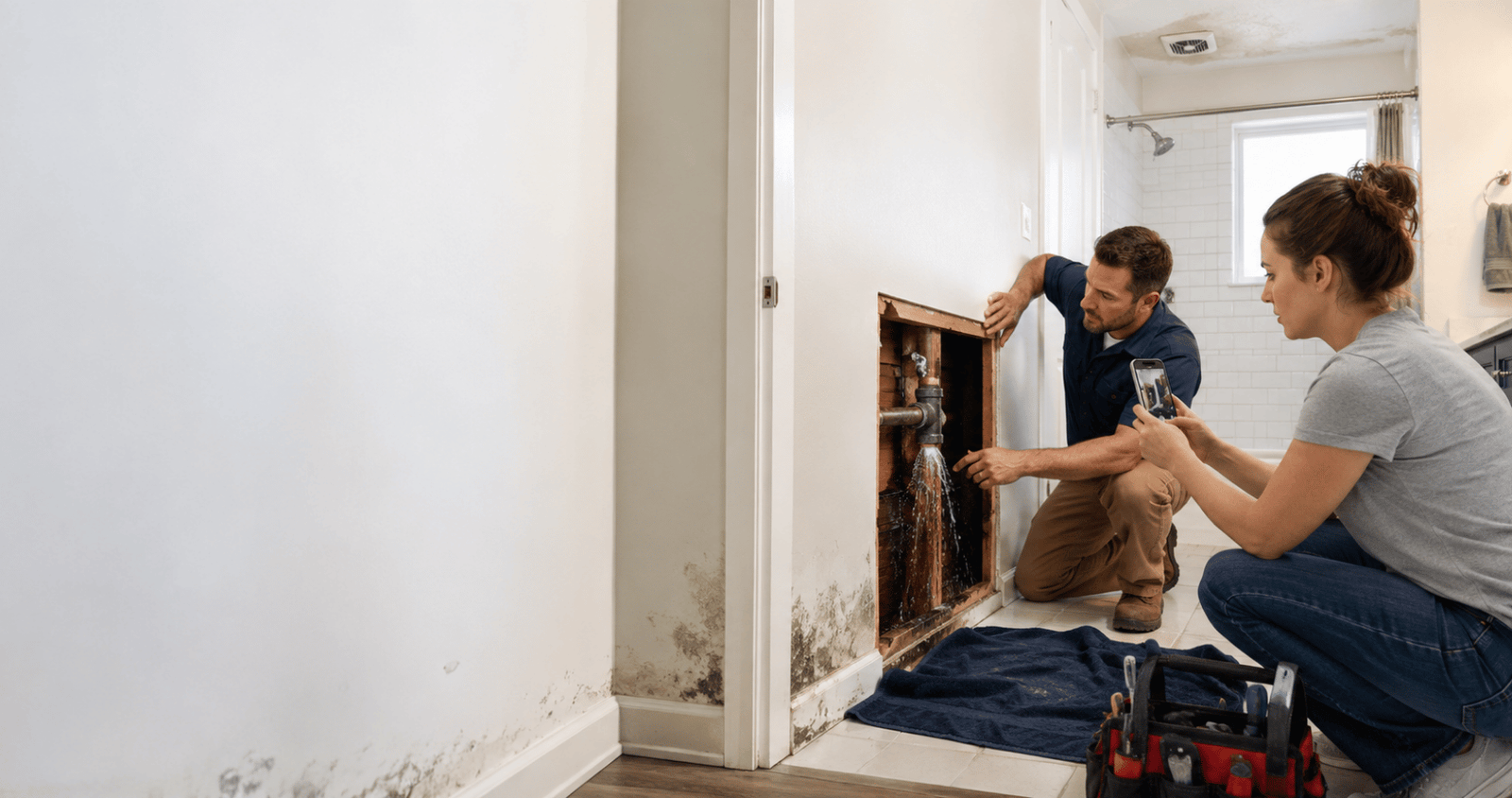
It covers your belongings against fire, theft, vandalism, and certain water damage. Your laptop, your clothes, your phone, your furniture.
It covers your liability if you injure someone or damage their property. This is the part newcomers find least intuitive and it matters most.
It pays small medical bills for a guest injured in your home, without anyone establishing fault.
It pays for temporary housing if a covered event makes your apartment unlivable.
What it does not cover is the building. Your landlord insures that, and their policy explicitly excludes your belongings.
The Liability Part Is The Unfamiliar One
Students from many countries find property coverage obvious and liability coverage strange, because litigation norms differ.
Here is why it matters in the United States.
If you accidentally start a fire that damages neighboring apartments, the building owner's insurer can pursue you personally for the repair cost. If a guest is seriously injured in your apartment, you can be sued.
Those claims regularly reach tens of thousands of dollars. As an international student, a judgment against you is a genuinely serious problem, and liability coverage is what stands between you and it.
Most policies default to one hundred thousand dollars, which is also the common lease minimum. Raising it to three hundred thousand typically costs a few dollars a year and it is worth doing.
Dorm Or Off Campus Changes The Answer
Two different situations.
University housing. Some universities require renters insurance for students in campus housing and others only recommend it. Some institutions provide limited coverage. Ask your housing office directly what applies.
Off campus with your own lease. This almost always means buying your own policy, and your landlord will likely require proof before you can move in.
One thing that does not apply to most international students. Domestic students are frequently covered under a parent's homeowners policy while living away at school. That extension depends on a US homeowners policy existing, which most international families do not have.
So the shortcut available to domestic classmates is generally not available to you. Plan on your own policy.
The Certificate Your Landlord Wants
Your landlord or housing office will ask for proof, and there is a specific document.
A certificate of insurance, or your declarations page, shows the policy exists, the coverage limits, and the dates.
Two practical points.
Ask what minimum liability limit they require before buying, commonly one hundred thousand dollars, so the policy you purchase satisfies the requirement the first time.
Ask whether they need to be listed on the policy as an interested party, which is free and simply means they are notified if your coverage lapses.
Then generate the certificate and send it. Most insurers produce it instantly through an app or online account.
Timing Matters More Than You Think
If your lease requires renters insurance, you must show proof before move in.
That creates a scheduling problem for someone arriving from abroad with a lot happening at once. Move in day slips, keys are withheld, and the delay lands during the week you have the least flexibility.
Buy the policy before you arrive if you can, with the effective date set to your lease start. Most carriers allow this and it removes a real source of arrival stress.
At minimum, do it the same day you sign, not the day you move.
What You Are Actually Insuring
Set the coverage amount from an honest count rather than a default.
Most international students arrive with less than a domestic student and then accumulate quickly. Laptop, phone, tablet, headphones, and any equipment your program requires. Clothing, including things bought for a climate you did not previously live in. Furniture and kitchen items purchased after arrival. Textbooks. A bicycle.
That total is usually lower than a full household and higher than students expect. Ten to twenty thousand dollars covers many student situations, and counting is better than guessing.
If you brought something genuinely valuable, an instrument, camera equipment, or jewelry, category limits apply and scheduling those items separately is the fix.
Moving Between Apartments
Students move often, and the insurance handles this easily if you let it.
Choose a carrier that lets you update your address online rather than requiring a new policy each time. Digital insurers are generally strongest here.
Then update the address the same week you move. A policy listing your old apartment is a genuine problem at claim time.
If you move to a different state, confirm your carrier writes there. Insurance is regulated state by state and not every company operates everywhere.
Keep The Policy Between Terms
Two situations where students cancel and should not.
Summer break. If you keep the apartment and your belongings stay in it, keep the policy. An empty apartment is not a risk free apartment, and a gap in coverage affects future pricing.
A semester abroad or a trip home. Same reasoning, plus your belongings may be in storage, which carries its own limits worth asking about.
If you are genuinely leaving the country and removing everything, cancelling is reasonable. Ask about a refund of unused premium, which most carriers provide.
A Side Benefit Worth Knowing
Establishing a US financial footprint takes time, and the usual advice involves secured credit cards and rent reporting services.
Renters insurance is not a credit building product and it will not appear on a credit report. But it does two adjacent things.
It creates a payment relationship with a US financial company, and a clean record with one carrier can help when you shop later.
It removes an obstacle in a housing market where landlords weigh anything that signals reliability. Arriving at a viewing with a policy already arranged, or arranged the same day you are approved, reads as competent.
Neither is transformative. Both are small advantages in a situation where small advantages accumulate.
Watching For Rental Scams
Worth including, because international students are targeted disproportionately and the pattern is consistent.
Never wire money for an apartment you have not seen, and be skeptical of any landlord who cannot show it. Requests to send a deposit before viewing, especially by wire transfer or gift card, are the single clearest warning sign.
Verify the person owns or manages the property. Property records are public in most US jurisdictions, and university housing offices will often help check.
Be careful with listings priced well below the local market. In student housing markets, unusually cheap is unusually rare.
Confirm your name is on the lease. Informal arrangements where someone else holds the lease leave you without tenant protections and complicate insurance, since a policy should match your actual living situation.
Use your university's housing resources. Most institutions maintain listings or landlord relationships and have seen every version of these scams.
None of this is about insurance directly. It is about not losing money before you get to the point where insurance matters.
If Something Goes Wrong And You Are Far From Home
A practical note, because handling a loss in an unfamiliar system while your family is in another time zone is genuinely hard.
Your university has support. International student services offices deal with emergencies routinely, including housing loss, and they know local resources.
Keep your policy number and claims line reachable offline, along with a copy of your declarations page saved somewhere you can access without your laptop.
File in English but ask for help if you need it. Larger carriers offer support in multiple languages, and you can ask whether that is available rather than struggling through a complicated claim in a second language.
Document everything from the first hour. Photographs, written notes with dates, and copies of every message. This matters everywhere and it matters more when you may be explaining events to people unfamiliar with your situation.
Ask about an advance if a covered event displaces you. Many carriers will advance funds for temporary housing rather than making you pay upfront and wait, which matters enormously for a student without a financial cushion.
What To Do In Your First Week
Six steps, in order.
Ask your landlord and your university housing office whether coverage is required and what minimum liability limit they want.
Gather your documents. Passport, visa, I-20 or DS-2019, proof of enrollment.
Get three quotes, including at least one digital or student focused carrier that does not require a US credit check.
Set the effective date to your lease start, not to today, unless today is the start.
Generate the certificate and send it to your landlord or housing office.
Photograph your belongings and store the file in cloud storage, along with a copy of your policy documents.
The Reassuring Version
Renting an apartment in the United States without credit history is genuinely difficult and takes documents, patience, and sometimes a guarantor.
Insuring what you put inside it is not. It takes a passport, a visa document, ten minutes, and roughly fifteen dollars a month.
Do it the day you sign the lease rather than the day you move in, buy more liability than the minimum, and photograph everything once you have unpacked.
That is one of the few American administrative tasks that works the way you would hope, and it is worth taking the win.
This article is for general educational purposes and is not insurance or immigration advice. Documentation requirements, carrier availability, university policies, and lease terms vary. Confirm requirements with your insurer, your landlord, and your university housing office.
Some images in this article were generated using artificial intelligence and are for illustrative purposes only.