The Fix You Were Told To Buy May Not Cover Your Basement
Every article about below grade living, including several on this site, tells basement renters to buy flood insurance.
Here is the complication nobody mentions. Standard federal flood insurance generally excludes personal property stored below ground level.
Read that carefully. A basement renter can buy a federal flood policy, pay the premium, take on water, and find that the belongings in the basement fall outside it because of where they were.
Some private flood insurance policies offer broader basement coverage, which is why comparing options matters more for a below grade unit than for anyone else.
That is the single most important thing on this page. Below grade renters need to ask a specific question before buying, rather than assuming the standard product solves the standard problem.
Three Ways Water Arrives Down Here
Below grade units face all three water paths at once, and each requires a different fix.
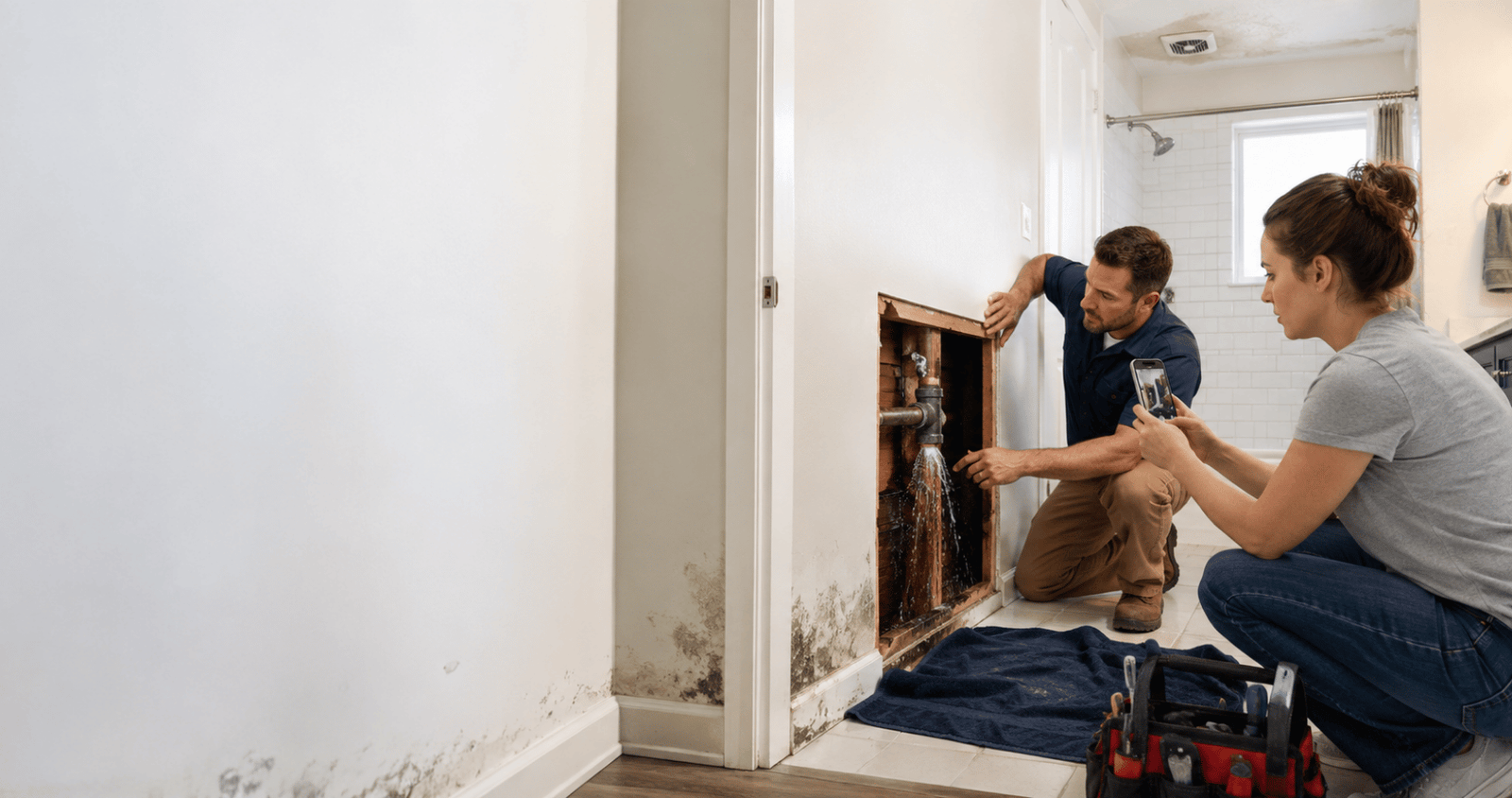
From your own plumbing. A burst pipe, a failed water heater, an overflowing tub. Covered by a standard renters policy as a sudden accidental event.
Up through drains. Sewer or drain backup, or a failed sump pump. Excluded from every standard policy. Requires a water backup endorsement, which is inexpensive and is the most sensible addition for anyone at or below ground level.
In from outside. Rising groundwater, street flooding, water pooling in a stairwell. This is flood, excluded everywhere, and requires the separate policy discussed above with the below grade caveat attached.
Three paths, three different products, and buying one does nothing about the other two.
If you rent below grade, the honest answer is that you plausibly need the standard policy plus a water backup endorsement plus a flood policy that actually covers below grade property.
The Mold Trap Basements Set
Moisture is the defining condition of below grade living, and it collides directly with how mold coverage works.
Mold is covered only when it results from a covered peril. A pipe bursts, the couch stays wet, mold grows before anything dries out, and the remediation is typically covered.
Mold that develops from high humidity, poor ventilation, or continuous seepage is excluded.
That second description is exactly what a basement produces on an ordinary schedule. Groundwater through foundation walls, condensation, and the general dampness that comes with being underground.
So the mold most likely to appear in a basement apartment is the mold least likely to be covered.
Two practical responses. Run a dehumidifier year round rather than seasonally, and ask your landlord whether they will provide one. And ask your insurer whether limited mold remediation coverage is available as an endorsement.
The Twenty Four Hour Rule
A claim preservation detail worth internalizing before anything happens.
Municipal guidance for renters is direct on this point. Call your insurance provider first and ask what to do about cleanup. If you do not take action within the first twenty four hours and mold begins to damage the property, a flood policy will not cover all of the repairs.
That is a short window and it runs during exactly the period when you are least organized.
Which means the useful preparation is knowing your carrier's claims number and having it accessible offline, before a night when the power is out and your phone is at eight percent.
Ground Level Changes The Theft Picture
Water dominates the conversation, but access matters too.
Ground floor units are easier to reach, which makes them a more common target for theft than apartments on higher floors.
Theft is covered under every standard policy, so this is not a gap. It is a frequency issue, and it argues for two things.
Documentation. Photograph belongings and record serial numbers, because payout quality depends on evidence.
Realistic limits. If you are in a higher frequency situation, being underinsured costs more often.
Window locks, a door with a deadbolt, and basic security devices also earn discounts at most carriers, which is a rare case of a risk factor and a savings opportunity pointing the same direction.
Pests Are More Likely And Never Covered
Proximity to the ground means proximity to the entry points that rodents and insects use.
Below grade units see higher pest exposure than upper floors for that simple structural reason.
Pest infestations are excluded from every renters policy, in every form. Not personal property, not liability, not loss of use.
Which makes this a landlord conversation rather than an insurance one. Report anything you see in writing immediately, because habitability obligations in most states cover infestations and the written record is what makes that claim usable.
Garden Level And Basement Are Not The Same Thing
A distinction worth insisting on before you sign anything.
A true basement unit sits entirely below grade. Higher moisture risk, less light, and greater flooding vulnerability.
A garden level unit has above grade window openings, which allow better air circulation and drainage. Slightly higher up, and typically less exposed to minor street level pooling.
The complication is that listings use the terms loosely. When a listing describes a unit with windows entirely below grade as a garden apartment, that is marketing rather than architecture.
Ask directly during the viewing. Where does grade sit relative to the windows, and does any part of the unit sit fully below ground level.
The answer changes your moisture risk, your flood exposure, and how a flood insurer will treat your belongings.
The Legality Question
Some below grade units are unpermitted conversions, and that matters beyond code compliance.
For a unit to be legal in most jurisdictions it needs adequate egress, meaning windows large enough for an adult to climb out of during a fire, along with proper ceiling height and other requirements.
Two reasons a renter should care.
Safety. A below grade unit with a single exit is a genuinely dangerous place to be during a fire.
Complications. Unpermitted units create problems that ripple outward. Zoning violations can affect the owner's own insurance, and a tenancy in an illegal unit can produce complications around habitability, repairs, and in some places the enforceability of the lease itself.
Ask whether the unit is a permitted, legal dwelling. A landlord who deflects is answering the question.
What To Inspect Before Signing
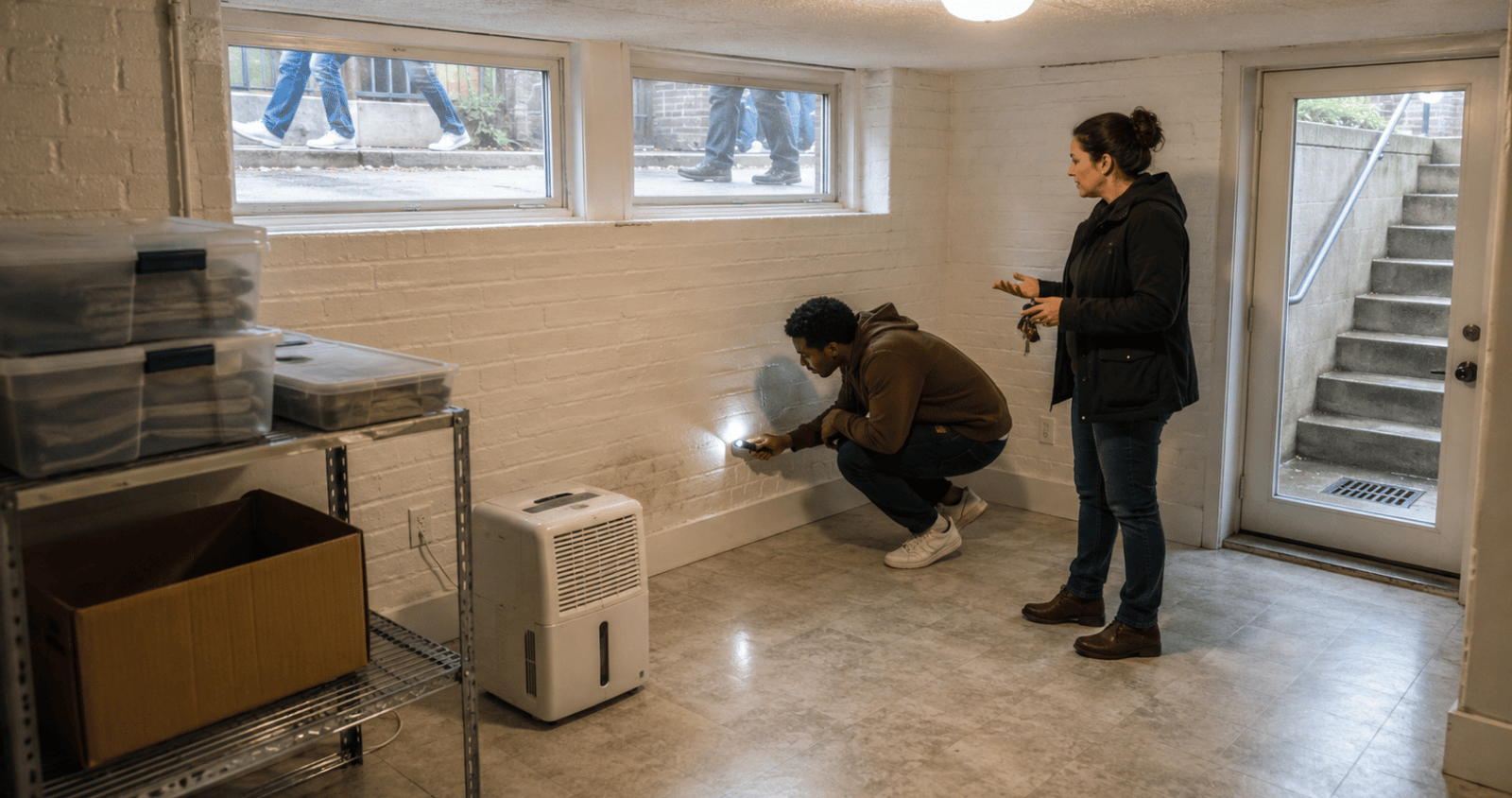
Municipal emergency management guidance for renters is specific about the signs of past flooding, and they are visible on a walkthrough.
Warped wood, cracked tile, or water stains near doors and windows. These indicate previous water intrusion even when the unit looks clean.
A musty smell, which suggests persistent moisture regardless of how recently the unit was painted.
Fresh paint low on the walls only, which is worth asking about directly.
Then look outside, because water management starts there.
Clogged gutters or missing downspouts.
Grading that slopes toward the building rather than away from it.
Where the stairwell drain sits, if there is an exterior stairwell to your door, and whether it looks maintained.
Also ask two direct questions. Has this unit ever taken on water, and is there a sump pump.
Protecting Belongings Without Renovating
Renters cannot make structural changes, which rules out most flood mitigation advice written for owners.
What is available is placement and packaging.
Nothing valuable directly on the floor. Shelving, risers, or pallets. A few inches changes outcomes in minor intrusion events, which are far more common than full floods.
Plastic bins rather than cardboard. Cardboard wicks water upward and fails immediately. Sealed bins frequently survive.
Documents, electronics, and irreplaceable items stored above grade where possible, or in a climate controlled storage unit rather than in the apartment.
Know which entry points you control. Doors and windows are yours to seal temporarily. Floor drains backing up and foundation cracks are the landlord's, and they require a written report rather than a towel.
That last distinction matters during a claim. Water entering through a door you could have addressed reads differently than water rising through a floor drain you have reported twice.
When Water Arrives, Order Matters
Below grade renters get less warning than anyone, so the sequence is worth knowing in advance.
Safety first, and treat standing water as dangerous. Electrical hazards below grade are real, and water that came up through a drain carries sewage. Boots and gloves, or stay out until it is cleared.
Call your insurer before you clean. This is the twenty four hour window described earlier, and the instruction is explicit in municipal guidance. Ask what they want you to do about cleanup before you start doing it.
Photograph everything first. Standing water, the entry point, every affected item, and a waterline on the wall if there is one. That waterline is the evidence that distinguishes a flood claim from a backup claim.
Note where the water came from. Up through a drain, in under a door, or down from a pipe. That single observation determines which of your three products responds.
Report to your landlord in writing the same day, since drainage and foundation issues are theirs.
Do not discard anything until an adjuster has seen it or released you.
Start drying immediately once documented. Mold begins within a day or two, and delay converts a covered water claim into an excluded mold problem.
The Rent Discount Is Real, And So Is The Math
Below grade units are typically the cheapest in a building, and that is a legitimate trade rather than a trap.
The honest version of the calculation looks like this.
A basement unit might save you a meaningful amount monthly against a comparable upstairs apartment in the same building.
Against that, add a water backup endorsement, a flood policy that actually covers below grade property, a dehumidifier running most of the year, and raised storage.
Those costs are modest, likely well under a month of the rent difference across a full year. So the trade usually still works.
What makes it a bad trade is buying none of them and discovering the gap during a storm. The discount is real. It is priced for a reason, and the reason is the three water paths described above.
Setting Your Numbers
Four decisions, weighted for below grade living.
Water backup endorsement. Not optional in a basement or garden unit. Ask for it by name.
Flood coverage that covers below grade property. Compare federal and private options specifically on this point.
Personal property limit based on an honest count, including anything in storage areas.
Liability at three hundred thousand rather than the default, since water originating in your unit can travel and create claims from others.
Then photograph everything, store the file off site, and note your claims number somewhere reachable without power.
Before You Sign, Or This Week If You Already Have
Ask your insurer the below grade question. Whether their flood option covers personal property stored below ground level. This is the gap most likely to leave you uncovered after doing everything right.
Add the water backup endorsement. Cheap, and it addresses the most likely form of water intrusion down here.
Get the storage right. Bins not boxes, nothing on the floor, irreplaceable things stored above grade.
Below grade apartments are frequently the most affordable units in a neighborhood, and that trade is a reasonable one to make. It is only a bad trade if nobody told you which three products the discount actually costs you.
This article is for general educational purposes and is not insurance or legal advice. Flood policy terms, below grade exclusions, endorsement availability, egress requirements, and habitability rules vary by insurer and by jurisdiction. Confirm details with your carrier and your local housing authority.
Some images in this article were generated using artificial intelligence and are for illustrative purposes only.