The Ten Percent Rule And What Nobody Tells You About It
Every article on this topic says the same thing. Your parents' homeowners policy extends about ten percent of its personal property coverage to you at school. A hundred thousand dollar limit gives you around ten thousand.
That part is accurate. It is also the easy part.
What almost nobody explains is that the extension comes with conditions, several of them, and breaking any one can quietly remove the coverage. Students discover this after a laptop disappears, not before.
The Six Conditions Attached To It
Carriers word these differently, but the pattern holds across the industry.
You have to be a full time student. Dropping to part time can end the extension mid semester.
There is an age limit. Commonly under twenty four or under twenty six depending on the carrier. Read the actual policy rather than assuming which one applies.
You have to be a dependent or resident relative. Becoming financially independent typically ends the coverage, even if nothing else changes.
Your parents' home usually has to be your permanent address. This is the one that catches people. Some insurers look at whether your driver's license still shows your parents' address. If it does not, they may treat you as no longer a resident of that household.
You generally had to live there before leaving for school. A student who never lived at the insured address may not qualify at all.
There can be a recency requirement for theft. This is the sharpest one and it deserves its own section.
The Clock On Theft Claims
Several carriers only cover theft at a student residence if the student has actually been living there recently.
The window varies. Some policies use forty five days. Others use ninety.
Think about what that means over a long summer break or a semester abroad. If your belongings stay in a dorm or an apartment while you are gone for four months and something is stolen, the claim can fall outside the window.
This is genuinely obscure and it is written into real policies. If your belongings will sit somewhere while you are away, ask your parents' insurer specifically what their recency requirement is.
Dorm Versus Off Campus Changes Everything
The extension is designed for temporary residence at school. How temporary matters.
In a dorm, the extension usually applies cleanly, assuming the conditions above hold. This is the scenario the coverage was written for.
In an off campus apartment on your own lease, it frequently does not. Signing a lease in your own name looks less like temporary absence from your parents' home and more like establishing your own residence.
Carriers differ here. Some extend to off campus housing if you still qualify as an insured. Others do not reach that far at all.
The reliable rule is that a dorm is usually covered and an apartment usually is not, but the only way to know is to have your parents call and ask about their specific policy and your specific situation.
Two Things The Parents' Policy Never Provides
Even when the extension works perfectly, two gaps remain.
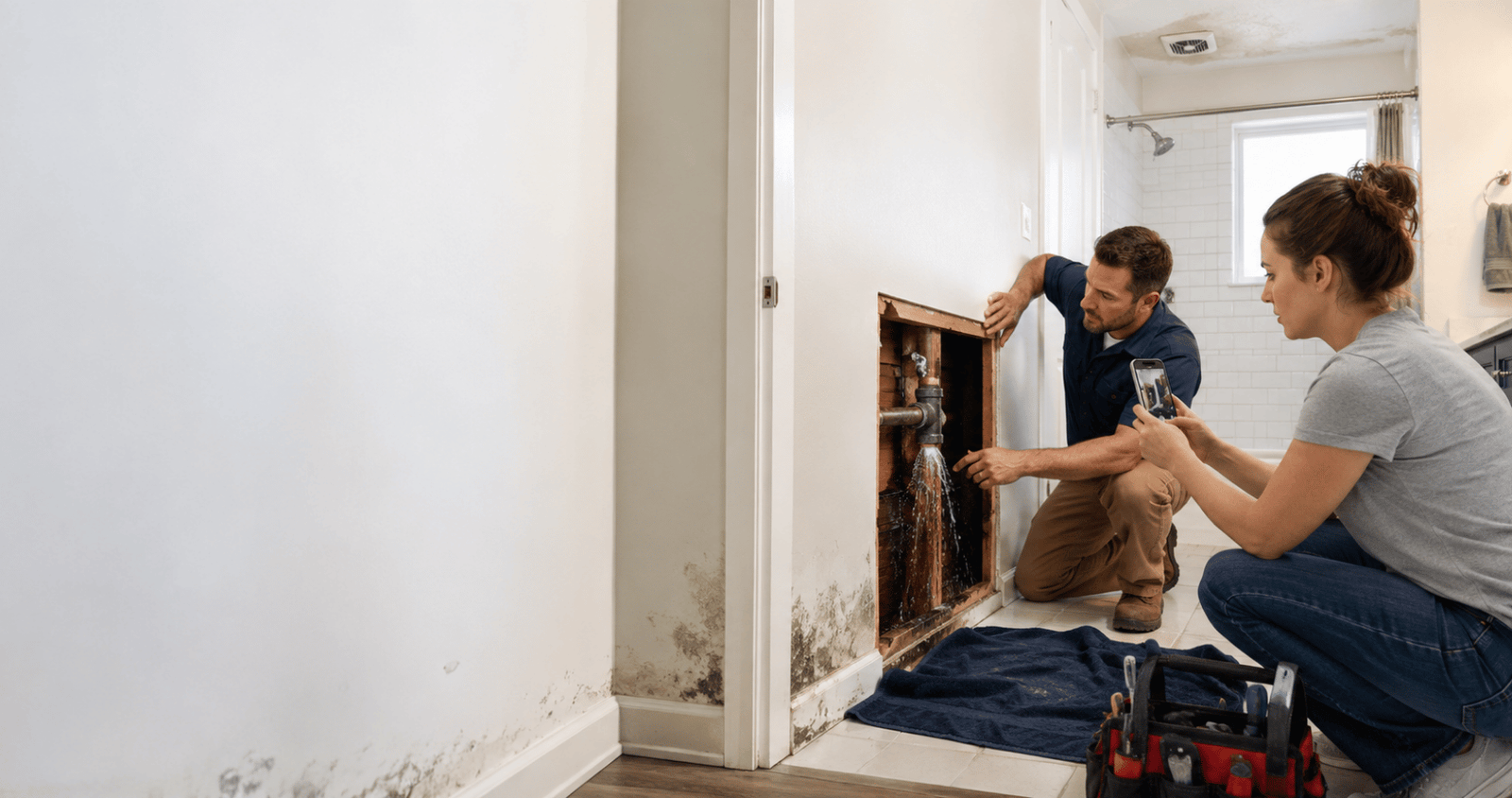
Loss of use. If your dorm or student apartment becomes uninhabitable after a fire or a burst pipe, a parents' homeowners policy generally does not pay for you to stay somewhere else. That coverage attaches to their home, not to your school residence.
A dorm fire displaces hundreds of students at once, into a local hotel market that is already full and expensive. That cost falls on the family.
Liability for the unit you occupy. Parents' liability coverage usually protects resident family members, but standard policies exclude damage to property rented to or occupied by the insured.
So if you start a kitchen fire in your apartment and the landlord seeks repair costs, that exclusion is exactly the situation it applies to. The coverage that would help is your own renters liability.
Those two gaps are the strongest argument for a student having their own policy even when the parents' extension technically works.
Count What You Actually Own
Students underestimate this consistently, so do the count.
Laptop. Phone. Tablet. Headphones. Gaming console. Monitor. Bike. Mattress and bedding. Mini fridge. Microwave. Clothing, all of it. Textbooks. A musical instrument. Sports equipment. Any tools or lab gear a program requires.
A ten thousand dollar extension sounds generous until a laptop and a phone alone account for a quarter of it.
And remember the category caps still apply. Jewelry, electronics, and collectibles carry their own sublimits underneath the ten percent figure. A student with an expensive camera or instrument can exceed a category cap without coming close to the overall limit.
Bikes, Instruments, And The Things Students Actually Lose
Three categories account for a disproportionate share of student claims, and each has a quirk.
Bikes. Campus bike theft is constant, and a bike is covered as personal property whether it was in a dorm room or locked to a rack. The obstacle is usually the deductible, since most student bikes are worth less than a five hundred dollar deductible. Record the serial number, stamped under the frame where the pedals attach, because police recover more bikes than people expect but only with that number.
Instruments. A music student's gear frequently exceeds category caps and sometimes exceeds the whole ten percent extension. Scheduling an instrument individually removes the cap, adds coverage for accidental damage rather than theft alone, and often drops the deductible to zero on that item.
Laptops. The most claimed item and the one where the settlement basis matters most. Actual cash value on a three year old laptop pays a fraction of replacement. If a student policy is being bought, replacement cost is worth the small premium difference.
What A Student Policy Costs
Considerably less than most families assume.
Published figures put student renters policies in the ten to twenty dollar a month range at several carriers, with broader estimates running fifteen to thirty depending on coverage.
One carrier's student offering runs around ten dollars a month for twenty thousand dollars of coverage with a five hundred dollar deductible.
Typical recommendations land at fifteen thousand to twenty five thousand dollars of personal property and one hundred thousand to three hundred thousand in liability.
Against a ten thousand dollar laptop, phone, and furniture replacement, and against a liability claim that could reach six figures, that premium is not a serious expense.
The Roommate Situation In Student Housing
Shared student apartments create the same problem as any shared housing, only more often.
Your policy covers you and your belongings. It does not cover your roommates or theirs. Each person needs their own.
Most insurers will not let unrelated roommates share a policy anyway. And sharing one means sharing a claims history, so a roommate's liability claim can follow you for years when you apply for coverage later.
Separate policies also avoid the argument about who owns the shared television when something happens to it. Decide that in advance and write it down.
Why Your Own Policy Protects Your Parents Too
Worth mentioning because it reframes the conversation with the person paying.
Every claim filed on the parents' homeowners policy affects their claims history and their renewal premium. A stolen student laptop claimed on their policy is a real mark on a real record, on a policy insuring a house.
A separate student renters policy keeps small student losses off that record entirely. The premium is often less than the eventual rate impact of a single homeowners claim.
That argument tends to land better than anything about coverage limits.
Storage Over The Summer Is Its Own Problem
A detail specific to student life that catches families every year.
Between spring move out and fall move in, most students put belongings somewhere. A commercial storage unit, a friend's basement, a corner of the apartment they are subletting out.
Coverage in storage is reduced almost everywhere. Off premises limits apply, and if you are relying on the parents' policy extension, the theft recency requirement can bite hardest during exactly this period, since nobody has been living at the address for months.
Three practical moves.
Take the expensive things home rather than storing them. A laptop and a camera fit in a car. A futon does not, and a futon is not what you need coverage for.
If you use a commercial storage facility, ask your insurer what limit applies to a storage unit specifically, since it is often lower than your regular off premises limit.
And photograph the inside of the unit when you lock it. If something is missing in August, that photo is your inventory.
What Changes When A Student Graduates
The extension ends and most graduates do not notice.
Coverage typically stops when you are no longer a full time student, when you pass the age cutoff, or when you become financially independent. The transition often happens quietly, in the same summer when someone signs a first real lease and buys real furniture.
That is the worst possible moment to be uninsured, because it is the moment your belongings become worth insuring.
If you are graduating, buy a policy the week you sign the lease rather than waiting until you feel established. The premium is small and the gap between graduation and a first policy is where a lot of uninsured losses happen.
Before Move In Day
Five things worth doing, none of which takes long.
Have your parents pull their declarations page and find the personal property limit. Ten percent of that number is your working figure.
Ask their insurer four specific questions. Whether off campus housing is covered, what the age cutoff is, whether there is a theft recency requirement, and whether loss of use extends to the student residence.
Photograph everything before it goes in the car. Serial numbers on electronics, wide shots of each box. Save the file to cloud storage.
Check the lease for an insurance requirement. Many off campus landlords now require each tenant to carry their own policy, which settles the question regardless of what the parents' insurer says.
Get one quote. Even if you conclude the extension is sufficient, knowing the actual price makes the decision informed rather than assumed.
The Practical Answer
If you live in a dorm, are a dependent full time student under the age limit, and your permanent address is still your parents' home, the extension probably works. Confirm the theft recency requirement and know that loss of use is missing.
If you signed your own lease off campus, get your own policy. The extension likely does not reach you, your landlord may require it anyway, and the liability gap for damage to the unit you occupy is exactly the risk students run.
At ten to twenty dollars a month, this is one of the cheapest decisions in a college budget, and one of the few that protects both the student and the parents' insurance record at the same time.
This article is for general educational purposes and is not insurance advice. Age limits, residency conditions, theft recency requirements, off campus treatment, and sublimits vary significantly by insurer and by policy. Read the actual policy and confirm details with the carrier before relying on any extension.
Some images in this article were generated using artificial intelligence and are for illustrative purposes only.