Legal In Your State Is Not Legal In Your Building
Cannabis is legal for adults in a majority of states and remains a Schedule I controlled substance under federal law.
That conflict does not resolve neatly, and for renters it produces a result that catches people badly. What is lawful for you to do may still cost you your housing, and in one category of housing the consequences are severe.
There are three layers stacking on top of each other. Federal law, your state's law, and your lease. The most restrictive one governs, and your lease is frequently the most restrictive.
Here is how each layer works, for both tobacco and cannabis, and where the genuine risks sit.
Subsidized Housing Is The Sharpest Version
If you live in public housing or receive federal rental assistance, this section matters more than anything else here.
Because cannabis use remains illegal under federal law, federal housing policy is to refuse tenancy to anyone known to use cannabis.
A federal housing memo from 2011 established that applicants who disclosed marijuana use on public housing applications would be denied admission to public housing or voucher programs regardless of their circumstances, since it is a controlled substance.
The same memo gave housing authorities the ability, though not the obligation, to terminate assistance for existing residents who use a controlled substance. Authorities have discretion, and some choose to act against individual users rather than entire households.
So in a state where cannabis is fully legal, a person in subsidized housing can lose their assistance for using it. State legalization does not reach federal program rules.
If you are in this category, that risk is worth understanding clearly before making any assumption based on your state's law.
What The Federal Smoke-Free Rule Covers
Separate from cannabis, and often confused with it.
A federal rule effective July thirty first, 2018 made smoke-free policies mandatory in public housing, covering tobacco, hookah, and waterpipe smoking in units, indoor common areas, administrative offices, and outdoor areas within twenty five feet of any building.
Two clarifications matter.
It applies to public housing rather than to all federally subsidized housing. Mixed finance buildings and privately owned dwellings financed through certain voucher programs are not automatically covered.
It addresses smoking specifically, which is why cannabis is governed by the separate controlled substance analysis above rather than by this rule alone.
If you are unsure which category your housing falls into, ask your housing authority directly, because the answer determines which rules apply to you.
Private Landlords Have The Same Authority
No federal trigger required.
A private landlord may prohibit smoking entirely, and the prohibition is enforceable everywhere.
The reason is straightforward. Smokers are not a protected class under the federal Fair Housing Act or under any state fair housing statute, which means a no smoking policy discriminates against nobody in the legal sense.
Most modern leases include a no smoking provision, and such a clause most likely applies to smoking of any kind rather than tobacco alone. If you are unsure, ask before signing rather than after.
There is also a financial reason these clauses proliferated. Insurance carriers offer meaningful rate reductions on landlord policies for documented no smoking properties, which gives owners a direct incentive to adopt and enforce them.
A Lease Clause And A House Rule Are Not The Same
A distinction that affects what a landlord can do about a violation.
Where a no smoking policy is written into the lease, a landlord can terminate the tenancy or pursue eviction for violating it.
Where the policy sits only in rules and regulations that were not incorporated into the lease, a landlord may be limited to acting on repeated violations rather than a single one.
Which means finding out where the policy lives is worth doing. Check the lease, any addendum, and the house rules, and note which document contains the restriction.
That said, this is a technical distinction rather than a license. Repeated violations reach the same outcome by a slower route.
Medical Cannabis Sits In Genuinely Unsettled Territory
Honest treatment, because the sources disagree and the law is moving.
One position. Accommodation requests for cannabis use are routinely denied, on the basis that cannabis remains federally illegal and fair housing law does not require accommodation of conduct that is illegal under federal law.
The other. A landlord who specifically bans medical cannabis may face a claim of discriminating against someone with a disability, which is why guidance to landlords frequently advises banning all smoking on odor and secondhand smoke grounds rather than singling out medical use.
Both of those appear in reputable sources, and the outcome depends on your state, your housing type, and how the policy is drafted.
What follows practically. If you use cannabis medically and your lease bans smoking, do not assume an accommodation will be granted, and do not assume it will be refused either. Ask in writing, and involve a fair housing organization if the response is unclear.
The Middle Ground Nobody Mentions
A practical resolution that satisfies both sides more often than a legal fight does.
Non smoked forms of cannabis, including extracts, tinctures, oils, edibles, pills, and inhalers, do not expose other residents to smoke at all.
Public health guidance notes this as a workable compromise for many users, reached in consultation with a prescribing physician, while acknowledging that methods of ingestion are not identical in effect for every person.
For a landlord, the objection is almost always smoke rather than cannabis. For a tenant with a genuine medical need, a non smoked route frequently preserves both the treatment and the tenancy.
Proposing that yourself, in writing, is a considerably stronger position than waiting to be accused of a violation.
If You Are The One Breathing Someone Else's Smoke
The reverse situation, and it has genuine remedies.
Severe secondhand smoke affecting health and safety can trigger a landlord's habitability obligations, and units subject to secondhand smoke infiltration have been argued to be uninhabitable on health grounds.
Secondhand smoke in common areas such as hallways and lobbies affects every tenant and is squarely the landlord's responsibility.
Landlord side guidance lists the expected responses. Investigate the complaint, enforce the lease against the smoking tenant if a provision exists, address ventilation and airflow, and in some cases transfer a tenant to a different unit.
Which tells you what to ask for. Naming those options in your written complaint frames a solvable problem rather than a grievance.
Do Not Simply Move Out
The procedural warning, and it is the same trap that appears throughout tenant law.
Secondhand smoke may justify lease termination, but only after you provide written notice, give the landlord a reasonable cure period, and the landlord fails to act.
Vacating without following the correct procedure produces the worst version of every outcome. You owe several months of rent, and you face an eviction on your record.
So the sequence is written notice, a reasonable period, escalation if nothing happens, and only then a decision about leaving, ideally with advice.
Follow your state's habitability remedy procedure. The problem being genuine is not a substitute for the process being followed.
Smoke Sensitivity Can Be A Disability
The other direction of accommodation, and it is stronger than the cannabis version.
Fair housing law may require accommodation for tenants with smoking related disabilities such as asthma or chronic obstructive pulmonary disease, through measures including separation, improved ventilation, or a unit transfer.
That is a request worth making explicitly if you have a documented respiratory condition and smoke is entering your unit.
Frame it as a reasonable accommodation request rather than as a complaint, because that language triggers a specific legal obligation on the landlord's part rather than a general one.
Two supporting steps. A note from a treating physician establishing the condition, and a written record of when and where the smoke intrudes.
Where No Policy Exists, You Can Ask For One
An option most renters do not consider.
Where a building has no smoke free policy, tenants can request that management adopt one. Apartments are typically made smoke free through lease addendums and changes to house rules.
Model smoke free lease addendum language exists publicly for landlords willing to adopt it, and the insurance discount mentioned earlier gives owners a financial reason to say yes.
Tenants experiencing infiltration from electronic cigarettes and vape products can also advocate for those to be included in any policy, since older clauses sometimes address combustion only.
A request from several units carries more weight than one from a single tenant. If neighbors share the problem, ask together.
Association Rules Can Override A Silent Lease
A layer renters in condos frequently miss.
Your lease binds you and your landlord. Association governing documents bind everyone in the community, including tenants, through covenants attached to the property itself.
Which means if your lease says nothing about balcony smoking but the association's rules prohibit it, the association rule controls.
Violations can produce fines assessed against the landlord, who may pass them to you or treat the violation as grounds for a lease breach.
Before signing in a condo or a community with an association, ask for a copy of the governing documents and any smoking policy. It is a reasonable request and the answer occasionally changes a decision.
Smoke Damage And Your Deposit
The financial tail of all this.
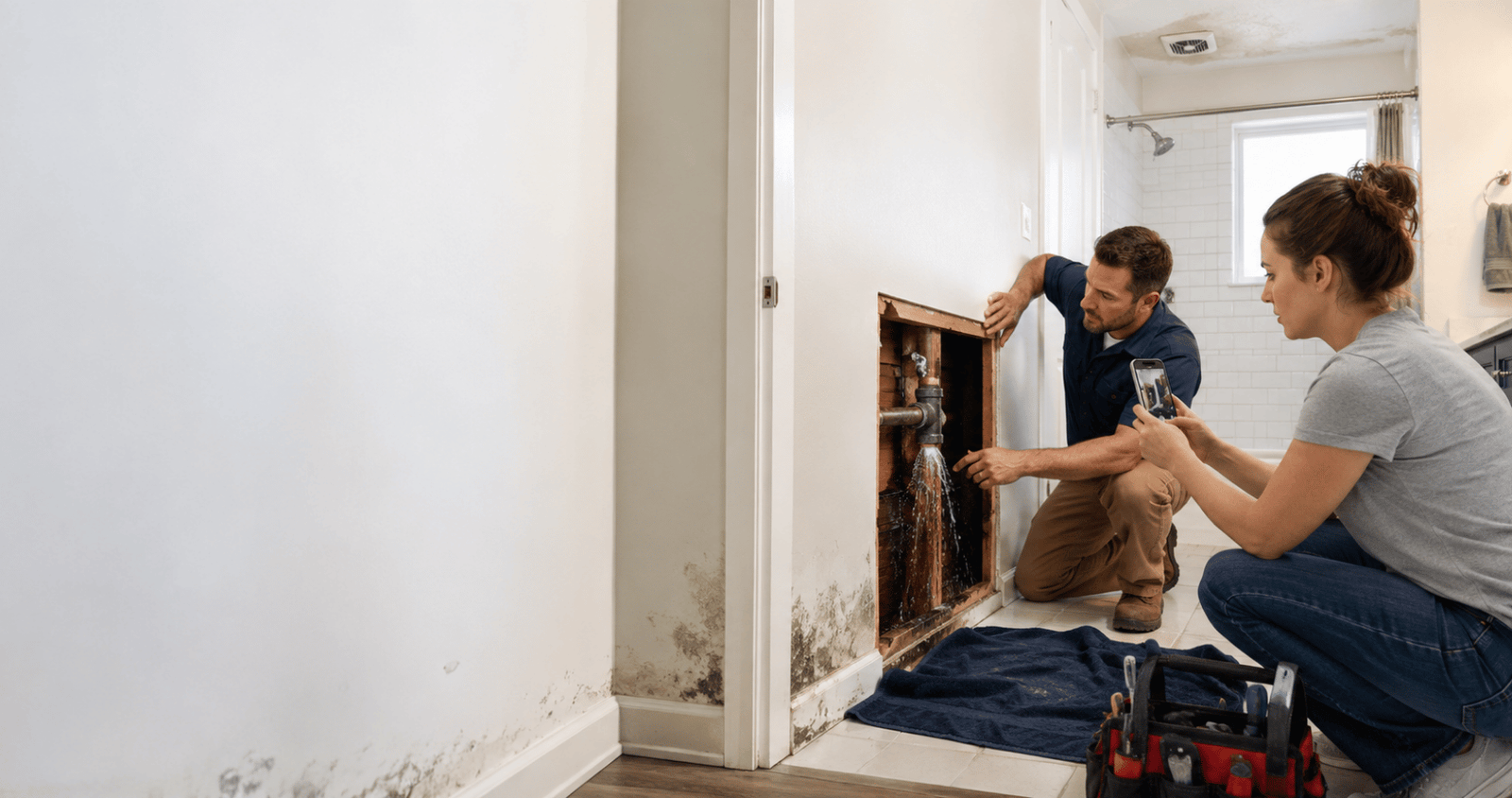
Smoke residue on walls, ceilings, and fixtures is treated as damage rather than normal wear and tear, and remediation is expensive because odor persists after surfaces are cleaned.
Which means a violation can cost far more than a fine. A deposit can be consumed entirely, and charges can exceed it.
Two protections. Photograph the unit thoroughly at move in, since pre existing smoke residue from a previous tenant is not your responsibility and is difficult to disprove without images.
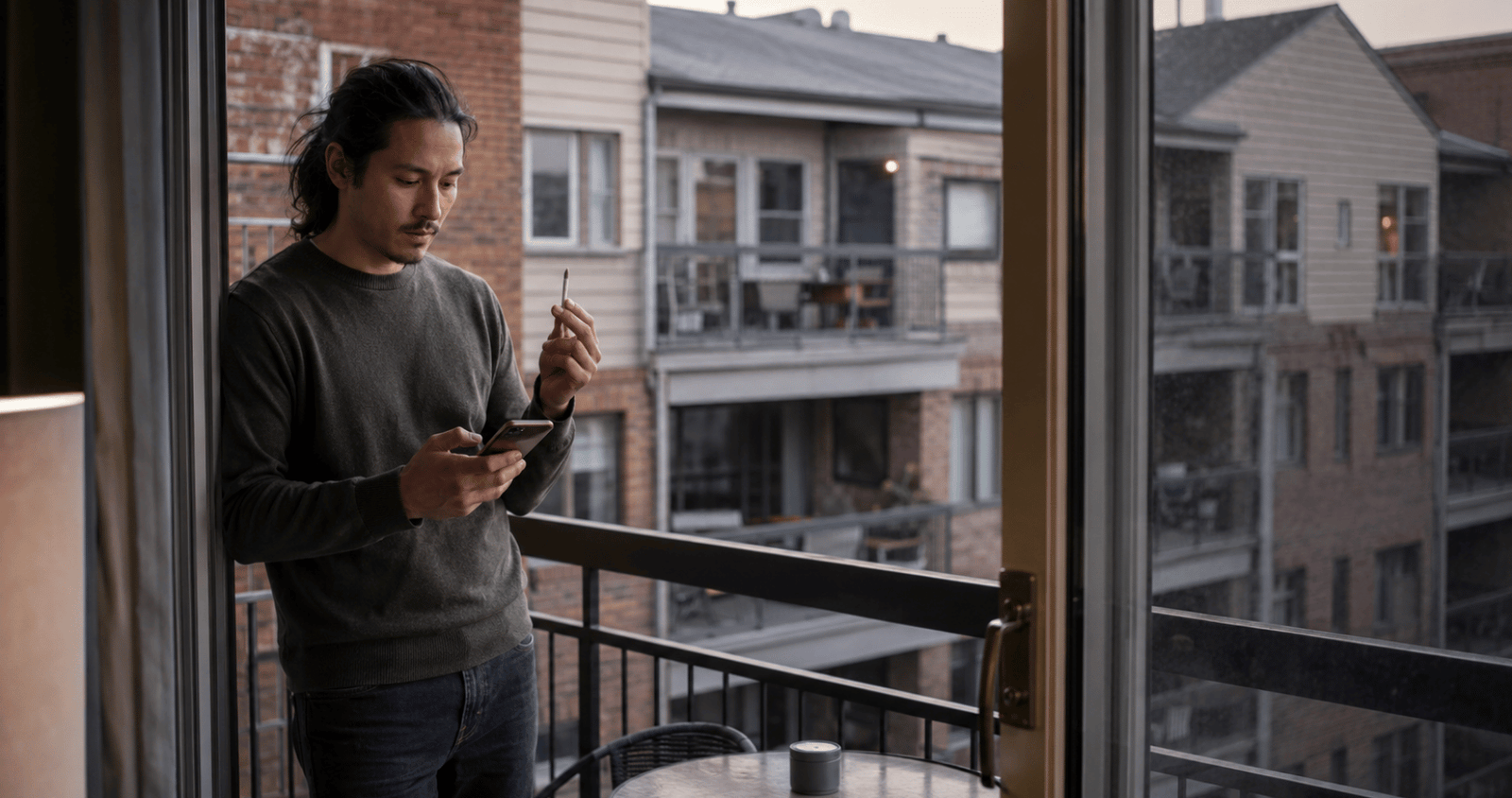
And if you smoke outside a unit where it is permitted, keep it genuinely outside and away from windows and vents, since infiltration into your own unit produces the same residue.
Before You Sign, And Before You Light Anything
Four things.
Find the smoking clause and check whether it covers all smoking or tobacco only, and whether it sits in the lease or in house rules.
Ask for the association rules if the building has an association, since they can be stricter than your lease.
Know your housing category. Public housing, other federally subsidized housing, and private rentals operate under different rules, and the cannabis consequences differ most sharply between them.
If you have a medical need, raise it in writing before there is a violation, and consider proposing a non smoked route yourself.
Three layers of rules stack here and the most restrictive wins. State legalization changed one of those layers and left the other two exactly as they were, which is why so many renters are surprised by an outcome that was entirely predictable from their lease.
This article is for general educational purposes and is not legal advice. Federal housing policy, state cannabis law, accommodation obligations, and lease enforcement vary and have been changing. Consult a local tenant organization, fair housing organization, or attorney about your situation.
Some images in this article were generated using artificial intelligence and are for illustrative purposes only.