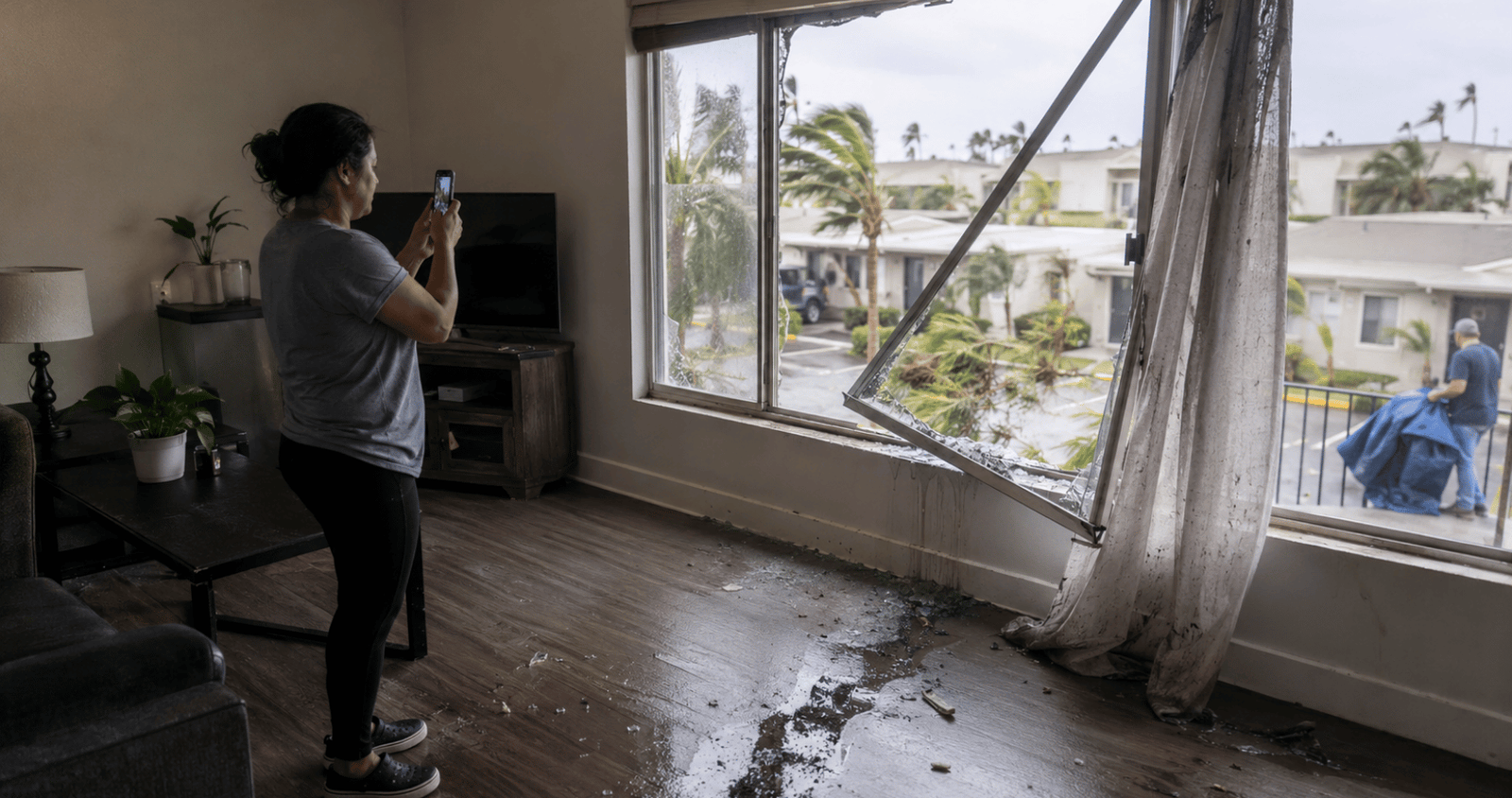
Your Policy Here May Not Cover Wind At All
Most renters assume wind is covered. In Corpus Christi that assumption is genuinely unsafe.
Nueces County is one of fourteen first tier coastal counties designated by the Texas Department of Insurance, and private carriers often exclude windstorm coverage in these counties entirely.
So a renter here can be holding a policy that covers fire, theft, and water from a burst pipe, and does nothing at all when a hurricane blows the windows out.
One Texas analysis puts it plainly. The windstorm and hail gap trips up more Texas renters than any other coverage issue on the Gulf Coast.
Checking whether you have it takes about two minutes and it is the most important thing on this page.
The Structure Exists Because Of This City
Worth knowing the history, because it explains why coastal Texas insurance works differently.
Hurricane Celia struck Corpus Christi in 1970 and caused around five hundred million dollars in damage. Afterward, most insurance companies stopped writing wind coverage along the Texas coast.
The Texas Legislature created the Texas Windstorm Insurance Association in 1971 in response, specifically to keep wind coverage available and affordable on the Gulf Coast.
TWIA is the state backed insurer of last resort for wind and hail in those fourteen counties, plus the portion of Harris County east of Highway 146.
What TWIA Is And Is Not
Precision matters here because the name misleads people.
TWIA covers wind and hail only. Not fire. Not theft. Not vandalism. It is a supplement to a separate policy where wind is excluded, not a replacement for one.
TWIA does not cover flood or storm surge. Those are explicitly excluded, exactly as they are on every other policy in the country.
TWIA is a last resort. It exists for properties that cannot obtain wind coverage in the private market.
For a renter, the practical question is simpler than for a homeowner. You need to find out whether wind and hail are on your renters policy, and if they are not, what your options are for adding them.
How To Check In Two Minutes
Open your declarations page and look for windstorm and hail.
You are looking for one of three situations.
Wind and hail are covered, with a deductible listed. Note whether that deductible is a percentage rather than a flat amount, since coastal Texas policies commonly use percentages.
Wind and hail are excluded, usually stated plainly. This is the situation that requires action.
You cannot tell. Call your agent and ask the specific question. Is windstorm and hail damage covered on this policy, and what deductible applies.
Do not accept a general reassurance that you have full coverage. Ask about wind by name.
The Three Policy Reality On This Coast
Full protection for a Corpus Christi renter is not one product.
A renters policy for fire, theft, vandalism, water from interior plumbing, liability, and loss of use.
Wind and hail coverage, either included on that policy or added separately where private carriers exclude it.
Flood coverage, because neither of the above touches rising water or storm surge.
Each closes a gap the others leave open. Renters here who carry only the first are covered against the least likely of the three catastrophic scenarios.
What Harvey Proved About Flood
Hurricane Harvey flooded more than two hundred thousand homes in 2017, and most renters affected had zero flood coverage.
Significant portions of Corpus Christi sit in high risk flood zones according to FEMA mapping, and flood damage is never covered under a standard renters policy.
The encouraging part is the price. Renter flood policies through the National Flood Insurance Program cover contents only rather than a building, and they start around ninety nine dollars a year, with coastal Texas renters commonly advised to budget ninety nine to one hundred fifty annually.
Under one hundred fifty dollars a year, on a coast where a single storm left hundreds of thousands of households uninsured against the exact damage that occurred.
The Fight That Follows Every Hurricane
Here is a Corpus Christi specific reality worth preparing for.
After major hurricanes, the allocation of damage between wind and storm surge is one of the most contested issues in coastal claims. Insurers frequently classify losses as flood rather than covered wind events, because that distinction determines whether they pay.
You cannot control how an adjuster reasons. You can control the evidence.
Photograph the entry point, not just the damage. A blown out window with rain marks below it is a wind claim. A waterline on a wall six inches off the floor is a flood claim. Those two images tell completely different stories.
Note the sequence and the time. Wind first, then water, or water rising with no wind breach. Write it down while it is fresh.
Photograph the exterior including any roof damage visible from the ground.
Keep both claim numbers and both adjusters' details separate if you are filing on two policies.
The renter with clear photographs of how the water got in resolves this far faster than the renter describing it from memory three weeks later.
The Lease Right Texas Gives You
This one is genuinely useful and almost never mentioned in insurance articles.
Under Texas Property Code Section 92.054, storm damage that makes a rental totally unusable for residential purposes allows either the landlord or the tenant to terminate the lease.
The tenant receives a pro rata rent refund and their security deposit back.
That is a statutory right, separate from your insurance claim, and it matters when a building will be under repair for months and you need to move on.
Two practical notes. The standard is totally unusable, not merely damaged or inconvenient. And you should get the condition documented in writing before acting on it.
Tornadoes And Hail Are A Statewide Problem
Texas averaged well over one hundred tornadoes a year over the past decade, and 2024 saw one hundred sixty nine confirmed tornadoes, more than any other state.
Corpus Christi also experiences significant hail events. Hail damage to your belongings is covered, assuming wind and hail are actually on your policy, which brings the article back to its opening point.
Hail is also where percentage deductibles bite. A three percent hail deductible on thirty thousand dollars of coverage is nine hundred dollars, against perhaps five hundred for a kitchen fire in the same apartment.
The Deductible Math On This Coast
Coastal Texas policies stack deductibles in a way inland renters never encounter, and the arithmetic changes what is worth filing.
You may be carrying three separate figures.
A standard deductible for fire, theft, and interior water damage. Commonly five hundred to one thousand dollars.
A wind or named storm deductible, frequently expressed as a percentage of your coverage rather than a flat amount. On thirty thousand dollars of personal property, a two percent figure is six hundred dollars and a five percent figure is fifteen hundred.
A flood deductible on your separate flood policy, typically a flat amount rather than a percentage.
After a hurricane that produces both wind and water damage, you can be looking at two claims against two policies with two deductibles for one storm.
Run those numbers before hurricane season rather than during a claim. Knowing that a moderate wind loss will not clear a fifteen hundred dollar deductible tells you something useful about whether to raise your coverage limit, lower the deductible percentage if that option exists, or simply plan around it.
Evacuation Costs Are Often Claimable
A detail Gulf Coast renters routinely leave on the table.
If local authorities issue a mandatory evacuation order and you incur hotel and meal costs, loss of use coverage may reimburse the additional expense even when your apartment is never damaged. The trigger is a civil authority preventing you from occupying your home.
Save every receipt from the moment you leave. Hotel, fuel above your normal commuting, meals above your grocery baseline, pet boarding, storage.
One important limit. Loss of use responds to covered perils. If your unit is unlivable because of surge water and you carry no flood policy, the hotel is not covered either, because the underlying peril is excluded.
That is the harshest version of the flood gap on this coast. You lose your belongings and the coverage that would have housed you at the same time.
What Texas Renters Pay
Texas renters insurance averages roughly one hundred eighty to two hundred fifty dollars a year, which makes it one of the more affordable states for the base policy.
Coastal counties price above inland Texas, and Corpus Christi sits at the upper end of the statewide range along with other Gulf communities.
Wind coverage, where it must be purchased separately, adds to that. For renters the additional cost is far lower than for homeowners, since you are insuring contents rather than a structure.
Bundling with auto remains the largest single discount available, and in a state with Texas auto premiums, the discount on the auto side often exceeds the entire renters premium.
Setting Your Coverage
Most Texas renters need twenty five thousand to forty thousand dollars in personal property coverage and at least one hundred thousand in liability, with three hundred thousand worth considering.
One useful correction. Most people underestimate what they own by thirty to forty percent.
Walk your apartment room by room and total replacement costs at current prices rather than trusting a quoting default or your own instinct.
Then check the settlement basis on your declarations page. Actual cash value pays depreciated value. Replacement cost pays what a comparable new item costs today. After a storm takes a whole room at once, that is the difference between rebuilding and starting over.
Before June
Four things, in order of importance.
Confirm wind and hail are on your policy. This is the Corpus Christi specific check and nothing else on this list matters as much.
Find every deductible, including any separate wind, hail, or named storm figure, and convert percentages into actual dollars.
Price a renter flood policy. Federal policies carry a thirty day waiting period, and new coverage generally cannot be bound once a storm is forecast. The window is winter and spring.
Video every room with closets and drawers open, capturing serial numbers, and store the file in cloud storage.
The Short Version
Corpus Christi renters carry a gap that renters almost nowhere else do. The peril most likely to damage your belongings, wind, may simply not be on your policy.
Check that first. Then price flood coverage, because Harvey demonstrated what happens to renters who assumed their standard policy covered rising water.
And keep Section 92.054 in mind. If a storm makes your apartment genuinely unlivable, Texas law gives you a way out of the lease with your deposit and a rent refund, which is worth knowing before you are negotiating with a property manager in a bad week.
This article is for general educational purposes and is not legal or insurance advice. Coverage availability, exclusions, deductibles, and statutory provisions vary by insurer and can change. Confirm details with your carrier, the Texas Department of Insurance, or a licensed agent.
Some images in this article were generated using artificial intelligence and are for illustrative purposes only.