Three Ways You Get Billed, And Only One Measures Your Use
Utility charges are the least examined line in most rentals, and the structure behind them varies more than tenants realize.
Direct metering. The utility installs a meter for your unit and the account is in your name. You contract with the provider and pay them directly. Your bill reflects exactly what you used.
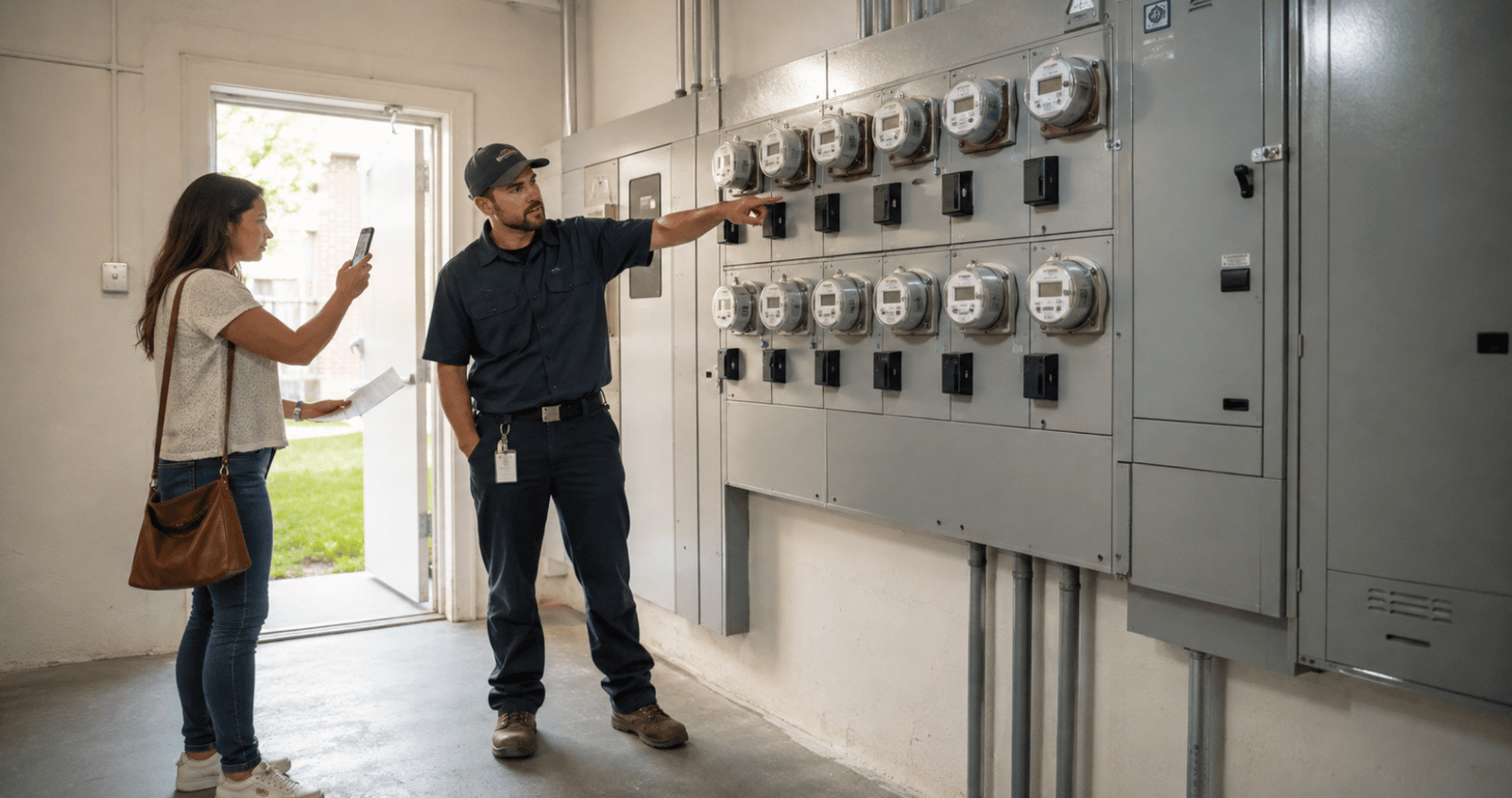
Submetering. Individual meters are installed per unit, but the master account stays in the landlord's name. The landlord bills you based on your actual measured consumption. Regulated separately from the third option and generally more tenant favorable, because charges track measured use.
Ratio utility billing, or RUBS. There are no individual meters. The building's total is divided among units by a formula, typically square footage, occupant count, or a blend. The landlord or a third party billing company invoices you for your allocated share.
Only the first two measure what you actually consumed. The third estimates it, and that difference is where most disputes live.
Why RUBS Draws Complaints
The structural problem is straightforward.
Under a formula, tenants who use less subsidize tenants who use more. A careful household in a large unit can pay more than a wasteful one in a small unit, because square footage rather than consumption drove the allocation.
RUBS is attractive to owners of master metered buildings because installing and maintaining submeters in an older property is expensive.
Regulation is a patchwork. Some states regulate RUBS closely, others allow it freely, and coverage comes from a mix of state statutes, public utility commission rules, and local ordinances.
Which means your rights here depend heavily on where you live, and the first thing to check is whether your state imposed a condition your landlord may have missed.
The Disclosure That Can Void The Whole Arrangement
This is the most valuable thing in this article.
California requires a landlord using RUBS to disclose the billing method to prospective tenants before they sign the lease, and the disclosure must explain the formula used to allocate costs.
Failure to make that disclosure before signing gives the tenant the right to void the RUBS billing provision and treat utilities as included in rent at no additional cost.
Read that again. Not a reduced bill. No bill.
Similar pre lease disclosure requirements exist in Texas, which requires the allocation method to be disclosed in the lease, in Washington under its utility commission rules, and in several other states.
So the question worth asking is not only whether your bill is accurate. It is whether the arrangement was properly disclosed to you before you signed anything.
Look back at what you received. If the formula was never explained in writing before signing, that is worth raising with a tenant organization in a state with a disclosure requirement.
The Common Area Deduction
A line item to look for, and its absence is a red flag.
Hallways, lobbies, pools, laundry rooms, and landscape irrigation all consume utilities that appear on the master bill.
A well run RUBS program subtracts an estimate for that shared consumption before dividing the remainder among tenants. The landlord absorbs the common area share as an operating expense.
If your itemized bill shows no common area adjustment, that is worth questioning. Charging tenants for lobby lighting and irrigation they do not control is precisely the practice that attracts regulatory attention.
Ask for the calculation. A landlord who cannot explain how the common area share was handled has told you something.
Leaks Are Not Your Consumption
A specific and common unfairness.
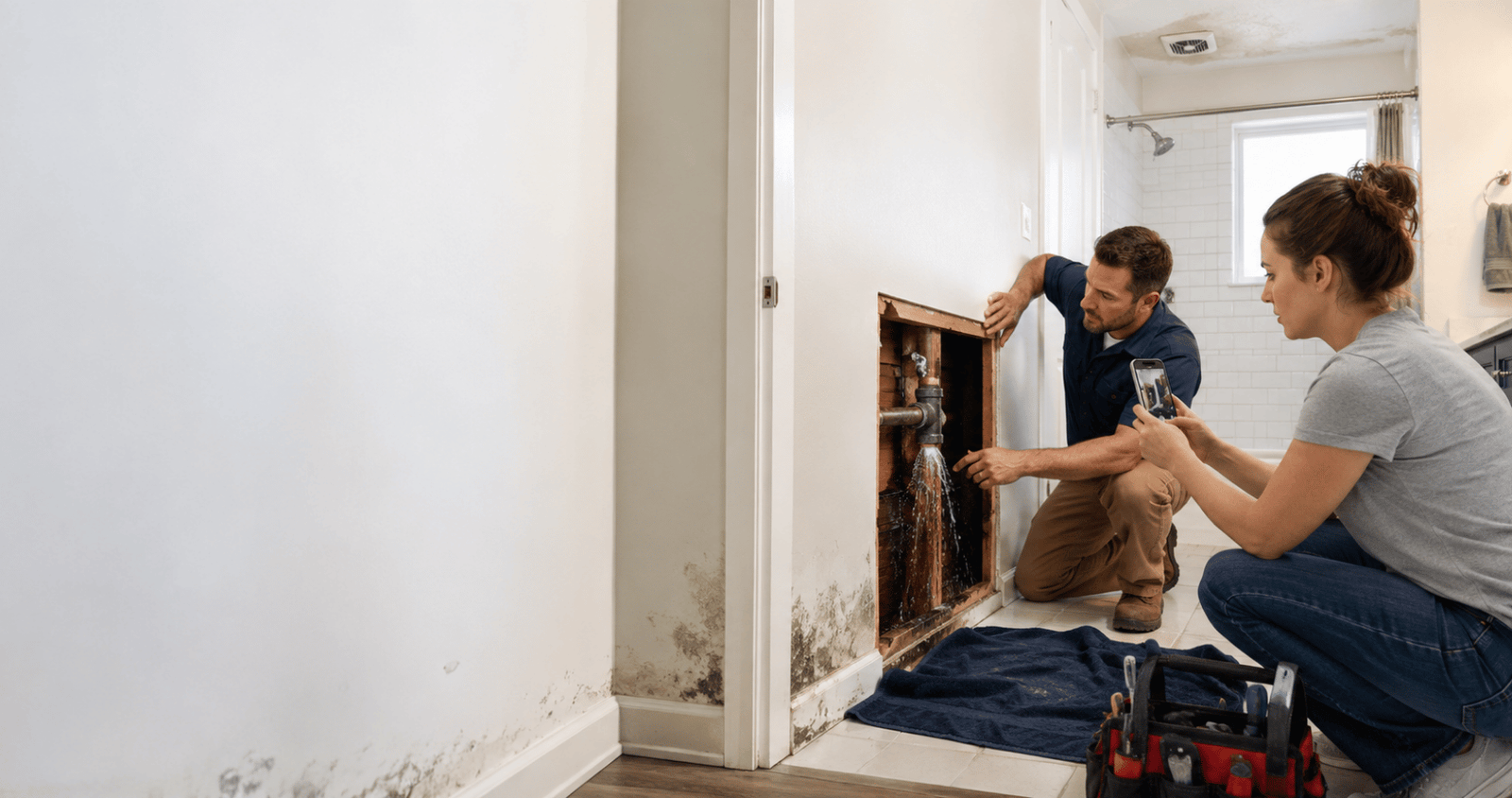
When a leak in landlord maintained plumbing causes water consumption to spike, tenants in a RUBS building should not bear that cost.
The building used the water. The tenants did not.
If your allocated water charge jumps sharply with no change in your household, that is a signal to ask two questions. Whether there is a known leak, and how the resulting consumption was treated in the allocation.
Report suspected leaks in writing regardless, since that record supports both a billing dispute and any later habitability issue.
Who Pays What By Default
Most US leases follow a consistent pattern, and the lease overrides it.
Tenants typically pay electricity, natural gas where applicable, and internet. Landlords typically pay water, sewer, and trash.
The logic is control. Utilities that scale with usage are tenant controllable, so tenants pay them. Utilities that are fixed cost or difficult to meter individually get bundled into rent.
Exceptions are extensive and state specific. Massachusetts, for example, does not permit landlords to pass through gas heat in master metered buildings, so where heat is master metered the landlord pays.
Read the utility clause in your lease before signing, and ask which specific utilities you will be billed for and by which method.
A Shutoff Is Never A Rent Collection Tool
The clearest rule in this whole area.
Every US state prohibits utility shutoff as an eviction tactic. California imposes civil penalties for it specifically.
And in a master metered building, a landlord almost certainly cannot shut off your service over an unpaid utility reimbursement charge, because the utility account is in the landlord's name rather than yours. Their dispute with you is a billing matter, not a service matter, and using a shutoff as leverage is treated as a form of illegal eviction.
If a landlord threatens or executes a shutoff over money, that is an urgent legal matter rather than a negotiation. Contact a tenant organization or legal aid immediately.
When The Landlord Stops Paying The Master Bill
The scenario that leaves whole buildings without service, and tenants have more options than they expect.
Where the landlord is responsible for the underlying account, as in all RUBS arrangements and most submetering, they have an obligation to keep it in good standing and maintain uninterrupted service.
A landlord who fails to pay and allows service to be cut to the building has violated the implied warranty of habitability, even where tenants paid their billed shares faithfully.
Three remedies commonly arise.
Pay the utility directly and deduct from rent. Most states require the utility company to notify tenants before disconnecting a master metered building, and tenants can often step in, pay the current bill to the provider, and deduct that payment from rent.
Terminate the lease for constructive eviction, where the loss of service makes the unit unlivable.
Seek damages for the disruption.
The first option is the one to know about in advance, because the window between the utility's notice and the actual disconnection is short.
If you receive a disconnection notice for a building account you do not hold, call the utility immediately and ask what a tenant in your position can do. They deal with this regularly.
A Disputed Bill Cannot Trigger A Shutoff
A protection worth using.
Most state public utility commission rules prohibit disconnection over a disputed billing amount.
A customer who has filed a formal billing dispute in writing generally cannot have service terminated until the dispute is resolved, whether through the utility's own review process or a complaint to the public utility commission.
The operative words are formal and in writing. A phone call expressing unhappiness is not a filed dispute.
If you believe a bill is wrong, file the dispute properly and keep proof of filing. That single act converts a vulnerable position into a protected one.
Winter Rules And Assistance
Two safety nets that exist and go underused.
Moratoriums. Many states prohibit disconnection during extreme temperatures, and some extend protections where a household includes someone with a serious illness. Rules vary considerably by state.
Assistance programs. Federal energy assistance is available to households typically at or below one hundred fifty percent of the federal poverty level or sixty percent of state median income. Crisis funds can be processed within eighteen to forty eight hours for imminent shutoff emergencies.
The national referral line is 1-866-674-6327, and local community action agencies administer the programs.
If you are facing disconnection, call before it happens rather than after. Restoration is slower and more expensive than prevention.
How To Audit A Utility Bill
A checklist adapted from what tenant advocates work through.
Which utilities are included in rent and which are billed separately.
How each billed utility is charged. Direct metering, submetering, or formula allocation.
What the allocation formula is, if RUBS applies, and whether it was disclosed to you before signing.
Whether a common area deduction appears, and how it was calculated.
Whether the amount passed through matches the underlying utility charge, with no markup. Tenant advocates and landlord guidance both treat pass through of actual cost as the standard.
Whether you can obtain a copy of the master bill. Well run arrangements provide it on request, and a refusal is informative.
What the advertisements and pre lease materials said about utilities, since a discrepancy between what you were told and what you are billed matters.
Ask for these in writing. A landlord operating properly can answer all of them.
When To Escalate
Three routes, depending on the problem.
Your state public utility commission, for billing disputes, disconnection issues, and questions about whether a landlord is acting as an unauthorized reseller of utility service.
A tenant organization or legal aid, for disclosure failures, habitability issues from lost service, and pay and deduct questions.
Your state attorney general or consumer protection office, where a billing practice looks like a consumer protection violation rather than a utility matter.
Document first. Copies of every bill, your lease, any pre lease disclosure, and your written requests for the underlying calculation.
Three Things To Check Tonight
Find out which system bills you. Direct meter, submeter, or formula. It is the difference between paying for your use and paying for an estimate.
Look for the pre lease disclosure if you are on RUBS, because in several states its absence changes everything.
Look for a common area deduction on your itemized bill, and ask for the calculation if there is none.
Utility charges are small enough monthly that people accept them without examination and large enough annually to be worth twenty minutes. And in a handful of states, a disclosure that never happened means the charge should not exist at all.
This article is for general educational purposes and is not legal advice. Utility billing regulation, disclosure requirements, shutoff protections, and available remedies vary significantly by state, by utility commission rule, and by local ordinance. Consult your state public utility commission or a tenant organization.
Some images in this article were generated using artificial intelligence and are for illustrative purposes only.