The Average Claim Is Sixty Nine Thousand And Your Limit Is One Hundred
Start with the number that makes this worth ten minutes.
The Insurance Information Institute put the average dog bite liability claim at sixty nine thousand two hundred seventy two dollars in 2024. Severe cases pass one hundred thousand.
Most renters policies default to one hundred thousand dollars in personal liability.
So the average claim consumes roughly two thirds of a standard limit, and a bad one exceeds it entirely. Anything above your limit is yours to pay, out of savings, wages, or whatever else is available.
Roughly seventy two percent of renters live with a pet. Very few of them have looked at that number.
What Your Policy Actually Covers
The good news first, because standard coverage is broader than people expect.
Personal liability, which is already built into your renters policy at no extra cost, responds when your dog injures someone or damages their property.
That includes the injured person's medical bills, your legal defense costs, and any settlement or judgment, up to your limit.
It applies whether the bite happens in your apartment, at a park, or on a walk. Liability generally follows you.
The property damage side works too. If your dog breaks a guest's laptop or destroys a neighbor's fence, that is third party property damage and it is covered.
Four Things It Never Covers
The exclusions are consistent across carriers.
Anyone in your household. Your policy will not pay for injuries to you, your spouse, your children, or anyone else named on it. If your dog bites your own child, that runs through health insurance.
Your own belongings. A chewed couch or shredded rug is your expense.
The rental unit itself. Scratched floors, damaged doors, and ruined carpet belong to your landlord, and liability generally excludes property rented to or occupied by you. That is a security deposit conversation.
Your dog's own injuries. That is pet health insurance, an entirely separate product.
The Roommate Exception
Here is a nuance almost nobody knows.
A roommate who is not named on your policy is usually treated as a third party. Which means a bite to that roommate may actually be covered, unlike a bite to a spouse or a child.
That is a strange line, but it follows from how insurers define an insured person. Household members named on the policy are inside. Everyone else is outside, including someone sleeping down the hall.
Worth knowing if you share an apartment and own a dog.
Which Breeds Get Excluded
Many insurers maintain breed restriction lists, and the same names appear repeatedly.
Pit bulls, Rottweilers, Doberman Pinschers, and German Shepherds are the most commonly listed. Some carriers extend it to Chow Chows, Akitas, Alaskan Malamutes, and wolf hybrids.
Beyond breed, several categories get excluded regardless of what the dog looks like.
Dogs with any bite history. Dogs trained for protection or attack work. In some cases, unneutered male dogs.
Exotic pets are their own category and are typically excluded outright. Reptiles including snakes and lizards, monkeys, and some species of birds.
Not Every Insurer Uses A List
This matters if you own a restricted breed, and it is the most useful thing to know.
Some large carriers do not use breed lists at all and instead evaluate each dog individually based on bite history. State Farm and USAA are notable examples.
State Farm's stated reasoning is worth repeating, because it is more sensible than the industry norm. Under the right circumstances, any dog might bite, regardless of breed.
So being declined by one carrier tells you about that carrier rather than about your options. Shop before concluding you are uninsurable.
Some States Restrict Breed Based Decisions
Several states limit or prohibit insurers from making coverage decisions based on breed alone, including New York, Nevada, Illinois, Michigan, Colorado, and Pennsylvania.
If you live in one of those and have been declined or excluded on breed, that is worth raising with your state insurance department.
Rules and their scope vary, so confirm your state's current position rather than assuming. But this is a genuine consumer protection that exists in some places and most renters have never heard of it.
The Emotional Support Animal Gap
This one causes real harm because people reasonably assume otherwise.
An emotional support animal letter protects your housing rights under the Fair Housing Act. Your landlord generally cannot refuse the animal or charge pet fees for it.
It does nothing at all in the insurance context.
Insurance operates on separate rules. A carrier can still maintain breed restrictions that exclude your ESA, deny coverage for a dog with bite history, or impose higher premiums and lower limits.
And your personal liability is unchanged. If your emotional support dog injures a visitor, you owe their medical bills, lost wages, and any other damages, exactly as any other owner would.
Fair housing protections and insurance coverage are two different systems. Winning the first does not touch the second.
If Your Breed Is Excluded
Three paths, in order of how well they usually work.
Shop carriers that do not use breed lists. The cheapest and simplest fix, and the one people skip because a single decline feels final.
Buy standalone animal liability coverage. Purpose built for owners whose renters insurer excludes their breed. It pays third party bite and property damage claims the same way renters liability would. Published pricing runs roughly one hundred fifty to five hundred dollars a year, with quotes of thirty to ninety five dollars a month for higher limits or breeds carriers consider riskier.
Consider an umbrella policy. Additional liability coverage sitting above your other policies. Worth asking about, though be aware many umbrella policies carry their own animal exclusions, so confirm your breed is actually covered before relying on it.
Disclosure Is Not Optional
This is the mistake that undoes everything else.
When you buy a policy you will be asked whether you own pets. Answer completely, including breed, size, and any bite history.
If your dog bites someone and you failed to disclose breed and size, your insurer can deny the claim on the grounds of misrepresentation.
That is the worst possible outcome. You paid premiums for years, you have a sixty nine thousand dollar claim, and the policy does not respond because of an answer you gave when you signed up.
Get written confirmation of what your policy covers regarding your specific dog. An email from your agent costs nothing and it is the document that settles a dispute later.
The same applies when circumstances change. A new dog, a bite incident, or a move all warrant a call.
Raise The Limit
Given the numbers at the top of this article, this is the clearest recommendation on the page.
Most policies default to one hundred thousand dollars. Standard options typically run to three hundred thousand, and higher is often available.
For a dog owner, one hundred thousand is thin. The average claim consumes most of it and severe cases exceed it.
Raising the limit to three hundred thousand generally costs a few dollars a year. Against the risk of a judgment above your coverage, that is among the best value decisions available on any insurance policy.
Ask when you buy rather than after a claim, because there is no retroactive fix.
Your Landlord Has A Separate Set Of Rules
Insurance and tenancy are two different gates, and passing one says nothing about the other.
Breed bans in leases. Many landlords and property management companies maintain their own restricted breed lists, and these often differ from insurer lists. A dog your carrier will cover may still violate your lease.
Pet deposits and pet rent. Separate from insurance entirely. A pet deposit covers damage to the unit, which is the exact category your liability coverage excludes. That alignment is not an accident.
Weight limits. Common in apartment complexes and unrelated to any insurance consideration.
Proof of coverage. Some landlords now ask specifically for evidence that your policy covers your dog, particularly in buildings that have had incidents.
Read the pet clause before you sign, and before you adopt. Discovering a breed restriction after the dog is home is a genuinely difficult situation, and it is one of the more common reasons animals get surrendered.
If A Bite Happens
The first hour shapes the claim more than anything afterward.
Get medical attention for the injured person first. Everything else waits.
Exchange information calmly and do not admit fault. Sympathy is fine. A statement accepting blame can complicate coverage.
Notify your insurer promptly, even if the injured person says they will not pursue anything. People change their minds, and late notice weakens a claim.
Document what happened while it is fresh. Where it occurred, who was present, what preceded it, and the extent of the injury.
Do not negotiate a payment directly. A private settlement can affect your coverage, and your liability policy includes legal defense for exactly this reason.
Expect it to affect your premium or your eligibility. A bite history is one of the strongest factors carriers weigh, and some will decline renewal afterward. That is another argument for choosing a carrier that evaluates dogs individually rather than by breed.
Reducing The Odds
Insurance is the backstop. A few habits reduce how often you need it.
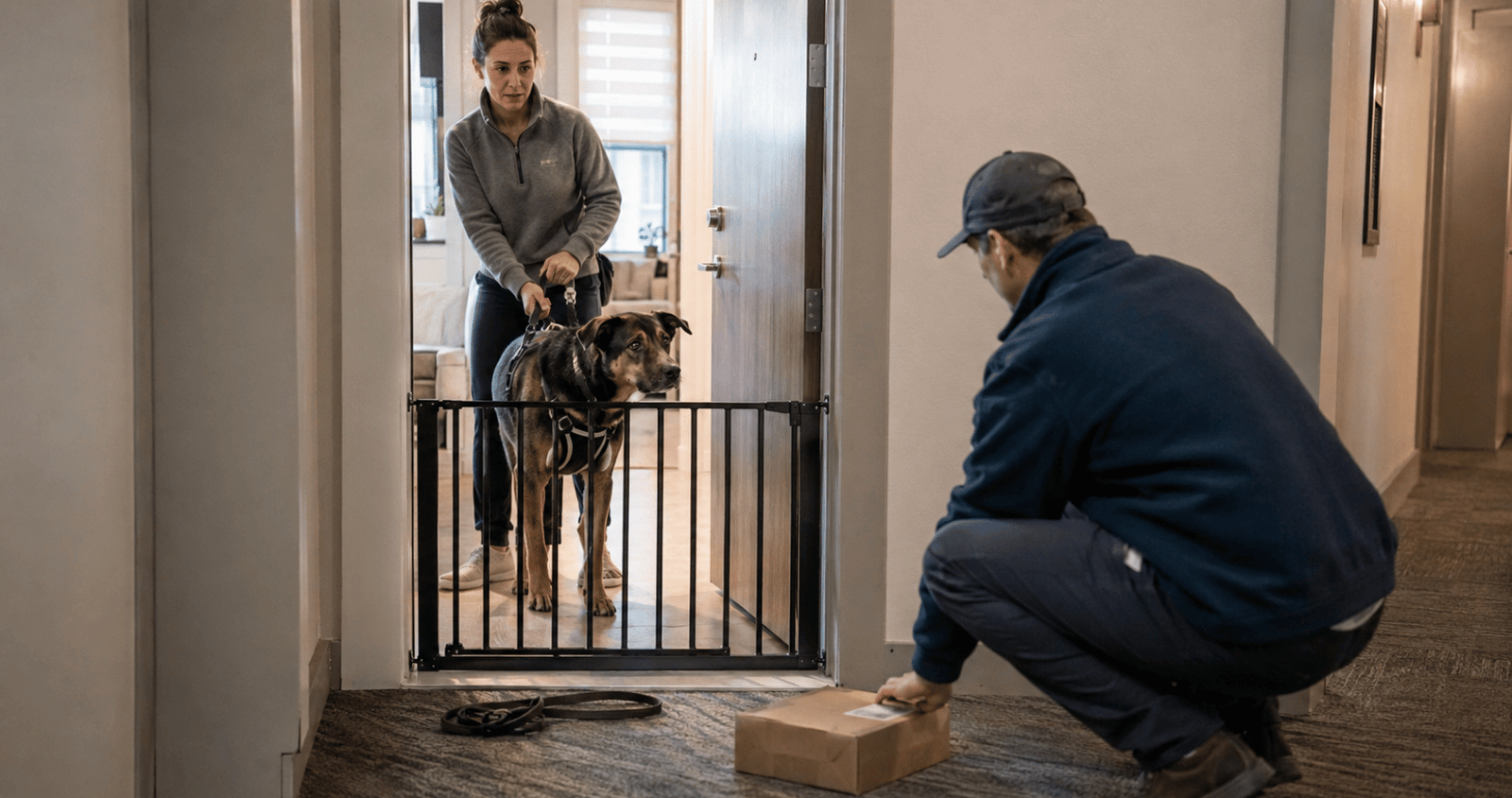
Do not let a dog greet strangers at the door unsupervised. Startled dogs at thresholds account for a meaningful share of bites.
Warn visitors and delivery people. A sign and a closed door are cheaper than a claim.
Take training seriously, particularly for reactivity around unfamiliar people.
Secure the dog before couriers arrive if you receive frequent deliveries.
Never let a bite go unreported to your insurer if there is any chance a claim follows. Late notice can complicate coverage.
None of this eliminates the risk. Dogs are animals, situations are unpredictable, and good owners have bad days. That is exactly why the liability limit matters.
Two Calls Worth Making
Confirm your dog is covered, in writing. Give your insurer the breed, the size, and any history, and ask them to email you confirmation. That document is what protects the claim.
Raise your liability limit. One hundred thousand dollars sits below the average bite claim. Three hundred thousand costs a few dollars a year and covers the scenario the number at the top of this page describes.
The dog does not have to be aggressive for any of this to matter. A startled animal, an unfamiliar visitor, and two seconds is the entire story in most of these claims.
This article is for general educational purposes and is not legal or insurance advice. Breed restrictions, state regulations, standalone policy availability, and pricing vary by insurer and by state and can change. Confirm your coverage in writing with your carrier.
Some images in this article were generated using artificial intelligence and are for illustrative purposes only.